Slender Club-rush Care (Isolepis cernua)

Also known as: low bulrush, Nodding club-rush
Slender Club-rush

About Slender Club-rush

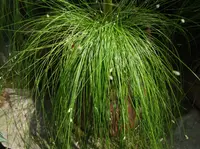
Slender club-rush (Isolepis cernua) is a small, grass-like sedge known for its fine, arching green stems tipped with tiny pale flower heads. It forms soft, mop-like clumps that suit shallow containers, bowls, and the edges of water features.

This species is native to moist habitats in Europe and other temperate regions, where it often grows near ponds, streams, and marshy ground. It tends to be easy to grow if kept consistently moist and given moderate light.

Because it prefers damp conditions and does not tolerate drying out, understanding how to care for Slender Club-rush focuses mainly on managing water and avoiding harsh, direct sun.

Main Plant Requirements

Care Difficulty

Moderate Care

Light Preference

Partial Sun

Water Requirements

Aquatic

Temperature Preference

Tropical / Frost Sensitive

Hardiness Zone

8–11

Soil Texture

Loamy, Silty, Organic-rich

Soil pH

Acidic (5.5–6.5), Slightly acidic (6.5–7.0)

Soil Drainage

Waterlogged tolerant

Fertilization

Light (every 4–6 weeks)

Get Personalized Care Plan

Scan your plant to receive care tips personalized for your specific plant

Available on iOS and Android

How to Care for the Slender Club-rush

Isolepis cernua thrives in bright, indirect light that mimics open, moist habitats.

  • Provide 4–6 hours of soft morning sun or filtered light daily; avoid harsh midday and late afternoon sun that can scorch fine foliage.
  • Plant in a spot with partial shade, such as an east-facing exposure or dappled light under taller plants, which suits Slender Club-rush well.
  • In summer, shift containers slightly back from south or west windows; in winter, move closer to brighter exposures to compensate for shorter days.

This sedge prefers consistently moist to wet conditions and does not tolerate drying out.

  • Keep soil evenly moist so the surface just glistens; do not allow the top 1–2 cm to dry completely, especially in active growth.
  • Use soil that drains but still holds moisture; water until excess drains away, then empty saucers to reduce root rot risk indicated by yellow, mushy stems.
  • In warm months, monitor every 1–2 days for drooping, pale foliage as a sign of underwatering; in cooler seasons, reduce volume slightly while never letting the root zone dry.

This species prefers mild, cool-temperate conditions without frost or extreme heat.

  • Aim for 60–75°F (16–24°C) for steady growth; temperatures in this range support active root and leaf development.
  • Protect from cold below 40°F (4°C); foliage and roots are easily damaged by frost and prolonged chills near freezing.
  • In hotter periods above 80°F (27°C), provide shade, ample moisture, and airflow, as sustained heat over 90°F (32°C) can stress and brown the fine stems.

This species prefers consistently moist air, so humidity has a clear impact on plant health.

  • Aim for 50–70% humidity; below 40% the fine leaves dry at the tips and look straw-like.
  • Tolerates brief drier air if soil stays evenly moist, but prolonged HVAC heating quickly stresses Slender Club-rush.
  • Increase humidity by grouping pots on a water-filled pebble tray or placing near a humidifier rather than misting heavily.

This plant prefers a constantly moist, fibrous, organic-rich substrate that does not become stagnant.

  • Use a mix of 2 parts peat or coco coir, 1 part compost, and 1 part fine sand to keep the medium moist yet lightly aerated.
  • Isolepis cernua grows best in slightly acidic to neutral soil, around pH 5.5–7.0, which supports root activity.
  • Avoid dense, heavy clay or pure garden soil that compacts and excludes air, as this encourages root rot.
  • If the mix feels sticky or waterlogged for many hours, blend in more sand or fine perlite to improve drainage and oxygen flow.

This species is well suited to container culture, especially for damp or water-feature displays.

  • Choose a wide, shallow pot that allows rhizomes to spread while keeping the root zone close to the consistently moist surface layer.
  • Use containers that retain moisture, such as glazed ceramic or plastic, to reduce rapid drying of the fine root system.
  • Place the pot inside a decorative cachepot or tray that can hold a shallow water layer, ensuring the inner pot base just touches the water for constant dampness.

This fine-textured sedge benefits from light, consistent feeding during active growth but is sensitive to excess salts.

  • Use a balanced liquid fertilizer (such as 10-10-10) at 1/4–1/2 strength every 4–6 weeks in spring and summer.
  • Alternatively, mix a small amount of slow-release balanced granules into the topsoil at the start of the growing season.
  • Avoid heavy compost or rich manure, which can cause floppy, weak growth in Slender Club-rush.
  • Stop feeding in late fall and winter, when growth slows, to reduce risk of root burn and nutrient buildup.

Isolepis cernua responds well to light, ongoing grooming to maintain a tidy, arching form.

  • Trim brown, dead, or damaged stems at the base throughout the year using clean, sharp scissors or snips.
  • In late winter or early spring, thin crowded clumps by removing the oldest, thickest tufts to encourage fresh, fine growth.
  • Lightly shape overgrown plants by shortening the longest stems, keeping cuts staggered for a natural look.
  • Disinfect tools before and after pruning to limit disease spread, especially in dense, moist plantings.

This shallow-rooted grass-like plant adapts well to containers but dislikes major root disturbance.

  • Plan to repot every 1–2 years when roots circle the pot, water drains very quickly, or growth becomes stunted.
  • Choose early spring for repotting so the plant can recover during the main growing season.
  • Move into a pot only 2–3 cm wider, gently loosening the outer roots while keeping the core root ball mostly intact.
  • Water thoroughly after repotting and keep in bright, indirect light for 1–2 weeks to reduce transplant shock.

This species is most often propagated by division, which preserves the fine, arching habit of established clumps.

  • Divide healthy container or garden clumps in early spring when new growth begins.
  • Lift the plant and separate it into small sections by hand or with a clean knife, each with roots and green shoots.
  • Replant divisions at the same depth in moist, free-draining substrate and water well to settle roots.
  • Keep new divisions in bright, indirect light with consistently moist soil until established, then resume normal care.

In mild climates this plant can overwinter outdoors, but colder regions require some protection from freezing.

  • In USDA zones below 8, grow Isolepis cernua in containers so plants can be moved indoors before hard frosts.
  • Indoors, keep temperatures above 50°F and provide bright, indirect light with slightly reduced watering.
  • In the ground, apply a light mulch around the root zone after the first frosts, keeping mulch off the crown.

Care Tips

Rotate water trays

Stand the pot in a shallow tray of water for 20–40 minutes, then remove and let it drain fully to keep roots moist but oxygenated, especially helpful when growing Slender Club-rush in warm, dry homes.

Frequent division schedule

Plan to divide crowded clumps every 1–2 years by cutting the root mass into sections with a clean knife and replanting, which keeps the plant compact, vigorous, and less prone to rot in the dense center.

Edge spill management

If planted in containers, position the pot slightly below the rim or use a cachepot so the arching stems can spill naturally without getting crushed by window frames or shelf edges.

Use aquatic baskets

For semi-aquatic or pond-side setups, grow the plant in fine-mesh aquatic baskets filled with peat-based mix so the roots can access constant moisture without losing soil into the water.

Seasonal haircut timing

Instead of ongoing heavy trimming, schedule a stronger haircut at the end of winter by removing weak, brown, or tangled stems at the base to stimulate a fresh, dense flush of spring growth.

Common Pests and Diseases

Fungus gnats

These insects are attracted to constantly wet potting mixes and lay eggs that hatch into larvae feeding in the top layer of the soil and around fine roots. Symptoms include tiny black flies hovering over the pot and slow, weakened growth in very wet containers.

Solution

Allow the top 1–2 cm of the substrate to dry slightly between waterings, use a well‑draining but consistently moist mix, and remove algae or moss build‑up on the soil surface. Trap adults with yellow sticky cards and control larvae by bottom‑watering only for a period and, if needed, applying a biological control such as a Bacillus thuringiensis israelensis (BTI) product according to label directions.

Aphids

This pest tends to cluster on the soft, arching shoots and stem bases, sucking sap and excreting sticky honeydew that can lead to sooty mold. Symptoms include distorted new growth, sticky foliage, and visible green, black, or brown soft‑bodied insects.

Solution

Rinse the foliage thoroughly under a gentle stream of water, including the inner clumps, and repeat every few days until populations drop. For persistent colonies, treat all sides of the plant with a ready‑to‑use insecticidal soap or neem oil spray, applied in the cool part of the day and repeated as directed, while also reducing excess nitrogen fertilization that encourages very soft, lush growth.

Leaf spot

This disease develops in dense, humid clumps, causing small brown or tan spots that may merge into larger patches on the fine leaves. Symptoms include thinning tufts, premature browning, and speckled or patchy foliage, especially in poorly ventilated indoor locations or crowded trays.

Solution

Improve air movement around the plant, avoid wetting foliage when watering, and promptly remove and discard the most affected shoots. In severe or recurring cases, thin the clump by division to reduce density and, if grown under cover, apply a broad‑spectrum fungicide labeled for ornamental grasses, following label instructions carefully.

Stem and crown rot

This disease appears in waterlogged containers or trays, where constantly saturated media cause soft, dark, collapsing stems at the base and rapid decline of the tuft. Symptoms include yellowing followed by sudden wilting and a mushy crown with a sour or earthy odor.

Solution

Prevent problems by using a free‑draining yet moisture‑retentive mix, containers with drainage holes, and water levels that keep the base moist but not submerged. At first signs, remove and discard affected clumps, reduce standing water, clean containers, and replant healthy divisions into fresh substrate, maintaining even moisture rather than continuous saturation as part of Isolepis cernua care.

Interesting Facts

Nodding flower heads

The tiny cream-white flower clusters sit on the side of the stem tips, causing the characteristic nodding or drooping appearance that gives the species its Latin name cernua, meaning bent or nodding.

Coastal marsh specialist

This species is naturally native to Atlantic and Mediterranean coasts of Europe and North Africa, where it grows in saline or brackish marshes, ditches, and wet sandy soils exposed to periodic flooding.

Microhabitat engineer

In the wild, its dense fine leaves and roots help trap silt and organic matter in shallow water margins, creating small sheltered microhabitats for algae, tiny invertebrates, and germinating seedlings of other wetland plants.

Botan icon

Did you know?

Despite being widely grown worldwide as an ornamental for containers, ponds, and terrariums, this species has not been formally assessed for the IUCN Red List, so its global conservation status remains officially unclassified.

FAQs about Slender Club-rush

Browning tips usually result from dry substrate, low humidity, or excess fertilizer salts. Check moisture, leach the pot thoroughly if fertilized often, and trim only the dried tips. Avoid sudden temperature drops and hot, drying drafts.

Grow Healthy Plants with Botan Care

Keep your plants happy and healthy with plant identification, disease detection, and easy care guidance.

Botan plant care app — identify plants on mobile

Explore More Plants