Encourage Deep Roots
Irrigate less often but for longer durations during establishment to encourage deep rooting, which improves drought tolerance and soil stabilization when growing beardless wildrye.

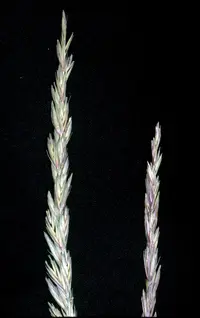
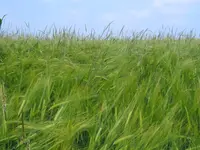
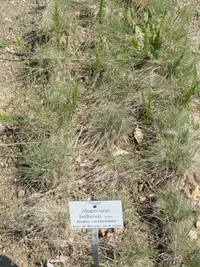
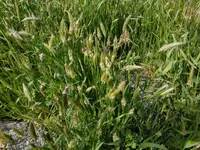
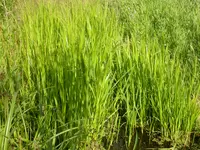
Beardless wildrye (Leymus triticoides) is a cool-season perennial grass native to western North America, especially along streams, floodplains, and moist meadows. It forms dense clumps and spreads by rhizomes, creating a low to medium-height grass stand with smooth, blue-green leaves.
This species is valued in restoration projects because it tolerates seasonal flooding, variable moisture, and moderately saline or alkaline soils. It is generally considered easy to establish in suitable climates, especially where soils stay moist but not permanently waterlogged.
For those learning how to care for beardless wildrye, it helps to know that it prefers full sun, consistent moisture, and well-drained to periodically wet soils.

Care Difficulty
Easy Care

Light Preference
Full Sun

Water Requirements
Regular Water

Temperature Preference
Cold Hardy

Hardiness Zone
4–9

Soil Texture
Sandy, Loamy, Clay

Soil pH
Slightly acidic (6.5–7.0), Neutral (7.0)

Soil Drainage
Moist but well-drained

Fertilization
Minimal (feed rarely)
Scan your plant to receive care tips personalized for your specific plant
Available on iOS and Android
Leymus triticoides prefers open, bright conditions typical of native wet meadows and riparian areas.
Leymus triticoides is adapted to moist to seasonally wet soils but dislikes prolonged waterlogging.
This cool-season grass tolerates a wide temperature range typical of many temperate climates.
This species is adapted to semi-arid conditions, so humidity is rarely a concern in typical outdoor settings.
This grass prefers moderately fertile, well-drained soil but shows good adaptability once established.
This species can be grown in containers for erosion-control trials or ornamental grass displays, though it is better suited to open ground.
Leymus triticoides usually needs minimal feeding, especially in fertile or restored native soils.
Pruning needs for Leymus triticoides are low, mainly to keep clumps tidy and vigorous.
This grass is typically grown in the ground; transplanting clumps is more common than container repotting.
Leymus triticoides is most often multiplied by division, with seed used for restoration or larger projects.
This cool-season native grass is cold hardy in much of its range and usually needs no special winter care.

Plant Health Check
Not sure what's wrong with your plant? Check your plant's health inside the app.
This perennial grass naturally colonizes moist streambanks and floodplains in western North America, where its spreading rhizomes help bind soil and reduce erosion in dynamic river systems.
It shows notable tolerance to saline and alkaline soils compared with many native grasses, which is why it is often used in restoration of degraded irrigation drains and other salt-affected sites.
Its extensive, creeping rhizomes allow the plant to survive seasonal flooding, grazing, and mowing, then rapidly resprout once conditions improve, forming dense, long-lived stands.

This species is an important component of many traditional irrigated meadow systems in the western United States, where ranchers value it as a persistent, cool-season forage grass that can stay productive under periodic flooding and high water tables.
This species spreads by rhizomes, forming dense clumps and patches over time. In irrigated or fertile sites it can expand noticeably, so edging, periodic division, or confining it with paths or barriers helps maintain defined planting areas.
Keep your plants happy and healthy with plant identification, disease detection, and easy care guidance.