Controlled clump spread
Periodically slice around overly dense clumps with a sharp spade and lift outer sections to keep stands open, reduce self-seeding, and maintain easier access for caring for bulbous foxtail in managed borders or meadow strips.

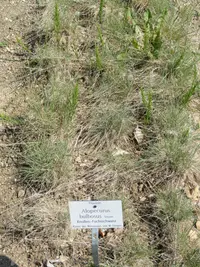
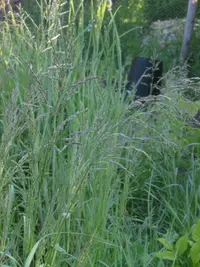
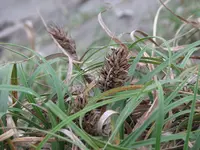
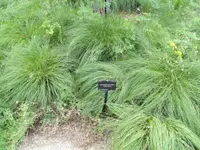
Bulbous foxtail, Alopecurus bulbosus, is a small, cool-season grass that forms dense clumps from a swollen, bulb-like base. It produces narrow leaves and soft, brush-like flower spikes that resemble a miniature foxtail.
This species is native to parts of Europe and western Asia and has naturalized in some temperate regions, often in pastures, roadsides, and disturbed soils. It tends to favor open, sunny spots with moist but not waterlogged ground.
Gardeners who care for bulbous foxtail usually find it undemanding where winters are mild and soils stay evenly moist, but it can spread and behave weedy in ideal conditions.

Care Difficulty
Moderate Care

Light Preference
Full Sun

Water Requirements
Regular Water

Temperature Preference
Cool Climate

Hardiness Zone
5–9

Soil Texture
Sandy, Loamy, Silty

Soil pH
Slightly acidic (6.5–7.0), Neutral (7.0)

Soil Drainage
Moist but well-drained

Fertilization
Minimal (feed rarely)
Scan your plant to receive care tips personalized for your specific plant
Available on iOS and Android
This small perennial grass prefers bright, open conditions but tolerates some shade in warmer regions.
This species prefers evenly moist but not saturated soil, especially during active spring growth.
This temperate grass grows best in cool to mild conditions and tolerates moderate winter cold.
This grass tolerates a wide humidity range and rarely needs special humidity management indoors or outdoors.
This species prefers loose, moderately fertile mineral soil that drains freely yet retains some moisture.
This species is suitable for container growing, especially for small displays or controlled spread.
This species usually thrives in modest soils, so fertilizing Alopecurus bulbosus should be light and targeted.
Alopecurus bulbosus benefits from light, timely pruning to maintain a tidy clump and healthy foliage.
This grass is usually grown in the ground, so focus on dividing and transplanting Alopecurus bulbosus rather than frequent repotting.
Alopecurus bulbosus is commonly propagated by division or by seed under suitable conditions.
This cool-season grass is generally hardy in temperate climates and needs minimal winter care once established.

Plant Health Check
Not sure what's wrong with your plant? Check your plant's health inside the app.
This grass forms a swollen, bulb-like corm at the base of its stems that stores reserves and helps it survive unfavorable conditions such as summer drought or grazing pressure.
It tends to grow and flower early in the season in Mediterranean-type climates, allowing it to complete most of its life cycle before intense summer heat and dry conditions arrive.
In some improved pastures and hay fields, it behaves as a minor weed, since its clumped growth and early maturity can reduce the uniformity of forage stands and compete with more desirable grasses.
This grass spreads by both seed and small bulb-like swellings at the stem base. In suitable conditions it can naturalize and form patches, especially in disturbed or grazed areas, so monitoring and timely removal of seed heads is helpful.
Keep your plants happy and healthy with plant identification, disease detection, and easy care guidance.

%20Near%20Granitethorpe%20Quarry%20Sapcote%20SP%204941%209370%20%20(taken%203.7.2008)-200x150.webp)