


Substrate Containment
Grow mats on fine-mesh trays or shallow baskets lined with horticultural fleece so the delicate roots stay anchored while allowing water flow in ponds, tubs, or aquaria.

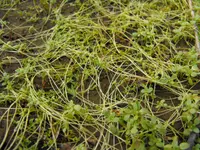
Winged water-starwort, Callitriche marginata, is a small aquatic or semi-aquatic plant often found in shallow ponds, slow streams, and seasonally wet depressions. It forms low, delicate mats of narrow leaves that can float on the water surface or grow in muddy edges.
This species is native to parts of western North America, where it colonizes open, sunny, or lightly shaded wet habitats. Its fine roots and compact growth make it sensitive to drying out and to strong water movement, which affects how to care for winged water-starwort. It usually prefers clean, still or gently moving water and soft, silty or sandy substrates.

Care Difficulty
Moderate Care

Light Preference
Full Sun

Water Requirements
Aquatic

Temperature Preference
Cool Climate

Hardiness Zone
6–10

Soil Texture
Sandy, Loamy, Organic-rich

Soil pH
Acidic (5.5–6.5), Slightly acidic (6.5–7.0)

Soil Drainage
Waterlogged tolerant

Fertilization
Minimal (feed rarely)
Scan your plant to receive care tips personalized for your specific plant
Available on iOS and Android
This aquatic species prefers bright, open conditions but is sensitive to intense drying sun.
This species is adapted to consistently wet habitats and must not be allowed to dry out.
This cool- to mild-water species prefers stable, moderate temperatures for best growth.
This aquatic species is not sensitive to ambient humidity as long as its roots stay submerged or constantly wet.
This species prefers permanently wet, fine-textured substrates rather than typical potting soil.
This plant can be grown in containers placed within ponds, water gardens, or trays of standing water.
Callitriche marginata usually needs only light feeding, especially in nutrient-poor water or newly set-up systems.
Pruning Callitriche marginata is mainly used to control spread and maintain healthy, well-lit stems.
Winged water-starwort is usually managed by transplanting patches rather than traditional repotting.
Callitriche marginata is commonly propagated by division and stem pieces rather than by seed in home setups.
In most temperate ponds, Callitriche marginata is fairly cold hardy and needs little specific winter care.

Plant Health Check
Not sure what's wrong with your plant? Check your plant's health inside the app.
This annual aquatic plant germinates and grows during the rainy season in shallow pools and then completes its life cycle as the water recedes, surviving dry periods only as seeds in the soil.
The species name marginata refers to the distinctive narrow wings along the edges of its tiny fruits, which may help them stay afloat and disperse across temporary water bodies.
It is closely associated with seasonal vernal pools and other temporary wetlands, especially in parts of western North America, making it sensitive to changes in hydrology and land use.

This species is considered regionally rare or of conservation concern in several parts of its range because it depends on intact vernal pool ecosystems, which have been extensively lost or altered by agriculture and urban development.
This species can spread quickly by stem fragments and seeds, forming dense mats in still or slow-moving water. In small ponds, regular thinning and removal of stray pieces helps prevent it from overrunning other aquatic plants.
Keep your plants happy and healthy with plant identification, disease detection, and easy care guidance.

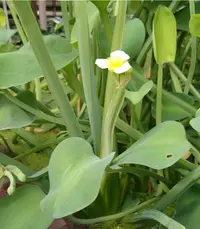
yellow velvetleaf
Limnocharis flava
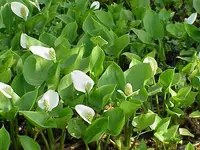
Bog Arum
Calla palustris
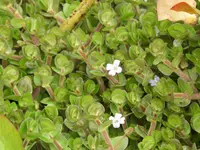
Bacopa salzmannii
Bacopa salzmannii
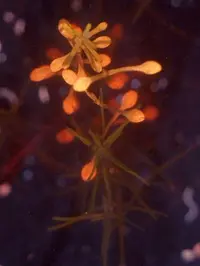
Pedunculate Water-Starwort
Callitriche brutia
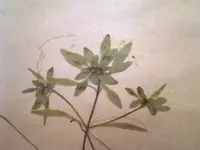
Intermediate Water-Starwort
Callitriche hamulata
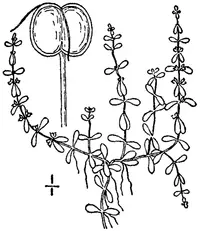
terrestrial water-starwort
Callitriche terrestris
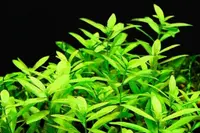
Indian swampweed
Hygrophila polysperma
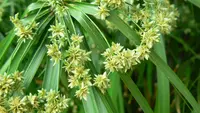
Umbrella Flat-Sedge
Cyperus alterniflorus