terrestrial water-starwort Care (Callitriche terrestris)

terrestrial water-starwort

About terrestrial water-starwort

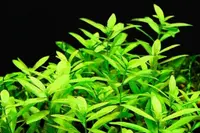
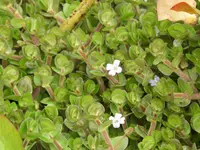
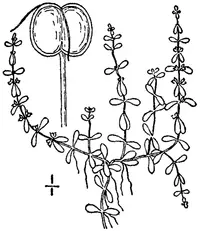
Terrestrial water-starwort (Callitriche terrestris) is a small, delicate aquatic-edge plant that often carpets shallow, seasonally wet ground and muddy pond margins. It forms low, mat-like patches of fine stems with tiny opposite leaves that can look like a soft green film over the soil or water.

This species is native to North America and is commonly found in ditches, slow streams, vernal pools, and other temporary wetlands. It is generally considered easy to grow if it receives consistent moisture, cool to mild temperatures, and low to moderate light. For anyone learning how to care for terrestrial water-starwort, its main requirement is a reliably damp, low-competition environment.

Main Plant Requirements

Care Difficulty

Moderate Care

Light Preference

Partial Sun

Water Requirements

Aquatic

Temperature Preference

Cool Climate

Hardiness Zone

5–9

Soil Texture

Sandy, Loamy, Silty

Soil pH

Acidic (5.5–6.5), Slightly acidic (6.5–7.0)

Soil Drainage

Waterlogged tolerant

Fertilization

Minimal (feed rarely)

Get Personalized Care Plan

Scan your plant to receive care tips personalized for your specific plant

Available on iOS and Android

How to Care for the terrestrial water-starwort

This small aquatic-terrestrial plant prefers bright, gentle light that mimics open, shallow stream margins.

  • Provide 4–6 hours of morning sun with light shade or dappled light in the afternoon to prevent leaf scorch on terrestrial water-starwort.
  • Allow light partial shade, especially in hotter regions; growth may be looser in 2–3 hours of direct sun but remains acceptable.
  • In summer, protect from harsh midday sun using taller plants or shade cloth; in winter, favor more open exposure to maximize weak sunlight.

This species naturally grows in saturated soils, so consistent surface moisture is essential for healthy growth.

  • Keep soil constantly moist to wet; the surface should not dry out, and standing shallow water up to a few cm is acceptable for Callitriche terrestris.
  • Use a substrate that holds moisture yet drains slowly; avoid foul, stagnant water with strong odor, which signals poor oxygen levels and root stress.
  • In hotter months, monitor daily for drying cracks or drooping foliage; in cooler seasons, maintain moisture but reduce added water if rainfall is frequent.

This cool- to mild-climate plant tolerates a wide range but grows best in moderate conditions.

  • Aim for 55–72°F (13–22°C) for strongest growth, matching typical spring and fall conditions in temperate regions.
  • Tolerates down to about 32°F (0°C) for short periods, but repeated hard frosts below 28°F (-2°C) can damage foliage and thin stems.
  • In summer, growth may slow above 80°F (27°C); provide partial shade and ample water during heat waves to reduce stress.

This species prefers consistently moist air but adapts to a broad humidity range.

  • Aim for 50–80% humidity, as the plant naturally occurs in damp, streamside or wetland habitats.
  • It tolerates brief dips to 30–40% humidity if the root zone stays evenly moist and does not fully dry out.
  • Humidity stress shows as paling, crisping shoot tips, and slower spread; increase humidity by grouping plants near water trays or shallow water features when caring for terrestrial water-starwort.

This plant prefers saturated, fine-textured substrates that stay wet without becoming stagnant and anaerobic.

  • Use a mix of 50–70% loam or fine sand with 30–50% peat or coco coir to mimic soft, silty stream margins for Callitriche terrestris.
  • Keep the substrate constantly wet to shallowly flooded; allow no complete drying, but avoid deep, still water that deprives roots of oxygen.
  • A slightly acidic to neutral pH around 6.0–7.0 supports healthy growth and nutrient uptake.
  • Improve aeration by blending in a small amount of fine gravel or coarse sand, avoiding dense clay or highly compacted garden soil.

This species is suitable for shallow containers or trays that can hold consistently wet substrate.

  • Choose a wide, shallow container to allow horizontal spreading while keeping the water level easy to manage across the surface.
  • Use a watertight outer tray or cachepot so the inner pot or insert can sit in a controlled depth of water without flooding the foliage.
  • Stabilize low, spreading growth by placing the container on a level surface where water can form an even film rather than pooling to one side.

This small native aquatic-terrestrial annual generally needs little feeding in natural or outdoor pond-edge settings.

  • For container or indoor culture, use a very dilute balanced liquid fertilizer (such as 10-10-10) at 1/4 strength.
  • Apply only during active spring–summer growth, every 4–6 weeks, if foliage looks pale or growth is weak.
  • Avoid fertilizing in fall–winter, when growth slows and nutrients are less needed.
  • Rinse or refresh water in shallow trays after feeding to prevent salt buildup around fine roots.

Light pruning helps keep Callitriche terrestris mats compact and prevents overcrowding in shallow water or damp soil.

  • Best time is during active growth in spring–summer, when the plant recovers quickly.
  • Snip back overgrown, leggy, or shading shoots, and remove dead or decaying stems to improve water quality.
  • Use small, clean scissors to trim above the root zone, lifting out cut material carefully.
  • Regular light thinning encourages fresh, dense foliage and reduces competition with neighboring small aquatics.

This species is more often transplanted in patches than repotted as an individual specimen.

  • Transplant when mats become too dense, growth slows, or stems crowd other small plants in shallow water or wet soil.
  • Best timing is in spring or early summer, when conditions are mild and roots re-establish quickly.
  • Lift small clumps with a spoon or narrow trowel, keeping as much root and attached substrate as possible.
  • Replant clumps at the same depth in their new spot, then keep soil or water level stable to limit transplant shock.

Callitriche terrestris is commonly renewed by seed and by dividing small rooted patches.

  • Collect mature seed in late summer and sow on the surface of consistently moist, fine-textured substrate.
  • Do not cover seeds deeply; they germinate best with light exposure and steady moisture at mild temperatures.
  • For division, gently lift small rooted mats in spring and separate into smaller pieces by hand.
  • Replant divisions quickly in shallow water or saturated soil so fine roots do not dry out.

This annual is generally winter-hardy in its range and usually does not need special care in naturalized settings.

  • In colder areas, allow plants to complete their life cycle and rely on self-sown seed for next year’s growth.
  • Container cultures in zones with prolonged freezes can be moved to a cold, frost-free space to protect roots.
  • Avoid heavy mulching over wet soil, which can keep the crown overly saturated and low in oxygen.

Care Tips

Maintain Shallow Water

Keep the water layer very shallow (0.5–3 cm) above the substrate so plants can root firmly yet still access dissolved nutrients efficiently.

Use Fine-Textured Substrate

Provide a base of washed sand or very fine gravel over a thin layer of low-nutrient aquatic soil to anchor the delicate roots without smothering them.

Control Algae Early

Limit nutrient spikes and excess light, and manually remove filamentous algae with a soft brush or forked stick before it overgrows and shades the tiny rosettes.

Encourage Spreading Mats

Trim and replant healthy stem tips every few weeks in adjacent bare spots to speed up mat formation and produce a denser, more even groundcover.

Seasonal Drawdown Management

In outdoor culture, gradually lower water levels in late spring to early summer and keep the substrate consistently moist to mimic natural drawdown conditions when growing terrestrial water-starwort.

Common Pests and Diseases

Algal overgrowth

Symptoms include bright green, slimy films coating leaves and stems in shallow or still water, often shading the plant and slowing growth. This issue is common where nutrients and light are high but water movement is low.

Solution

Reduce nutrient input from runoff or fish waste, increase water movement or gentle circulation, and physically remove algal mats from around the plants. In small features or trays, partial and frequent water changes plus shading during the brightest hours help keep algae pressure low while still growing terrestrial water-starwort successfully.

Filamentous green algae

This disease-like condition appears as fine, hair-like green strands entangled around the plant, restricting light and sometimes trapping debris. These algae thrive in nutrient-rich, shallow habitats with slow water flow.

Solution

Manually wind and remove the filamentous strands from the plant and surrounding area, then lower nutrient levels by reducing fertilizer or nutrient-rich runoff. Improving flow and lightly shading the water surface can prevent reinfestation without harming the delicate stems and leaves.

Aquatic snails

These insects do not occur here; instead, small freshwater snails may graze on tender shoots and young leaves, leaving irregular holes and thinning patches. Damage is usually most visible on very young growth in nutrient-rich ditches, ponds, or trays.

Solution

Hand-pick snails from the water and plant mats, and reduce refuge areas such as heavy leaf litter around the plants. In container or restoration settings, physical barriers, periodic manual removal, and careful control of introduced material (soil, rocks, other aquatic plants) help limit new snail introductions while maintaining overall Callitriche terrestris plant care at a low-intervention level.

Interesting Facts

Seasonal life strategy

This species is an annual aquatic or semi-aquatic herb that completes its life cycle in a single growing season, relying on large numbers of small seeds to re-establish populations each year in temporary wet habitats.

Threadlike submerged leaves

In flooded or submerged conditions, it often develops very narrow, threadlike underwater leaves that increase surface area for gas exchange and photosynthesis in low-oxygen, low-light water layers.

Pioneer of wet mud

It commonly colonizes recently exposed wet mud along streams, ponds, and ditches, helping stabilize fine sediments and forming early-stage vegetation in disturbed or fluctuating shorelines.

FAQs about terrestrial water-starwort

This species can spread quickly in shallow, wet areas through seed and stem fragments, forming low mats. In managed spaces, contain it with edging, regular thinning, and by removing stray pieces during routine maintenance to prevent unwanted expansion.

Grow Healthy Plants with Botan Care

Keep your plants happy and healthy with plant identification, disease detection, and easy care guidance.

Botan plant care app — identify plants on mobile

Explore More Plants