Stream orchid Care (Epipactis gigantea)

Also known as: Chatterbox orchid
Stream orchid

About Stream orchid

Stream orchid (Epipactis gigantea) is a hardy, rhizomatous terrestrial orchid native to damp habitats across western North America. It usually grows in clumps with upright stems and soft green, lance-shaped leaves.

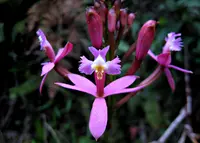
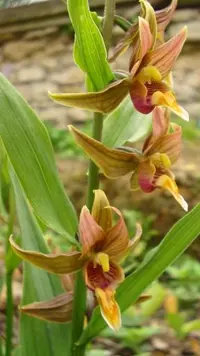
The plant produces nodding, coppery to yellow-green flowers along the upper part of its stems, giving a natural, informal look in bog gardens and near water features. It prefers consistently moist soil, cool roots, and light shade to partial sun.

In suitable conditions it can spread steadily and form colonies, which makes it rewarding but sometimes demanding where summers are hot and dry. Understanding how to care for Stream orchid mainly involves providing steady moisture and avoiding strong heat around the roots.

Main Plant Requirements

Care Difficulty

Moderate Care

Light Preference

Partial Sun

Water Requirements

Aquatic

Temperature Preference

Cold Hardy

Hardiness Zone

4–9

Soil Texture

Sandy, Loamy, Silty

Soil pH

Slightly acidic (6.5–7.0), Neutral (7.0)

Soil Drainage

Waterlogged tolerant

Fertilization

Minimal (feed rarely)

Get Personalized Care Plan

Scan your plant to receive care tips personalized for your specific plant

Available on iOS and Android

How to Care for the Stream orchid

Epipactis gigantea thrives in bright conditions that mimic open, streamside habitats.

  • Provide 4–6 hours of sun daily, ideally morning sun with light afternoon shade, especially in hotter regions.
  • Allow dappled or high, open shade during midday; Stream orchid tolerates partial shade but flowering may decrease with less than 3–4 hours of direct light.
  • In summer, protect from harsh west-facing sun to prevent leaf scorch, and in cooler seasons ensure plants are not shaded by overgrown shrubs or structures.

This species prefers consistently moist conditions that resemble natural stream edges.

  • Keep soil evenly moist with no more than the top 1–2 cm drying; never allow the root zone to become fully dry.
  • Use rich, humus-based soil with good drainage so water moves through but moisture remains, and avoid standing water that smells sour or shows algae scum.
  • In hot weather, increase watering frequency and watch for limp, curling leaves (too dry) or yellowing, soft stems and blackened rhizomes (overwatering or stagnation).

This hardy terrestrial orchid tolerates a broad temperature range when established in the ground.

  • Aim for active growth in 60–80°F (16–27°C); cooler nights around 50–60°F (10–16°C) support strong, compact shoots.
  • Dormant rhizomes can survive short drops to about 0°F (−18°C) under mulch, but emerging shoots are sensitive to late frosts and may need light protection.
  • In summer heat above 90°F (32°C), provide afternoon shade and reliable soil moisture to prevent stress, leaf scorch, and stalled flowering.

This species prefers moderate to high humidity but adapts to typical outdoor conditions in much of its range.

  • Aim for 50–70% humidity, especially in warmer climates, to support healthy Stream orchid foliage and flowering.
  • Leaves that brown at the tips or curl while soil stays moist often indicate air that is too dry rather than underwatering.
  • Increase humidity locally by grouping plants near water features, placing containers in shallow trays of wet gravel, or positioning them in naturally damp garden spots.

This wetland orchid needs consistently moist, highly aerated soil that never becomes stagnant or compacted.

  • Use a loose, organic-rich mix such as 2 parts loam, 1 part coarse sand, and 1–2 parts fine bark or leaf mold to mimic streambank conditions.
  • Ensure soil stays evenly moist with slow drainage rather than fast-drying, sharply drained substrates that leave roots exposed to cycles of dryness.
  • Aim for slightly acidic to neutral pH around 6.0–7.0, avoiding strongly alkaline soils that can limit nutrient uptake and weaken Epipactis gigantea growth.
  • Improve aeration in heavy garden soil by incorporating coarse grit, fine gravel, or pine bark fines while avoiding dense clay pockets that hold stagnant water.

This species can grow successfully in containers if moisture and stability are carefully controlled.

  • Choose a tall, heavy container to keep the spreading rhizomes contained while preventing the pot from tipping in wind or when stems elongate.
  • Drill or use multiple side and base drainage holes, then add a gravel layer above them to let water move out while keeping the root zone saturated but oxygenated.
  • Stand the pot inside a wider outer cachepot or basin that holds a shallow water layer, ensuring only the lower pot base contacts water to maintain constant dampness without flooding the crown.

This native orchid benefits from modest, targeted feeding rather than heavy fertilization.

  • Use a balanced, dilute liquid fertilizer (around 10-10-10) at 1/4–1/2 strength for Stream orchid in containers or nutrient-poor beds.
  • Feed every 4–6 weeks during active growth in spring and early summer, then stop by late summer.
  • Apply a thin layer of compost around outdoor clumps once a year to enrich soil gently.
  • Do not fertilize during winter dormancy; excess nutrients at this time can weaken rhizomes.

Pruning needs for Epipactis gigantea are light and mainly focused on hygiene and appearance.

  • In late fall or early winter, cut back browned, dead stems at ground level using clean, sharp pruners.
  • Remove damaged or diseased shoots promptly during the growing season to limit spread of problems.
  • Thin out weak, crowded flowering stems after bloom to maintain good air circulation and clump vigor.
  • Avoid heavy shaping cuts; this orchid’s natural form is best preserved with minimal, selective removal.

This terrestrial orchid is usually grown in the ground, so care focuses on occasional division and transplanting rather than frequent repotting.

  • Transplant or divide clumps every 3–5 years when flowering declines or new shoots crowd tightly.
  • Best timing is early spring just as new growth starts, or early fall after foliage dies back.
  • Signs a container plant needs attention include roots circling the pot, slow growth, or quick drying soil.
  • Lift rhizomes carefully, keep roots shaded and moist, replant at the same depth, and water gently to reduce stress.

Epipactis gigantea is most commonly propagated by careful division of established clumps.

  • Divide rhizomes in early spring or early fall when the plant is dormant or just starting growth.
  • Use a clean, sharp knife or spade to separate sections with at least 2–3 buds and healthy roots.
  • Replant divisions into moist, humus-rich, well-drained soil and water thoroughly after planting.
  • Seed propagation is possible but slow and specialized, usually requiring symbiotic fungi or sterile lab conditions.

This orchid is generally cold hardy in much of its range and needs only modest winter attention in the ground.

  • Dormant rhizomes tolerate frost in USDA zones roughly 5–9 when soil drains well.
  • After foliage dies back, leave stems until fully brown, then cut to ground level if desired.
  • Apply a 5–8 cm layer of loose mulch over the root zone in colder areas to buffer freeze–thaw cycles.
  • Move container-grown plants into a sheltered, frost-free but cool spot, keeping the medium just barely moist.

Care Tips

Streamside positioning

Plant rhizomes slightly above the constant water line of a pond or stream, so the crown stays moist but not submerged, and use stones or bricks to create a stable, shallow ledge that mimics a natural stream bank.

Rhizome containment

Install a 15–20 cm deep root barrier or plant in a sunken, bottom-drained container set into the ground to prevent the colony from spreading aggressively into adjacent beds while still allowing good moisture access.

Seasonal division

Divide congested clumps in late fall or very early spring, cutting the rhizomes into sections with at least 2–3 healthy shoots each, then replant immediately at the same depth to maintain vigor and flower production.

Mulch management

Apply a thin, open-textured mulch such as fine bark or leaf mold in spring, keeping it 2–3 cm away from the shoots to maintain cool, moist soil while reducing the risk of crown rot.

Wildlife protection

In areas with slugs, snails, or deer, use physical barriers such as copper tape at the rim of bog containers, low mesh fencing, or rigid plant collars around new shoots to protect emerging growth and support long-term success when growing Stream orchid.

Common Pests and Diseases

Aphids

This pest often colonizes tender shoots and flower stems, sucking sap and causing distortion, sticky honeydew, and sooty mold on stream orchid clumps.

Solution

Rinse colonies off stems and buds with a firm stream of water, then spot-treat remaining insects with insecticidal soap or a ready-to-use neem oil product, repeating weekly until populations drop. Encourage natural predators such as lady beetles by avoiding broad-spectrum insecticides and keeping surrounding vegetation diverse when growing Stream orchid in garden settings.

Slugs and snails

These pests frequently chew on young shoots and flower spikes, leaving irregular holes, shredded tissue, and slime trails, especially in damp streamside plantings.

Solution

Hand-pick slugs and snails at dusk or early morning and remove nearby hiding places such as boards or dense debris. Use iron phosphate slug baits around but not directly on the orchid clumps, and maintain moderate, not excessive, mulch to reduce shelter while still keeping the root zone cool and moist.

Spider mites

These insects become a problem in hot, dry conditions, causing fine stippling on leaves, pale or bronzed foliage, and fine webbing on the undersides of leaves and between stems.

Solution

Increase humidity around the plants and hose down foliage thoroughly, including leaf undersides, to dislodge mites. If needed, apply insecticidal soap or horticultural oil to all leaf surfaces at 5–7 day intervals until new growth appears clean, and avoid water stress, which makes Epipactis gigantea more susceptible.

Rust

This disease produces small yellow to orange spots on the upper leaf surface and powdery orange pustules on the undersides, which can lead to premature leaf drop in moist, crowded stands.

Solution

Remove and discard affected leaves promptly and thin dense clumps to improve air movement around foliage. Water at soil level instead of overhead, and if rust recurs annually, use a labeled ornamental fungicide early in the season on new foliage according to product directions.

Leaf spot

Symptoms include small water-soaked or brown lesions on leaves that may expand and merge, often starting in lower, shaded foliage in consistently wet conditions along streams or ponds.

Solution

Trim off and discard spotted leaves to reduce inoculum and avoid wetting foliage late in the day. Improve spacing and airflow, keep the crown above standing water, and in persistent cases apply a broad-spectrum fungicide labeled for ornamental perennials at the first sign of new spots.

Interesting Facts

North American stream orchid

This orchid is one of the few temperate terrestrial orchids in North America that naturally grows along cool, flowing streams and seeps, often with its roots in saturated gravel or shallow water.

Clonal colony growth

It spreads by creeping rhizomes, forming loose colonies along waterways over time rather than existing only as isolated plants.

Bee and wasp pollination

Its coppery-brown and green flowers produce nectar that attracts native bees and wasps, which act as the primary pollinators in much of its range.

Botan icon

Did you know?

This species is unusual among orchids for its relatively high tolerance of calcium-rich and mildly alkaline substrates, so it can sometimes be found in habitats influenced by limestone or other calcareous geology where many other orchids are absent.

FAQs about Stream orchid

Lack of flowering usually comes from insufficient winter chill, poor light, or overly dry conditions in late winter–spring. Crowded, old clumps may also flower less and benefit from division every few years to refresh growth.

Grow Healthy Plants with Botan Care

Keep your plants happy and healthy with plant identification, disease detection, and easy care guidance.

Botan plant care app — identify plants on mobile

Explore More Plants