wolfsbane Care (Aconitum napellus)

Also known as: Aconite, Venus' chariot, Wolfsbane, Queen of Poisons, adam and eve, blue rocket, cuckoo's caps, old granny's nightcap, parson in the pulpit
wolfsbane

About wolfsbane

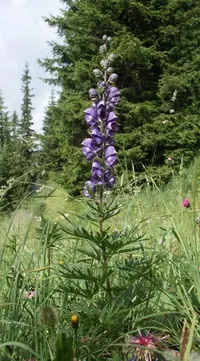
Wolfsbane, Aconitum napellus, is a perennial flowering plant grown mainly for its tall spikes of hooded blue to violet blooms. It has deeply divided, dark green leaves and a clumping, upright habit that suits cottage-style borders and cool, moist gardens. Native to mountain regions of Europe, it prefers cool summers, consistent moisture, and humus-rich, well-drained soil. The plant is long-lived but slow to establish, so it is not ideal for impatient gardeners or very hot climates. Once settled, it needs little division or disturbance. Gardeners who care for wolfsbane must handle it cautiously, as all parts are highly toxic.

Main Plant Requirements

Care Difficulty

Moderate Care

Light Preference

Partial Shade

Water Requirements

Keep Soil Moist

Temperature Preference

Cold Hardy

Hardiness Zone

3–7

Soil Texture

Loamy, Silty, Organic-rich

Soil pH

Acidic (5.5–6.5), Slightly acidic (6.5–7.0)

Soil Drainage

Moist but well-drained

Fertilization

Minimal (feed rarely)

Get Personalized Care Plan

Scan your plant to receive care tips personalized for your specific plant

Available on iOS and Android

How to Care for the wolfsbane

This shade-tolerant perennial prefers cool, moderate light rather than intense direct sun.

  • Provide 3–5 hours of morning sun with light or dappled shade from late morning onward, especially in warmer regions.
  • Plant wolfsbane where it receives bright partial shade; dense shade reduces flowering, while full afternoon sun can scorch leaves and dry soil too fast.
  • In hot summers, increase shade or use taller plants for filtered light, while in cooler climates it can tolerate more open exposure without leaf burn.

This plant prefers consistently moist, cool soil without becoming waterlogged.

  • Water when the top 2–3 cm of soil feels slightly dry, aiming for evenly damp soil around the root zone during active growth.
  • In spring and early summer, check moisture every few days in the ground; in rainy periods, rely on natural rainfall if the soil drains freely.
  • Reduce watering once flowering ends and foliage declines; yellowing, limp leaves with soggy soil suggest overwatering, while crisp, browning edges signal underwatering.

This hardy perennial is adapted to cool, temperate climates and tolerates winter cold well.

  • Optimal growth occurs around 55–70°F (13–21°C), with cooler nights helping maintain sturdy stems and long-lasting flowers.
  • Established plants usually tolerate down to about 0–5°F (-18 to -15°C) in the ground, provided soil drains well and crowns are not waterlogged in winter.
  • Heat above 80–85°F (27–29°C) can stress plants; provide extra shade and mulch during hot spells, as prolonged extreme heat may reduce flowering and vigor.

Aconitum napellus handles typical outdoor humidity levels and rarely needs special humidity management.

This perennial prefers deep, evenly moist, well-drained, humus-rich soil that stays cool around the roots.

  • Use a loamy soil with plenty of organic matter, such as garden compost or leaf mould, to support tall growth and moisture retention.
  • Aim for slightly acidic to neutral pH, about 6.0–7.0, avoiding strongly alkaline or chalky sites that can limit nutrient uptake.
  • Ensure excess water drains freely; avoid compacted or heavy clay by working in coarse sand or fine gravel to improve structure and aeration.
  • Do not plant in low-lying or waterlogged spots, since persistent saturation increases the risk of root and crown rot.

This species can be grown in containers, but the pot must support its tall, toxic, and potentially top-heavy growth safely.

  • Choose a tall, heavy container that anchors the plant so wind or accidental contact does not tip it over near walkways or play areas.
  • Select a deep pot to accommodate the long taproot and maintain a cool root zone, shading the container sides if exposed to strong sun.
  • Use a free-draining mix and elevate the pot slightly so drainage holes stay clear and excess water escapes quickly after rain or watering.

Aconitum napellus benefits from modest, well-timed feeding but does not need heavy fertilization.

  • Use a balanced, slow-release fertilizer (around 10-10-10) or light compost worked into the soil in early spring.
  • Feed outdoor clumps once per growing season; container-grown wolfsbane can receive a second light application in midsummer.
  • Dilute liquid feeds to 1/2 strength to avoid burning sensitive roots and encourage steady growth.
  • Stop feeding in late summer so plants can harden off and enter dormancy cleanly over fall and winter.

Aconitum napellus needs only light, targeted pruning to stay tidy and flowering well.

  • Cut back spent flower spikes in late summer to encourage a neater shape and sometimes a light rebloom.
  • Remove dead, damaged, or diseased stems at the base using clean, sharp hand pruners.
  • Thin a few crowded stems in early spring to improve air flow and reduce foliar disease risk.
  • Always wear gloves and avoid skin contact with sap, as all plant parts are highly toxic.

This perennial is usually grown in-ground; transplant Aconitum napellus only when necessary to avoid disturbing its roots.

  • Plan moves for early spring or early fall when temperatures are mild and top growth is limited.
  • Look for signs such as congested clumps, reduced flowering, or slow growth despite good care.
  • Lift the clump with a wide root ball, keeping soil around the roots to reduce transplant shock.
  • Replant at the same depth in moist, well-drained soil, then water thoroughly and shade lightly for 3–7 days.

Aconitum napellus is usually propagated on a small scale because of its toxicity and slow establishment.

  • Divide mature clumps in early spring, separating a few healthy buds and roots while keeping divisions large.
  • Sow fresh seeds outdoors in fall to allow natural cold stratification, which improves germination.
  • Provide cool, evenly moist soil and partial shade for both divisions and seedlings while they establish.
  • Label areas clearly and handle roots and crowns with gloves, avoiding damage to the brittle tuberous roots.

Established Aconitum napellus is cold hardy in most temperate climates and needs only minimal winter care.

  • After frost blackens foliage, cut stems down to just above ground level and dispose of debris.
  • Apply a 5–8 cm layer of mulch over the root zone in late fall to moderate freeze–thaw cycles.
  • Container-grown plants in colder zones can be moved into an unheated garage or shed to protect the roots.

Care Tips

Secure Sturdy Support

Install a discrete wire frame or 90–120 cm stakes early in the season and loosely tie stems with soft garden ties so heavy flower spikes stay upright and do not snap in wind or rain.

Deadhead With Caution

After the first flowering flush, cut spent flower spikes back to a strong leaf joint wearing gloves and long sleeves, which encourages a tidier plant and may promote a modest second bloom while limiting unwanted self-seeding.

Safe Handling Routine

Always handle this plant with nitrile or latex gloves, avoid touching your face, and wash tools and hands thoroughly after work, since all parts are highly toxic and sap can irritate skin.

Planned Division Timing

Divide mature clumps only every 4–6 years in very early spring or early fall, replanting divisions quickly at the same depth to reduce transplant shock and maintain vigorous, flowering plants.

Slug And Snail Management

Protect young shoots with physical barriers like copper tape collars or rough grit around the base and use targeted slug traps outside the main bed, since early damage to emerging stems can severely reduce flowering when growing wolfsbane.

Common Pests and Diseases

Powdery mildew

This disease produces a white, powdery coating on leaves and stems, often in late summer and in crowded plantings. Symptoms include distorted growth and premature yellowing or browning of foliage.

Solution

Remove and discard heavily infected leaves to reduce spore levels, and thin or stake plants to improve air circulation around stems. Avoid overhead watering, water at soil level in the morning, and if needed apply a sulfur or potassium bicarbonate fungicide labeled for ornamentals according to label directions.

Downy mildew

This disease causes yellow or pale blotches on the upper leaf surface and a grayish or purplish felt-like growth on the undersides, especially in cool, damp conditions. Affected leaves often curl, wilt, and drop early.

Solution

Promptly remove and discard infected leaves and any plant debris on the soil surface. Increase spacing and airflow, water at the base in the morning, and in persistent cases use a copper-based or phosphonate fungicide suitable for ornamental perennials, rotating products to reduce resistance risk.

Crown and stem blight

This disease leads to dark, sunken lesions at the base of stems, wilting of upper growth, and eventual collapse of shoots, often following prolonged wet weather or poor drainage. Symptoms include soft, rotting tissue near the soil line and rapid dieback of affected stems.

Solution

Cut out and dispose of all affected stems down to healthy tissue, disinfecting pruners between cuts, and improve soil drainage by loosening compacted soil or raising the planting area. Avoid waterlogging and excessive nitrogen fertilizer, and where problems recur, consider rotating the planting site or replacing with a less susceptible species.

Aphids

These insects cluster on tender shoots and flower stems, sucking sap and causing curling, distortion, and sticky honeydew on leaves. Symptoms include slow growth and the appearance of sooty mold on the honeydew deposits.

Solution

Dislodge colonies with a firm spray of water, focusing on shoot tips and the undersides of leaves, and remove heavily infested stems if practical. Encourage natural predators like lady beetles, and if populations remain high, use insecticidal soap or a light horticultural oil applied thoroughly to all infested surfaces.

Leaf miners

This pest creates pale, winding tunnels within the leaves as larvae feed between the leaf surfaces. Symptoms include serpentine trails and localized browning where tissue has been destroyed.

Solution

Remove and discard leaves showing fresh mines to physically reduce larvae before they mature, and keep plants well watered so new foliage can replace damaged leaves. In severe or repeated infestations, consider applying a systemic insecticide labeled for leaf miners on ornamental perennials, following all label safety directions for Aconitum napellus plant care.

Interesting Facts

Neurotoxin-rich alkaloids

Aconitum napellus contains highly active diterpenoid alkaloids such as aconitine, which interfere with voltage-gated sodium channels in nerves and heart muscle, leading to rapid onset of neurological and cardiac symptoms if ingested or absorbed through damaged skin.

Specialized bumblebee pollination

The hooded flowers are structurally adapted for large bees, especially bumblebees, which are strong enough to force their way into the helmet-shaped blossom to reach nectar while efficiently transferring pollen.

Cool-climate mountain native

This species is naturally distributed in cool, moist habitats of Central and Western European mountain regions, often growing in montane meadows and along stream margins where summers remain relatively mild.

Botan icon

Did you know?

In several parts of Europe, Aconitum napellus was historically planted in monastery and physic gardens not primarily for therapy but as a controlled study plant for poisons, making it one of the classic reference species in early toxicology.

FAQs about wolfsbane

All parts of this plant are highly toxic to humans and animals if eaten and can irritate skin. Always handle with gloves, avoid ingestion, and keep it out of reach of children, dogs, cats, and livestock.

Grow Healthy Plants with Botan Care

Keep your plants happy and healthy with plant identification, disease detection, and easy care guidance.

Botan plant care app — identify plants on mobile

Explore More Plants