Early trellis training
Install a low trellis, netting, or string support at sowing time and gently wind young vines around it every few days so stems harden in the direction you want rather than tangling on nearby plants.

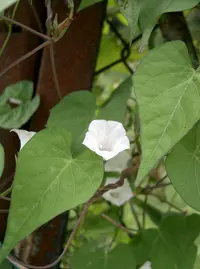
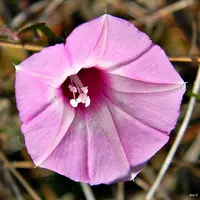
Whitestar, Ipomoea lacunosa, is a small, twining annual vine in the morning glory family. It produces delicate white, funnel-shaped flowers that open mainly in the morning.
In the wild it is common across much of the eastern and central United States, often appearing in fields, roadsides, and other disturbed soils. The plant grows quickly, using nearby supports to climb and form a light screen of foliage.
It is generally easy to grow from seed, as long as it receives enough sun, warmth, and well-drained soil. Gardeners who want to learn how to care for whitestar usually focus on providing consistent moisture without long periods of waterlogging.

Care Difficulty
Easy Care

Light Preference
Full Sun

Water Requirements
Moderate Water

Temperature Preference
Tropical / Frost Sensitive

Hardiness Zone
6–10

Soil Texture
Sandy, Loamy, Organic-rich

Soil pH
Acidic (5.5–6.5), Slightly acidic (6.5–7.0)

Soil Drainage
Well-drained

Fertilization
Minimal (feed rarely)
Scan your plant to receive care tips personalized for your specific plant
Available on iOS and Android
Ipomoea lacunosa performs best in bright, direct sun with some protection from the harshest afternoon rays.
Ipomoea lacunosa prefers evenly moist but not saturated soil, adjusting moisture to heat and rainfall.
This warm-season annual thrives in stable, frost-free conditions with moderate to warm temperatures.
This species handles a wide humidity range and rarely needs special humidity management.
This species prefers light, well-drained soil that does not stay waterlogged after rain or watering.
This twining annual is suitable for containers when given enough root depth and firm support.
This twining annual morning glory benefits from light feeding but grows acceptably in average soil.
Light pruning helps manage Ipomoea lacunosa growth and supports flowering.
This species is usually grown as a seasonal vine, so transplanting young plants matters more than long-term repotting.
Ipomoea lacunosa is most commonly propagated from seed, which suits its annual life cycle.
This annual vine is not frost tolerant and usually dies back completely after hard freezes.

Plant Health Check
Not sure what's wrong with your plant? Check your plant's health inside the app.
The small white flowers are capable of autonomous self-pollination, so a single plant can set viable seed even when pollinators are scarce or absent.
It serves as a primary host plant for the larvae of the sweetpotato leaf miner moth, Bedellia somnulentella, which feed within the leaf tissues.
Although not a nitrogen fixer itself, it often grows in disturbed, nutrient-poor soils where it can benefit from and help support soil microbial communities associated with nitrogen cycling.

In parts of its native range, dense natural populations can reach thousands of individuals per hectare, forming extensive seasonal ground covers that significantly influence light availability for low-growing neighboring plants.
Flowering declines when plants receive too little direct sun, experience nutrient-poor or excessively rich soil, or face drought stress. Remove competing weeds, maintain moderate, consistent moisture, and avoid high-nitrogen fertilizer so more energy goes into buds rather than foliage.
Keep your plants happy and healthy with plant identification, disease detection, and easy care guidance.