crossvine Care (Bignonia capreolata)

crossvine

About crossvine

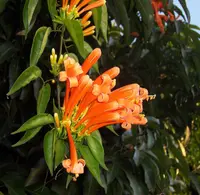
Crossvine, Bignonia capreolata, is a woody, evergreen to semi-evergreen climbing vine known for its trumpet-shaped, yellow to reddish-orange flowers. It uses tendrils with adhesive disks to cling to supports, forming dense vertical coverage on fences, trellises, or walls.

This species is native to the southeastern United States, where it grows in woodlands and along forest edges. It is valued in gardens for its showy spring bloom and ability to attract hummingbirds.

Crossvine is generally considered tough and adaptable, tolerating a range of soils and brief dry periods once established. It prefers full sun to light shade and moderately moist, well-drained soil, which makes it relatively straightforward to care for crossvine in many regions.

Main Plant Requirements

Care Difficulty

Easy Care

Light Preference

Full Sun

Water Requirements

Moderate Water

Temperature Preference

Cold Hardy

Hardiness Zone

6–9

Soil Texture

Sandy, Loamy, Clay

Soil pH

Acidic (5.5–6.5), Slightly acidic (6.5–7.0)

Soil Drainage

Moist but well-drained

Fertilization

Minimal (feed rarely)

Get Personalized Care Plan

Scan your plant to receive care tips personalized for your specific plant

Available on iOS and Android

How to Care for the crossvine

This vigorous vine thrives in full sun but also performs well in light shade in most US climates.

  • Provide 6–8 hours of direct sun daily for best flowering; morning sun with light afternoon shade reduces leaf scorch in hotter regions.
  • Tolerates partial shade (around 3–4 hours sun), but flowering on crossvine decreases and growth becomes more open and sparse in deeper shade.
  • In summer, avoid highly reflective west-facing walls that intensify heat; in winter, unobstructed sun helps ripen wood and supports better bloom the following spring.

This species prefers steadily moist, well-drained soil rather than extremes of drought or saturation.

  • Allow the top 3–5 cm of soil to dry before deep watering; aim for slow soaking that moistens the root zone rather than frequent light splashes.
  • During the first 1–2 growing seasons, monitor closely in hot, dry spells; leaves that curl or lose gloss signal thirst, while yellowing leaves and soft stems suggest excess moisture.
  • Bignonia capreolata tolerates short dry periods once established, but it declines in heavy clay or poorly drained sites where water stands after rain.

This vine is adapted to warm temperate climates with cool winters and hot summers.

  • Best growth occurs around 65–85°F (18–29°C), with active shoot extension and flowering in late spring and early summer.
  • Mature plants usually tolerate brief drops to about 0°F (−18°C) when well rooted, but young vines benefit from protection from hard freezes and drying winter winds.
  • Handles summer heat up to about 95°F (35°C) if soil moisture is adequate, but prolonged extremes above this combined with drought can cause leaf scorch and reduced flowering the next season.

This vine handles a broad humidity range and rarely needs special humidity management outdoors.

  • Performs well at 30–60% humidity, typical of many temperate outdoor locations.
  • Tolerates periods of dry air without stress if soil moisture is consistent.
  • Humidity stress shows mainly as marginal leaf browning and faster leaf drop during hot, windy spells.
  • In very dry, exposed sites, reduce stress by adding windbreaks and a light organic mulch to limit transpiration.

Soil for Bignonia capreolata should be loose, well-draining, and moderately rich in organic matter.

  • Use a loamy or sandy loam base amended with compost to support vigorous root and shoot growth.
  • Ensure sharp drainage; on heavy clay sites, plant on a mound or raised bed and mix in coarse sand or fine bark.
  • Aim for slightly acidic to neutral pH around 6.0–7.0, which supports nutrient availability for this species.
  • Avoid compacted, waterlogged, or salty soils, and improve aeration by incorporating chunky organic material that prevents fine particles from packing.

This species can be grown successfully in containers when given stable support and careful watering.

  • Choose a deep, heavy pot to counterbalance vigorous climbing growth and reduce tipping in wind.
  • Use a coarse, bark-based mix that drains quickly yet retains enough moisture for steady growth.
  • Position the container where a trellis, fence, or wire system can be anchored directly to the pot or immediately behind it for secure climbing support.

This native vine typically needs modest feeding, especially in poor soils or containers, when caring for crossvine.

  • Apply a balanced slow-release fertilizer (around 10-10-10) once in early spring as new growth starts.
  • In richer garden soils, use a light layer of compost instead of synthetic fertilizer to avoid excessive vine growth.
  • For container plants, use a diluted balanced liquid feed at 1/2 strength every 4–6 weeks in the growing season.
  • Stop fertilizing in late summer; do not feed in fall or winter to allow the plant to harden off.

Pruning helps manage size and flowering performance of Bignonia capreolata on trellises, fences, or walls.

  • Time main pruning for late winter to very early spring before vigorous new growth begins.
  • Remove dead, diseased, storm-damaged, or rubbing stems first, cutting back to healthy wood with clean bypass pruners.
  • Thin congested vines to improve light and air flow, which supports better flowering and reduces fungal issues.
  • Shorten overly long shoots to shape the vine and keep it within the support structure or away from gutters and roofs.

This vigorous climber is usually grown in the ground, so focus on thoughtful transplanting rather than frequent repotting.

  • Transplant in early spring or early fall, when temperatures are mild and soil is workable.
  • Move plants when growth is slow, roots circle the container, or the vine outgrows its support structure.
  • Dig a wide hole, disturb circling roots gently, and set the root ball at the same depth as before to limit shock.
  • Water thoroughly after planting, apply 5–8 cm of mulch, and keep soil evenly moist for several weeks while roots establish.

Bignonia capreolata is commonly propagated by semi-ripe cuttings, seeds, or simple layering for home gardens.

  • Take 10–15 cm semi-ripe stem cuttings in late spring to summer, removing lower leaves.
  • Insert cuttings into a moist, well-draining mix, use optional rooting hormone, and maintain high humidity and bright shade.
  • For layering, pin a flexible stem to the soil, cover a section with soil, and sever once well rooted.
  • Sow seeds in spring in a free-draining mix, keep lightly moist, and provide warmth and bright indirect light for germination.

This vine is generally cold hardy in much of its range and needs only modest winter care once established.

  • In colder zones near its hardiness limit, apply 5–8 cm of mulch around the root zone in late fall.
  • Avoid heavy pruning after late summer so stems can mature and better withstand freezing conditions.
  • For container plants, move pots into an unheated garage or sheltered area where temperatures stay above severe freezes.

Care Tips

Early support training

Install a sturdy trellis, fence, or wires before planting and loosely tie new vines with soft ties every 20–30 cm to guide growth and prevent stems from kinking or tearing in wind.

Root zone protection

Mulch a 5–8 cm layer around the root zone (not touching the stems) to keep roots cool, reduce transplant stress, and stabilize soil moisture during hot summers.

Selective shoot management

Each spring, choose a few strong main stems to keep and remove weak, crossing, or awkward side shoots at the base to maintain an open framework that flowers more evenly along the vine.

Encouraging wall coverage

For coverage of walls or fences, fan out young stems horizontally and secure them at intervals so side shoots fill vertical gaps, giving a denser, more uniform screen over time.

Winter readiness check

In late fall, check and reinforce supports, remove any damaged or rubbing ties, and lightly thin tangled sections so ice, snow, and wind are less likely to snap or strip mature vines when caring for crossvine.

Common Pests and Diseases

Aphids

These insects cluster on new shoots and flower buds, sucking sap and causing curled, distorted growth and sticky honeydew on leaves and stems.

Solution

Prune off heavily infested tips, then wash vines with a strong but controlled stream of water to remove colonies. If needed, apply insecticidal soap or a neem oil spray, repeating every 7–10 days until populations are controlled, and encourage natural predators like lady beetles by avoiding broad-spectrum insecticides.

Spider mites

These pests thrive in hot, dry conditions, causing fine stippling, a dull grayish cast on leaves, and very fine webbing on the undersides of foliage.

Solution

Increase humidity around the vine and hose down foliage, focusing on the undersides of leaves to dislodge mites. For heavier infestations, use insecticidal soap or horticultural oil, applied in the early morning or evening, and repeat treatments while monitoring for return in warm, dry weather as part of ongoing Bignonia capreolata care.

Leaf spot

This disease causes small to medium brown or tan spots on leaves that may coalesce, leading to premature yellowing and leaf drop, especially in warm, humid conditions.

Solution

Remove and dispose of affected leaves from the plant and ground to reduce inoculum, and water at the base rather than overhead to keep foliage dry. Improve air circulation by thinning dense growth, and in severe recurring cases consider a labeled copper or chlorothalonil fungicide, applied according to product directions.

Powdery mildew

This disease appears as white, powdery patches on leaves and young stems, which can lead to distorted growth and reduced flowering if severe.

Solution

Improve air movement by spacing and pruning vines, and avoid overhead irrigation that keeps foliage damp for long periods. At first signs, remove the worst-affected leaves and use a horticultural oil or potassium bicarbonate product labeled for powdery mildew, making repeat applications as directed until new growth remains clean.

Scale insects

These insects appear as small, immobile bumps on stems and leaf veins, feeding on sap and often producing honeydew that can lead to sooty mold growth.

Solution

Gently scrape off individual scales or prune heavily infested stems, then wipe remaining colonies with a cloth dipped in diluted insecticidal soap or horticultural oil. For larger outdoor vines, apply a horticultural oil spray during the growing season, ensuring thorough coverage of stems and leaf undersides, and monitor new growth regularly for reinfestation.

Interesting Facts

Spring nectar specialist

This vine flowers very early in spring, often before many other nectar sources are available, and its trumpet-shaped blooms are an important resource for newly arrived hummingbirds and early-emerging bees in its native range.

Tendril disks for climbing

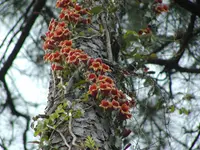
Instead of twining stems, the plant climbs using forked tendrils that form small adhesive disks, allowing it to anchor onto rough surfaces like bark and masonry without needing support wires.

Tolerance of mild flooding

In the wild, this species commonly grows along stream banks and swamp margins and can tolerate short periods of soil saturation better than many other ornamental vines, provided water eventually drains.

Botan icon

Did you know?

This vine is semi-evergreen to evergreen in the warmest parts of its range, and its leaves can develop a purple-bronze tint in cold weather, so a single plant may show both green and tinted foliage depending on winter temperatures and sun exposure.

FAQs about crossvine

This vine can spread widely through long stems and root suckers, especially in favorable conditions. It is not usually invasive in managed gardens, but regular pruning and removing unwanted shoots help keep growth within boundaries.

Grow Healthy Plants with Botan Care

Keep your plants happy and healthy with plant identification, disease detection, and easy care guidance.

Botan plant care app — identify plants on mobile

Explore More Plants