


Early vine training
Install a sturdy vertical support before planting and loosely tie young shoots with soft ties so the twining stems learn the intended direction and do not tangle or damage neighboring plants.

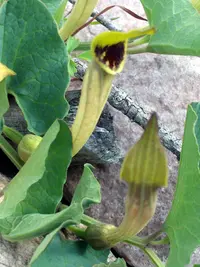
Aristolochia paucinervis is a perennial climbing herb known for its unusual pipe-shaped flowers and heart-shaped leaves. It belongs to a group often called birthworts. Native to Mediterranean regions, it typically grows in rocky grasslands and open scrub, twining through surrounding vegetation for support. The flowers are often mottled and dark, adapted to attract specific pollinating insects. This species can be moderately challenging in cultivation because it needs well-drained, lime-rich soil and steady but not excessive moisture. Gardeners who learn how to care for Aristolochia paucinervis often focus on providing bright light, protection from extreme cold, and a support structure for its climbing stems.

Care Difficulty
Moderate Care

Light Preference
Partial Shade

Water Requirements
Moderate Water

Temperature Preference
Warm Climate

Hardiness Zone
8–10

Soil Texture
Sandy, Loamy, Organic-rich

Soil pH
Slightly acidic (6.5–7.0), Neutral (7.0)

Soil Drainage
Moist but well-drained

Fertilization
Minimal (feed rarely)
Scan your plant to receive care tips personalized for your specific plant
Available on iOS and Android
This species prefers bright, indirect light with limited direct sun exposure.
This climber prefers evenly moist but never waterlogged soil.
This plant grows best in mild, frost-free conditions.
This vine benefits from moderate humidity and tolerates typical indoor levels if extremes are avoided.
Aristolochia paucinervis prefers a loose, well-aerated mix that drains quickly yet holds some moisture.
This species adapts well to container growing when given stable support and controlled moisture.
This Mediterranean vine is adapted to lean soils, so feeding Aristolochia paucinervis should stay light and targeted.
Pruning Aristolochia paucinervis helps keep the vine controlled and flowering on accessible growth.
This species is usually grown in the ground, so attention focuses more on careful transplanting than on frequent repotting.
Propagation of Aristolochia paucinervis is possible but slower than with many common garden vines.
This hardy perennial usually requires modest winter care in regions with mild to moderately cold winters.

Plant Health Check
Not sure what's wrong with your plant? Check your plant's health inside the app.
The flowers release a carrion-like scent and use downward-pointing hairs to temporarily trap small flies that enter, releasing them only after they have picked up or deposited pollen.
This species produces mottled, pipe-shaped flowers that are often flush with the ground or hidden in low vegetation, positioning them right where its main pollinating flies are most active.
In the wild, it is largely restricted to Mediterranean regions of southwestern Europe and North Africa, where it grows in dry, open habitats on limestone or other calcareous soils.

The plant is a specialist food source for caterpillars of certain swallowtail butterflies in parts of its range, which can tolerate its toxic aristolochic acids and use these compounds for their own chemical defense against predators.
Yes. All parts contain toxic aristolochic acids, which can damage kidneys and are potentially carcinogenic if ingested. Keep this species away from children and pets and avoid using it in herbal preparations or teas.
Keep your plants happy and healthy with plant identification, disease detection, and easy care guidance.


Wintercreeper
Euonymus fortunei var. radicans 'Emerald 'n Gold'

Aristolochia constricta
Aristolochia constricta
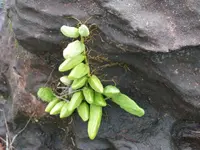
Malayan Urn Vine
Dischidia major
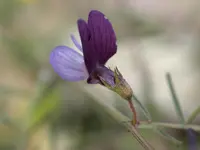
angled pea
Lathyrus angulatus
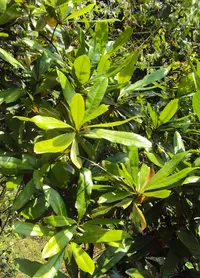
Kardal
Ancistrocladus heyneanus
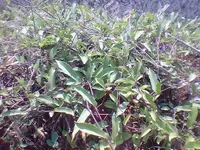
Aristolochia indica
Aristolochia indica
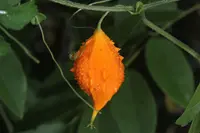
balsampear
Momordica charantia
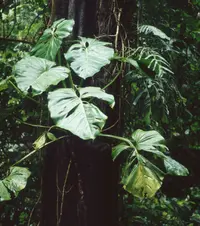
Philodendron pterotum
Philodendron pterotum