Provide sturdy trellis
Install a strong, weather-resistant trellis or wire mesh before planting so the vine can be gently tied and guided as it grows, preventing stem breakage and tangled growth later.

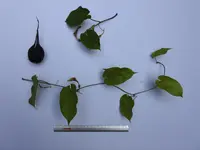
Aristolochia constricta is a twining perennial vine known for its unusual, tubular flowers and heart-shaped leaves. It belongs to the birthwort family, which includes many climbing ornamentals. Native to tropical regions of Central and South America, it typically grows in warm, humid habitats along forest edges or thickets. In cultivation, it is often trained on trellises, fences, or other supports. The plant prefers bright, indirect light, evenly moist but well-drained soil, and protection from cold. Its vining habit and specific climate needs mean it is easier in frost-free gardens or greenhouse settings. Understanding how to care for Aristolochia constricta helps maintain healthy foliage and consistent flowering.

Care Difficulty
Moderate Care

Light Preference
Partial Shade

Water Requirements
Moderate Water

Temperature Preference
Warm Climate

Hardiness Zone
Unknown

Soil Texture
Loamy, Sandy, Organic-rich

Soil pH
Acidic (5.5–6.5), Slightly acidic (6.5–7.0)

Soil Drainage
Moist but well-drained

Fertilization
Minimal (feed rarely)
Scan your plant to receive care tips personalized for your specific plant
Available on iOS and Android
This twining vine prefers bright, indirect light with some protection from harsh midday sun.
This species prefers consistently moist but never waterlogged soil.
This vine grows best in warm, frost-free conditions with only moderate temperature swings.
This species prefers moderately humid air and reacts quickly to very dry conditions.
This vine performs best in loose, aerated, organic-rich soil that drains rapidly yet holds some moisture.
This species adapts well to container culture when the pot supports its vining habit and root needs.
Feeding supports steady growth and flowering in Aristolochia constricta when grown in containers or poor soil.
Thoughtful pruning helps maintain size, structure, and flowering wood on Aristolochia constricta vines.
Container-grown Aristolochia constricta may need periodic repotting, while garden plants benefit from careful transplanting when established.
Propagation of Aristolochia constricta is usually done by seeds or semi-ripe stem cuttings under warm, stable conditions.
Cold sensitivity means Aristolochia constricta usually needs protection outside frost-free climates.

Plant Health Check
Not sure what's wrong with your plant? Check your plant's health inside the app.
This species is native to a very limited area in northeastern Queensland, Australia, where it occurs in dry vine thickets and open forest margins rather than in widespread rainforest habitats.
Its tubular, constricted flowers create a temporary trap for small pollinating insects, a classic pitfall mechanism seen in Aristolochia species but expressed here in a distinctly narrow, elongated form.
In its natural range, this vine serves as a larval food plant for certain Australian swallowtail butterflies, whose caterpillars are able to feed on its chemically defended foliage.
This species is a twining climber. Stems wrap around nearby supports rather than self-clinging with tendrils or aerial roots. It can also scramble over shrubs or along the ground if no vertical support is available.
Keep your plants happy and healthy with plant identification, disease detection, and easy care guidance.