Wintercreeper Care (Euonymus fortunei var. radicans 'Emerald 'n Gold')

Also known as: Wintercreeper Euonymus
Wintercreeper

About Wintercreeper

Wintercreeper, Euonymus fortunei var. radicans 'Emerald 'n Gold', is an evergreen shrub or vine often used as groundcover, low hedge, or wall climber. It is valued for its dense habit and strong landscape structure.

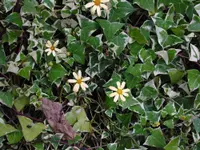
The foliage is small, leathery, and green with bright golden-yellow margins that may develop pink tones in colder weather. This cultivar originates from East Asian species but is widely planted in temperate gardens.

It is generally considered easy to grow, adapting to many soils and tolerating pruning and urban conditions. Basic knowledge of how to care for Wintercreeper helps manage its vigorous growth and prevent it from spreading where it is not wanted.

Main Plant Requirements

Care Difficulty

Easy Care

Light Preference

Partial Sun

Water Requirements

Moderate Water

Temperature Preference

Cold Hardy

Hardiness Zone

5–9

Soil Texture

Sandy, Loamy, Clay

Soil pH

Slightly acidic (6.5–7.0), Slightly alkaline (7.0–7.5)

Soil Drainage

Moist but well-drained

Fertilization

Minimal (feed rarely)

Get Personalized Care Plan

Scan your plant to receive care tips personalized for your specific plant

Available on iOS and Android

How to Care for the Wintercreeper

This variegated shrub prefers bright light to maintain strong color and compact growth.

  • Provide 4–6 hours of direct sun daily, ideally with morning sun and light afternoon shade to prevent leaf scorch in hot summers.
  • Tolerates partial shade (2–4 hours sun), but Wintercreeper foliage may green out and growth become more open with too little light.
  • In hotter regions, protect from harsh west-facing sun; in cooler climates, more direct sun improves winter leaf color and vigor.

This plant prefers moderately moist, well-drained soil and becomes more drought-tolerant as it matures.

  • Water when the top 3–5 cm of soil feels dry, allowing excess to drain; avoid letting the root zone stay saturated for more than 1–2 days.
  • Reduce frequency in cool, wet seasons and increase slightly during hot, dry spells, especially in the first 1–2 years after planting.
  • Watch for yellowing, soft leaves as a sign of overwatering, and crisp, browning leaf edges or drooping stems as signs of underwatering.

This evergreen shrub handles a wide temperature range but grows best in moderate conditions.

  • Active growth is strongest around 60–75°F (16–24°C), with steady growth in typical spring and fall temperatures.
  • Hardy to about -10°F (-23°C) once established, though foliage may bronze or burn slightly in very cold, drying winter winds.
  • Tolerates summer heat up to about 90–95°F (32–35°C) if soil moisture is maintained and roots are mulched to limit heat stress.

This evergreen shrub tolerates a wide humidity range and usually does not need special humidity management.

  • Target 30–60% humidity, typical of most heated and air-conditioned homes and outdoor conditions.
  • Dry indoor air rarely harms Wintercreeper, but prolonged heat plus very low humidity can crisp leaf edges.
  • If air is extremely dry, group plants or place a shallow water tray nearby to slightly raise local humidity.

This shrub prefers evenly moist, well-drained, moderately fertile soil that does not stay waterlogged.

  • Use a loose, loamy mix with 40–60% compost or garden soil, 20–30% coarse sand, and 20–30% perlite or fine bark to balance moisture and drainage.
  • Aim for slightly acidic to neutral pH around 6.0–7.2, which supports nutrient availability and healthy root growth for Euonymus fortunei var. radicans 'Emerald 'n Gold'.
  • Improve aeration by incorporating coarse sand or fine bark chips rather than peat alone, which can compact and reduce airflow over time.
  • Avoid heavy clay that puddles after watering, constantly saturated containers, or dense mixes rich in fine peat that lead to root rot.

This species is well suited to container growing outdoors on patios, balconies, or along paths.

  • Choose a wide, heavy container to counterbalance its spreading, sometimes top-heavy growth and reduce tipping in wind.
  • Select thick-walled terracotta or stone if extra moisture loss is desired in wet climates, or plastic/fiberglass in hot, dry areas to slow drying.
  • Elevate the pot on feet or bricks so drainage holes stay clear and runoff exits quickly instead of pooling under the container.

This shrub responds well to moderate feeding, but mature Wintercreeper usually needs only light supplementation in average garden soil.

  • Apply a balanced granular or slow-release fertilizer (around 10-10-10) once in early spring, following label rates.
  • In containers, use a half-strength balanced liquid feed every 4–6 weeks during the growing season.
  • Avoid high-nitrogen lawn fertilizers near the root zone to limit excessively soft, pest-prone growth.
  • Stop feeding in late summer to allow stems to harden before winter and avoid pushing tender late growth.

Pruning supports dense growth and maintains a tidy outline for Euonymus fortunei var. radicans 'Emerald 'n Gold'.

  • Carry out main pruning in late winter or very early spring before new growth starts.
  • Remove dead, diseased, or storm-damaged stems first, cutting back to healthy wood with clean, sharp bypass pruners.
  • Thin congested or crossing shoots to improve light penetration and air flow through the plant.
  • Lightly trim the outer growth to shape hedges or groundcover edges, avoiding heavy cuts into old, bare wood.

This plant is most often grown in the ground, so guidance focuses on transplanting and occasional container up-potting.

  • Transplant or repot in early spring or early fall when temperatures are mild and soil is workable.
  • Look for roots circling the pot, slow growth, or quick drying soil as signs a container plant needs a larger pot.
  • Move to a container 1–2 in wider, loosening circling roots gently and setting the crown at the same soil level.
  • Water thoroughly after planting, then keep soil evenly moist for several weeks to limit transplant shock and support new root growth.

New plants are most commonly produced vegetatively, using cuttings or simple layering methods.

  • Take 7–10 cm semi-ripe stem cuttings in late spring to late summer from healthy, non-flowering shoots.
  • Remove lower leaves, dip the cut end in rooting hormone, and insert into a free-draining mix under high humidity and bright, indirect light.
  • Use simple layering by pegging a low, flexible stem to the soil, lightly wounding the underside where it touches the ground.
  • Keep the layered section moist; once well rooted, cut it from the parent and transplant gently to its new position.

This cultivar is generally cold hardy in much of the US and usually needs only minimal winter attention.

  • In ground, it tolerates typical winter frost once established, especially in well-drained soil.
  • Apply a 5–8 cm layer of organic mulch around the root zone in late fall, keeping it clear of the stems.
  • For containers in colder regions, move pots to a sheltered, unheated but frost-sheltered spot to reduce root freezing risk.

Care Tips

Discourage Wall Climbing

Install a 5–10 cm gravel or paver strip between the plant and walls or fences to reduce aerial root attachment and make it easier to control spreading stems that try to climb vertical surfaces.


Color Maintenance Pruning

Once or twice a year, selectively remove long, solid-green shoots back to variegated growth points to maintain the yellow-and-green foliage pattern and prevent the plant from reverting to all green.

Snow Load Management

In snowy climates, gently brush heavy wet snow off the foliage with a broom to prevent stems from bending, splitting, or tearing away from supports.

Root Zone Containment

In small gardens or near paving, plant into a bed edged with metal, stone, or deep plastic edging at least 20–25 cm deep to keep shallow, spreading roots and shoots from creeping into lawns or adjacent beds.

Targeted Scale Monitoring

Every few weeks during the growing season, inspect the lower stems and underside of older leaves for scale insects, and if clusters are found, prune out localized infestations or treat limited areas rather than spraying the entire plant to reduce chemical use when caring for Wintercreeper.

Common Pests and Diseases

Euonymus scale

This pest appears as small white or brown shell-like bumps on stems and leaves and often causes yellowing, thinning foliage, and dieback. Heavy infestations are very common on this shrub and can seriously weaken the plant.

Solution

Prune out and discard heavily infested stems, then wash remaining foliage with a strong spray of water to dislodge crawlers. For ongoing control, apply a horticultural oil spray thoroughly to stems and leaf undersides in late spring when crawlers are active, and improve plant vigor with proper watering and fertilization as part of broader Euonymus fortunei var. radicans 'Emerald 'n Gold' care instructions.

Anthracnose

This disease causes irregular tan to brown leaf spots with dark margins, sometimes leading to partial defoliation in cool, wet weather. Symptoms include blighted shoot tips and a generally scorched appearance on affected foliage.

Solution

Remove and discard infected leaves and shoot tips, both on the plant and on the ground, to reduce inoculum. Improve air circulation, avoid overhead watering, and during prolonged wet periods consider using a labeled ornamental fungicide applied according to the product directions.

Crown gall

This disease produces rough, corky, tumor-like swellings at the crown or on lower stems, which can disrupt water flow and lead to poor growth or decline. Symptoms include stunted shoots and increased susceptibility to other stresses.

Solution

Cut out and destroy small, localized galls if possible, sterilizing pruning tools between cuts with alcohol or a 10% bleach solution. Severely affected plants are best removed with as much root system as possible, and replacement plantings should go into fresh, well-drained soil away from previously infected sites.

Powdery mildew

This disease shows up as a white, powdery coating on leaves and young stems, which can lead to distorted new growth and premature leaf drop in shaded, humid conditions. Symptoms include dull, grayish foliage that may yellow over time.

Solution

Thin dense growth to improve light and air movement, and avoid overhead watering that leaves foliage damp for long periods. If needed, treat with a labeled ornamental fungicide or a horticultural oil, making sure to coat both upper and lower leaf surfaces and repeating as directed on the label.

Aphids

These insects cluster on tender shoot tips and leaf undersides, sucking sap and causing curling or distorted growth, especially on new foliage. This pest also excretes sticky honeydew that can lead to sooty mold on leaves and nearby surfaces.

Solution

Spray shoots and leaf undersides with a strong stream of water to knock off colonies, repeating every few days as needed. For persistent infestations, use insecticidal soap or a light horticultural oil, applied thoroughly to all infested areas while protecting beneficial insects as much as possible.

Interesting Facts

Strong color retention

The yellow variegation on its leaves is relatively stable compared with many other variegated euonymus cultivars, so foliage usually keeps its gold margins rather than reverting to solid green when grown in typical garden light conditions.

Temperature‑driven color shift

In cooler seasons, especially autumn and winter, the yellow and green foliage often develops pink to red tones along the leaf edges, a stress response to low temperatures that gardeners value for added seasonal color.

Growth form flexibility

This cultivar can behave as both a low shrub and a climbing groundcover, using small adventitious roots to cling to rough surfaces when given support, yet remaining a compact mound when grown without structures to climb.

FAQs about Wintercreeper

This species spreads by rooting stems and can form dense mats, especially in mild, moist climates. In some regions it is listed as invasive, so monitor edges, remove unwanted runners, and avoid planting near natural woodlands.

Grow Healthy Plants with Botan Care

Keep your plants happy and healthy with plant identification, disease detection, and easy care guidance.

Botan plant care app — identify plants on mobile

Explore More Plants