Early support training
Install a sturdy moss pole or slab when the plant is still small and loosely tie each new node to it so aerial roots can attach early and create a more stable, upright specimen over time.

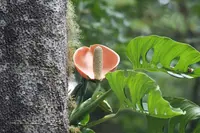
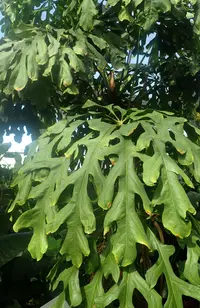
Monstera oreophila is a climbing aroid native to higher-elevation tropical forests in Central and South America. It grows as a vine that anchors itself with aerial roots. Mature plants develop perforated, deeply cut leaves, while young foliage stays smaller and more solid, so the plant’s look changes as it ages. In cultivation it is still rare and better suited to growers who already care for Monstera oreophila or similar species. It prefers stable warmth, moderate indirect light, and evenly moist but well-drained soil, and it reacts poorly to long dry periods or sudden environmental shifts.

Care Difficulty
Moderate Care

Light Preference
Bright Indirect Light

Water Requirements
Moderate Water

Temperature Preference
Tropical / Frost Sensitive

Hardiness Zone
11–12

Soil Texture
Loamy, Organic-rich

Soil pH
Acidic (5.5–6.5), Slightly acidic (6.5–7.0)

Soil Drainage
Moist but well-drained

Fertilization
Light (every 4–6 weeks)
Scan your plant to receive care tips personalized for your specific plant
Available on iOS and Android
This species prefers bright, filtered light that mimics a forest understory.
Watering should balance consistent moisture with strong drainage to protect roots.
Stable warm conditions support steady growth and prevent stress-related leaf damage.
This species benefits from moderately high, consistent humidity to keep foliage healthy.
Monstera oreophila prefers an airy, organic-rich mix that drains quickly yet holds some moisture.
This species adapts well to container cultivation when the pot supports its climbing, top-heavy growth.
Nutrient inputs support steady growth for Monstera oreophila grown in containers or poor soils.
Thoughtful pruning keeps Monstera oreophila manageable and encourages healthy structure.
Container-grown Monstera oreophila benefits from occasional repotting to prevent root congestion and maintain vigor.
Vegetative propagation of Monstera oreophila is commonly done from stem cuttings taken during the warm growing season.
This tropical species is frost sensitive and needs thoughtful winter care in temperate climates.

Plant Health Check
Not sure what's wrong with your plant? Check your plant's health inside the app.
This species is native to montane forests of Costa Rica and Panama, where it naturally grows at higher elevations than most other Monstera species, often in cooler, cloud-forest conditions.
Young plants typically produce small, entire leaves without fenestrations, and the adult leaf form in cultivation remains less well documented, which reflects how rarely the species is seen outside its natural range.
Field records show this species has a geographically restricted distribution in Central America, which makes wild populations more sensitive to habitat disturbance and land-use change.
This species is a climbing aroid that naturally scrambles up trees or supports using aerial roots. Indoors or in containers, it tends to climb rather than sprawl, so it benefits from a vertical structure rather than horizontal space.
Keep your plants happy and healthy with plant identification, disease detection, and easy care guidance.