


Provide sturdy support
Install a strong trellis, arbor, or wire mesh before planting so the vine can be tied in with soft garden ties as it grows, preventing stem breakage and keeping the heavy flowers displayed and accessible for inspection.

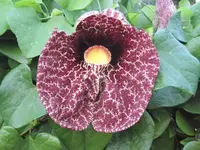
Elegant dutchman's pipe (Aristolochia littoralis) is a vigorous, twining vine grown mainly for its unusual, pipe-shaped flowers and dense foliage. The blooms often have striking maroon and cream patterns that attract attention in tropical and subtropical gardens.
This species naturally occurs in South America but is now cultivated in warm regions and greenhouses in many countries. It can grow quite fast and needs strong support, which makes it suitable for covering trellises, arches, or fences.
Aristolochia littoralis benefits from bright light, evenly moist but well-drained soil, and protection from cold. Gardeners who understand how to care for elegant dutchman's pipe usually find it moderately easy to maintain, provided it has enough warmth and space to climb.

Care Difficulty
Moderate Care

Light Preference
Partial Sun

Water Requirements
Regular Water

Temperature Preference
Tropical / Frost Sensitive

Hardiness Zone
10–12

Soil Texture
Loamy, Sandy, Organic-rich

Soil pH
Acidic (5.5–6.5), Slightly acidic (6.5–7.0)

Soil Drainage
Moist but well-drained

Fertilization
Light (every 4–6 weeks)
Scan your plant to receive care tips personalized for your specific plant
Available on iOS and Android
This vine thrives in bright conditions that balance direct sun with protection from harsh midday rays.
This vigorous climber prefers consistently moist but not waterlogged soil.
This tropical vine grows best in warm, frost-free conditions with stable temperatures.
This vine benefits from moderate to moderately high humidity for steady growth.
Use a moisture-retentive yet fast-draining mix that supports this vigorous, twining vine.
This species grows well in containers when given stable support and controlled moisture.
This vigorous vine benefits from moderate feeding during the warm growing season.
Pruning helps manage the strong growth and flowering performance of Aristolochia littoralis.
Transplanting or repotting this vine maintains healthy root growth and supports its vigorous top growth.
New plants are most often raised from seeds or softwood cuttings taken in the growing season.
This tropical vine is frost-sensitive and needs protection in regions with cold winters.

Plant Health Check
Not sure what's wrong with your plant? Check your plant's health inside the app.
Its pipe-shaped flowers emit a scent and display patterns that mimic decaying material, luring small flies inside where they are temporarily trapped and forced to contact the reproductive structures before being released.
The large, heart-shaped flowers have a mottled purple-brown surface with a pale, almost translucent window-like area near the center that helps guide pollinating insects toward the tube opening.
The plant contains aristolochic acids, known nephrotoxins and carcinogens, which make the plant highly toxic to humans and many animals if ingested and have led to strict regulation of Aristolochia species in herbal products.

In several regions such as parts of Australia and the southern United States, this species has become invasive, where it can smother native vegetation and also mislead native birdwing butterflies into laying eggs on it, with the caterpillars often dying because they are not adapted to its chemistry.
This species performs best outdoors in warm, frost-free climates where it has space, airflow, and natural pollinators. Elegant dutchman's pipe indoor care is possible in bright sunrooms or greenhouses, but flowering is usually reduced and growth more limited.
Keep your plants happy and healthy with plant identification, disease detection, and easy care guidance.

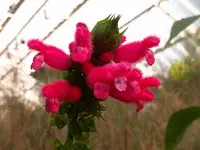
Bolivian hummingbird sage
Salvia oxyphora
Telanthophora grandifolia
Telanthophora grandifolia
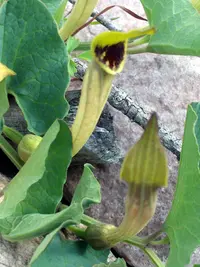
Aristolochia paucinervis
Aristolochia paucinervis
Lavender Feverberry
Croton gratissimus
Malayan Urn Vine
Dischidia major
hyacinthbean
Lablab purpureus
elephant creeper
Argyreia nervosa
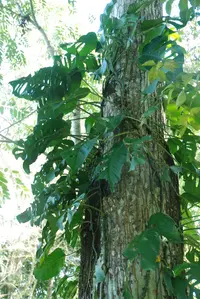
Monstera dissecta
Monstera dissecta