Staking flower stems
Install thin bamboo stakes early in the season and loosely tie tall, flowering stems with soft ties to keep the plant upright and prevent wind damage as the inflorescences gain weight.

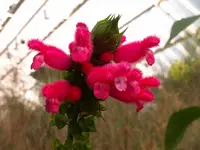
Bolivian hummingbird sage, Salvia oxyphora, is a tender perennial shrub in the mint family grown mainly for its vivid tubular flowers and lush foliage. It typically forms a dense, upright clump with broad, softly textured leaves and tall spikes of deep pink to red blooms that attract hummingbirds and other pollinators. Native to cloud forests of Bolivia, it prefers mild conditions and does not tolerate hard frost, which makes it better suited to sheltered gardens or containers in cooler climates. Gardeners who want to care for Bolivian hummingbird sage should provide bright light, consistent moisture, and well-drained, fertile soil to keep plants vigorous and flowering well.

Care Difficulty
Moderate Care

Light Preference
Partial Sun

Water Requirements
Regular Water

Temperature Preference
Tropical / Frost Sensitive

Hardiness Zone
9–11

Soil Texture
Loamy, Organic-rich

Soil pH
Acidic (5.5–6.5), Slightly acidic (6.5–7.0)

Soil Drainage
Moist but well-drained

Fertilization
Light (every 4–6 weeks)
Scan your plant to receive care tips personalized for your specific plant
Available on iOS and Android
This species prefers bright, gentle light that avoids harsh midday exposure in most climates.
This plant prefers consistently moist but not waterlogged soil, especially during active growth.
This species grows best in mild, frost-free conditions with stable, moderate temperatures.
This species benefits from moderately humid air, especially in warm indoor or patio conditions.
Salvia oxyphora prefers a loose, airy, and moisture-retentive yet free-draining substrate.
This species is well suited to container growing when the pot supports its tall, leafy growth habit.
Salvia oxyphora responds well to light, consistent feeding during the active growing season.
Pruning keeps Salvia oxyphora compact, encourages branching, and supports good flowering.
Container-grown Salvia oxyphora benefits from occasional repotting or transplanting to maintain healthy root growth.
Salvia oxyphora is most commonly propagated from softwood or semi-ripe stem cuttings.
Bolivian hummingbird sage is frost sensitive and needs protection in regions with cold winters.

Plant Health Check
Not sure what's wrong with your plant? Check your plant's health inside the app.
This species is native to humid montane forests of Bolivia, where it grows in cool, misty conditions with high, consistent moisture and filtered light beneath taller vegetation.
Its leaves and stems are covered in dense glandular hairs that feel sticky and velvety; these hairs secrete aromatic compounds that can deter some herbivores and may reduce water loss from the leaf surface.
The large, bright pink tubular flowers are adapted for pollination by hummingbirds, with a shape and nectar placement that suit the long beaks and tongues of these birds in its native range.

In cultivation outside its native range, this plant is considered rare and is mostly maintained by botanic gardens and specialist collectors, which means that many detailed Salvia oxyphora care suggestions come from a relatively small but well‑documented group of growers rather than broad commercial experience.
Lack of blooms usually comes from insufficient light, too much nitrogen-rich fertilizer, or pruning at the wrong time. Ensure bright conditions, use a balanced fertilizer, and avoid hard pruning just before its natural flowering season.
Keep your plants happy and healthy with plant identification, disease detection, and easy care guidance.