


Encourage Basal Shoots
After flowering, lightly tip-prune a few outer branch ends to stimulate new basal shoots, which helps maintain a dense, wind-resistant shrub in exposed, dry sites.

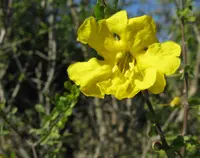
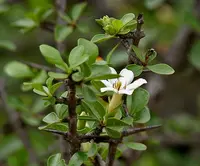
Yellow pomegranate (Rhigozum obovatum) is a small, deciduous shrub or shrubby tree known for its bright yellow, trumpet-shaped flowers and thorny branches. It usually forms a dense, irregular crown that can be pruned to maintain shape in gardens and dry landscapes.
This species is native to arid and semi-arid regions of southern Africa, where it thrives in rocky, well-drained soils and full sun. Its natural drought tolerance and slow to moderate growth rate make it relatively low-maintenance once established.
For gardeners learning how to care for Yellow Pomegranate, its main needs are strong light, sharply draining soil, and infrequent but deep watering, especially in hotter, drier climates.

Care Difficulty
Easy Care

Light Preference
Full Sun

Water Requirements
Low Water

Temperature Preference
Warm Climate

Hardiness Zone
9–11

Soil Texture
Sandy, Loamy, Rocky

Soil pH
Slightly acidic (6.5–7.0), Neutral (7.0)

Soil Drainage
Well-drained

Fertilization
Minimal (feed rarely)
Scan your plant to receive care tips personalized for your specific plant
Available on iOS and Android
Rhigozum obovatum prefers bright, open conditions typical of arid shrublands.
This drought-tolerant shrub prefers infrequent, deep watering in fast-draining soil.
This plant thrives in warm, dry climates and dislikes prolonged cold or frost.
This drought-adapted shrub tolerates low humidity and usually needs no special humidity control indoors or outdoors.
Rhigozum obovatum prefers very well-drained, sandy to gravelly soil that mimics arid, rocky habitats.
This species can be grown in containers if the pot and substrate are managed for strong drainage and stability.
Rhigozum obovatum is adapted to poor, rocky soils and usually needs only light feeding in cultivation.
Pruning Rhigozum obovatum is mainly about light shaping and removing problem wood to maintain a tidy, flowering shrub.
This shrub is usually grown in the ground, so focus on careful transplanting rather than frequent repotting.
Rhigozum obovatum is usually propagated by semi-ripe cuttings or seeds under controlled conditions.
This species prefers mild, frost-free climates and benefits from basic winter protection in cooler regions.

Plant Health Check
Not sure what's wrong with your plant? Check your plant's health inside the app.
This shrub produces brief but very showy flushes of bright yellow, bell-shaped flowers after rain events, a strategy that synchronizes flowering with peak pollinator activity in its arid habitat.
It is drought-deciduous, dropping most of its small, obovate leaves during dry spells to reduce water loss, then quickly releafing when moisture returns.
The intricate, thorny branching provides refuge for small birds and other animals in open savanna and semi-desert, while also deterring browsing by larger herbivores.
In parts of southern Africa, this species is used in traditional living hedges and boundary plantings, where its dense, spiny growth habit creates a long-lasting, low-maintenance barrier in dry rangeland landscapes.
This shrub usually flowers in late spring to early summer, often after seasonal rains. Individual blooms last only a few days, but heavy flowering can continue in flushes over several weeks under suitable warm, dry conditions.
Keep your plants happy and healthy with plant identification, disease detection, and easy care guidance.

-1-200x133.webp)
Egyptian starcluster
Pentas lanceolata
Coffea humblotiana
Coffea humblotiana
Hawai'i hawthorn
Osteomeles anthyllidifolia
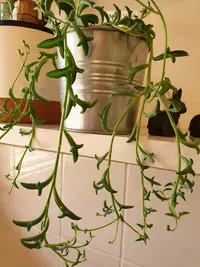
String of Dolphins
× Bacurio delphinatifolius
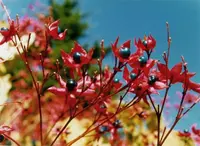
harlequin glorybower
Clerodendrum trichotomum
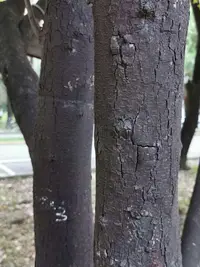
woolly-flowered persimmon
Diospyros eriantha
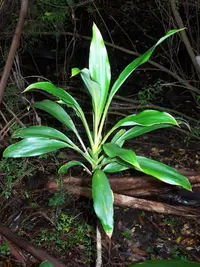
palm lily
Cordyline rubra
Mountain Pomegranate
Catunaregam spinosa