woolly-flowered persimmon Care (Diospyros eriantha)

woolly-flowered persimmon

About woolly-flowered persimmon

Diospyros eriantha, commonly called woolly-flowered persimmon, is a small to medium evergreen tree or large shrub in the ebony family. It is mainly grown as an ornamental plant rather than as a fruit crop.

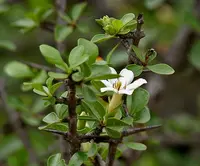
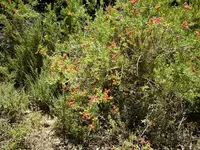
The plant is recognized for its dense foliage and distinctive, softly hairy flower buds and young shoots, which give it a slightly fuzzy look. In suitable climates it forms a rounded canopy and can be used as a background or screening plant.

Diospyros eriantha occurs naturally in parts of East and Southeast Asia, often in warm, humid forest habitats. These origins guide how to care for woolly-flowered persimmon, as it generally prefers bright light with some protection, moderate moisture, and well-drained soil.

Main Plant Requirements

Care Difficulty

Moderate Care

Light Preference

Partial Sun

Water Requirements

Moderate Water

Temperature Preference

Warm Climate

Hardiness Zone

10–11

Soil Texture

Sandy, Loamy, Organic-rich

Soil pH

Acidic (5.5–6.5), Slightly acidic (6.5–7.0)

Soil Drainage

Well-drained

Fertilization

Minimal (feed rarely)

Get Personalized Care Plan

Scan your plant to receive care tips personalized for your specific plant

Available on iOS and Android

How to Care for the woolly-flowered persimmon

This species prefers bright, gentle light with some protection from intense midday sun.

  • Provide 4–6 hours of direct morning sun with light shade or filtered light after 11 a.m., especially in hotter regions.
  • Tolerates light partial shade, but very dense shade reduces flowering and causes sparse, elongated growth on woolly-flowered persimmon.
  • In summer, monitor for leaf scorch on exposed western sides; in winter, ensure at least bright open shade so the plant receives strong ambient daylight.

This tree prefers evenly moist, well-drained soil that never stays waterlogged for long periods.

  • Before watering, let the top 3–5 cm of soil dry; soil below should still feel slightly damp rather than completely dry.
  • Increase watering during active growth and hot weather if leaves lose turgor or curl slightly, but reduce frequency in cool seasons to avoid root rot.
  • Use deep, infrequent watering to encourage strong roots, and ensure free-draining soil so excess water does not pool around Diospyros eriantha.

This species performs best in warm, frost-free conditions with moderate seasonal variation.

  • Aim for 65–85°F (18–29°C) for active growth, with slightly cooler nights improving overall vigor and reducing heat stress.
  • Protect from temperatures below 40°F (4°C); light frost can damage young shoots and repeated freezing can kill branches or entire young plants.
  • In hot spells above 95°F (35°C), provide mulch and some afternoon shade to limit root heating and leaf scorch, especially in exposed positions.

This species prefers moderately humid air but adapts to typical indoor levels if not extremely dry.

  • Aim for 40–60% humidity, as very arid rooms slow growth and increase leaf edge browning.
  • It tolerates short periods of 30–35% humidity but may show curling leaves and crisp tips under prolonged dryness.
  • Use a nearby humidifier or grouped plants rather than misting to raise humidity around woolly-flowered persimmon.

Diospyros eriantha grows best in deep, loose, well‑drained mineral soil with moderate organic matter.

  • Use a loamy mix of roughly 50% standard potting mix, 25% coarse sand, and 25% fine bark or perlite for structure and drainage.
  • Aim for slightly acidic to neutral pH, around 6.0–7.0, to support nutrient availability and steady root activity.
  • In heavy clay, incorporate coarse sand, fine gravel, and compost into the top 20–30 cm to improve aeration and water movement.
  • Avoid compacted, waterlogged, or purely sandy soil where roots either suffocate or dry out quickly between waterings.

This species can be grown in containers when young or maintained as a compact specimen with careful root space management.

  • Choose a tall, heavy pot to give the developing taproot depth and prevent the plant from becoming top‑heavy in wind.
  • Use a slightly wider pot than the root ball to balance stability with controlled moisture retention in the mix.
  • Raise the container on feet or bricks so drainage holes stay clear and excess water leaves the root zone rapidly.

This species grows steadily with modest feeding when cultivated, especially in containers or poor soils.

  • Use a balanced slow-release fertilizer (such as 10-10-10) or well-rotted compost at the start of the growing season.
  • Feed container plants every 6–8 weeks with a half-strength balanced liquid NPK during active growth.
  • Reduce or stop feeding in late fall and winter when growth slows or stops.
  • In fertile ground, caring for woolly-flowered persimmon may only require a light surface compost dressing once a year.

Pruning helps maintain structure and health in Diospyros eriantha without heavy intervention.

  • Carry out main pruning in late winter or very early spring before new growth starts.
  • Remove dead, diseased, damaged, or crossing branches with clean, sharp bypass pruners or loppers.
  • Thin overly crowded interior shoots to improve light penetration and air flow through the canopy.
  • Limit cuts to minor shaping so natural form and flowering wood are preserved.

Diospyros eriantha is usually grown in the ground, but young or nursery plants may need occasional repotting or careful transplanting.

  • Look for roots circling the pot drainage holes, dry-out after watering, or slowed growth as cues to move up a size.
  • Schedule transplanting or potting on in early spring or early fall, avoiding extreme heat or frost.
  • Transplant every 2–3 years for container plants, stepping up only 1–2 pot sizes at a time.
  • Water well before and after moving, keep the original rootball intact, and shade the plant for 3–7 days to reduce transplant shock.

Diospyros eriantha is most often propagated from seed, with vegetative methods used where specific traits must be preserved.

  • Collect ripe seed in late summer to fall, clean the pulp, and sow fresh for best viability.
  • Provide a period of cold stratification at about 35–40°F for 8–12 weeks to improve germination.
  • Sow seeds in a deep, free-draining medium, keeping it slightly moist and warm at 68–77°F.
  • Semi-hardwood cuttings taken in late summer may root under high humidity with rooting hormone and bottom heat.

This species is only moderately cold tolerant and benefits from some winter preparation in cooler climates.

  • In regions colder than its hardiness range, grow in containers and move plants into a bright, frost-free space before temperatures drop near freezing.
  • Apply a 5–8 cm mulch layer over the root zone in late fall, keeping material slightly away from the trunk.
  • In exposed sites, use windbreak fabric or burlap wraps to limit stem damage from freezing winds and rapid temperature swings.

Care Tips

Early structural training

In the first 2–3 years, select 3–5 well-spaced main branches and lightly tip-prune competing shoots to build a strong open framework that can carry fruit without breaking.


Wind and fruit support

In exposed sites, use a sturdy stake for young trees and add simple branch props or soft ties under heavily fruiting limbs to prevent splitting when crops are abundant.

Mulch for root stability

Apply a 5–8 cm layer of coarse organic mulch in a wide ring around the tree, keeping it 5–8 cm away from the trunk, to buffer soil temperature and reduce surface root stress.

Seasonal pest monitoring

From late spring through summer, inspect the undersides of leaves and young shoots every 2–3 weeks for scale, mealybugs, and leaf-chewing insects so that targeted treatment can start before damage becomes extensive.

Flower and fruit thinning

On young or stressed trees, remove some flowers or excess small fruits by hand so that remaining fruits develop better size and the tree does not exhaust itself, which is an important part of caring for woolly-flowered persimmon over the long term.

Common Pests and Diseases

Tea mosquito bug

This pest feeds on young shoots, leaves, and flower buds, causing dark feeding lesions, leaf distortion, and dieback of tender tips.

Solution

Prune and destroy heavily infested shoot tips, then monitor new flushes closely; if needed, apply a targeted contact insecticide such as neem oil or pyrethrin in the evening, ensuring thorough coverage of new growth while supporting natural predators by avoiding broad-spectrum chemicals.

Leaf spot

This disease causes small dark or tan spots on leaves that may coalesce, leading to yellowing and premature leaf drop, especially under warm, humid conditions.

Solution

Remove and dispose of affected leaves, avoid overhead watering, improve spacing and airflow, and, if spotting continues to spread, use a copper-based or chlorothalonil fungicide according to label directions during humid periods.

Sooty mold

This disease appears as a black, soot-like coating on leaves and stems that grows on honeydew excreted by sap-feeding insects such as scale, aphids, or whiteflies.

Solution

Control the underlying sap-feeding insects with horticultural oil or insecticidal soap, then gently wipe or hose off affected foliage; improving light exposure and airflow helps leaves recover and reduces future mold buildup while supporting overall Diospyros eriantha care.

Scale insects

These insects attach firmly to stems and leaf undersides as small bumps, sucking sap and causing yellowing, reduced vigor, and sticky honeydew deposits.

Solution

Physically remove light infestations by rubbing scales off with a cloth or soft brush, then treat remaining colonies with repeated applications of horticultural oil or insecticidal soap, ensuring buds, young stems, and leaf undersides are thoroughly wetted.

Twig dieback

Symptoms include gradual wilting and browning of shoot tips and small branches, often following physical damage, heavy pruning, or insect injury that allows fungal pathogens to enter.

Solution

Cut back affected twigs into healthy wood, sterilizing pruning tools between cuts, then improve plant vigor with balanced watering and nutrition; in regions where dieback is recurrent, apply a systemic or copper fungicide to pruning wounds and monitor new growth for recurring symptoms.

Interesting Facts

Evergreen forest understory

This species is a small evergreen tree or shrub that naturally occurs in the shaded understory of subtropical and tropical broadleaf forests in parts of East and Southeast Asia, rather than in fully open habitats.

Distinct woolly flowers

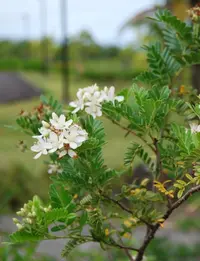
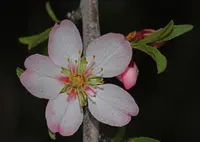
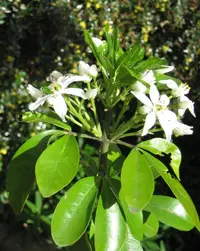
The species name eriantha means woolly-flowered and refers to the dense hairs on floral parts, which give the small cream to whitish flowers a noticeably fuzzy appearance at close range.

Sexes on separate plants

Like many members of the ebony family (Ebenaceae), this species is functionally dioecious, meaning male and female flowers are typically produced on separate plants, so fruit set requires both sexes in proximity.

FAQs about woolly-flowered persimmon

This species is generally evergreen in frost-free, subtropical to tropical climates, holding foliage year-round. In cooler regions or during unusual cold spells, it may behave semi-evergreen, shedding some leaves but usually refoliating once conditions improve.

Grow Healthy Plants with Botan Care

Keep your plants happy and healthy with plant identification, disease detection, and easy care guidance.

Botan plant care app — identify plants on mobile

Explore More Plants