Trunk training
Select 1 strong central leader while the plant is young, stake it loosely, and remove competing shoots to develop a single sturdy trunk suitable for hedge or small tree form.

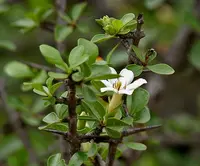
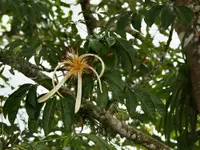
Mountain pomegranate, Catunaregam spinosa, is a spiny shrub or small tree grown mainly in tropical and subtropical climates. It has dense branching, small glossy leaves, and hard rounded fruits that resemble miniature pomegranates.
The plant is native to South and Southeast Asia, where it often grows in dry forests and scrublands. It tolerates seasonal drought and poor, rocky soils, which can make it fairly resilient once established.
For gardeners, its thorns and slow to moderate growth rate are the main factors that influence how easy it is to manage. Those who care for Mountain Pomegranate should know it generally prefers bright light, moderate moisture, and well-drained soil.

Care Difficulty
Moderate Care

Light Preference
Full Sun

Water Requirements
Moderate Water

Temperature Preference
Tropical / Frost Sensitive

Hardiness Zone
10–12

Soil Texture
Sandy, Loamy, Organic-rich

Soil pH
Acidic (5.5–6.5), Slightly acidic (6.5–7.0)

Soil Drainage
Well-drained

Fertilization
Minimal (feed rarely)
Scan your plant to receive care tips personalized for your specific plant
Available on iOS and Android
Catunaregam spinosa thrives in strong light typical of open tropical or subtropical sites.
This shrub prefers moderately moist but sharply draining soil and dislikes standing water.
This species performs best in consistently warm, frost-free conditions typical of tropical to warm subtropical climates.
This species handles a wide humidity range but grows best with moderate ambient moisture.
Catunaregam spinosa prefers a well-aerated, draining mineral soil that does not stay wet for long.
This species can be grown in containers, especially in cooler climates or where ground space is limited.
This shrub or small tree benefits from light, structured feeding but copes with lean soils when established.
Pruning helps Catunaregam spinosa maintain a strong framework and manageable size.
This species is most often grown in the ground, so focus on careful transplanting rather than frequent repotting.
New Catunaregam spinosa plants are usually raised from seed, with cuttings used less often.
This plant prefers warm climates and benefits from some attention in colder winters.

Plant Health Check
Not sure what's wrong with your plant? Check your plant's health inside the app.
This species belongs to the Rubiaceae family, the same family as coffee, and forms dense, rigid spines along its branches that protect it from browsing animals in dry and open habitats.
Its spherical fruits have a very hard, woody shell that can persist on the plant for a long time, helping protect the seeds from early predation and desiccation in seasonal climates.
In parts of South and Southeast Asia, this shrub is characteristic of dry deciduous and scrub forests, where it tolerates high temperatures and pronounced dry seasons better than many associated species.

Archaeobotanical evidence from sites in South Asia shows that its extremely hard fruits can remain recognizable in soil layers for long periods, allowing researchers to reconstruct past vegetation and human use of dry forest landscapes.
Lack of flowering often comes from insufficient light, heavy or unpruned old wood, or nutrient imbalance from high-nitrogen fertilizer. Supportive Catunaregam spinosa care includes strong sun, a balanced fertilizer, and light pruning after flowering to encourage new shoots.
Keep your plants happy and healthy with plant identification, disease detection, and easy care guidance.