standing-cypress Care (Ipomopsis rubra)

Also known as: Texas plume, scarlet gilia, flame flower, Indian spur
standing-cypress

About standing-cypress

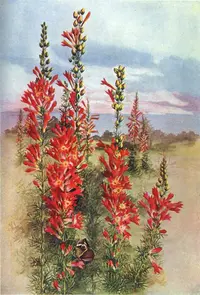
Standing-cypress, Ipomopsis rubra, is a short-lived perennial or biennial wildflower grown mainly for its tall, narrow spikes of bright red, tubular blooms. It forms a low rosette of fine, feathery foliage in its first year, then sends up flowering stems crowded with nectar-rich flowers that attract hummingbirds and pollinators.

This species is native to sandy, well-drained habitats of the southeastern and south-central United States. It adapts well to dry, poor soils, which makes it relatively low-maintenance once established but less suitable for very rich or wet sites. Understanding how to care for standing-cypress starts with providing full sun, lean soil, and good drainage.

Main Plant Requirements

Care Difficulty

Easy Care

Light Preference

Full Sun

Water Requirements

Low Water

Temperature Preference

Warm Climate

Hardiness Zone

6–10

Soil Texture

Sandy, Loamy, Rocky

Soil pH

Acidic (5.5–6.5), Slightly acidic (6.5–7.0)

Soil Drainage

Well-drained

Fertilization

Minimal (feed rarely)

Get Personalized Care Plan

Scan your plant to receive care tips personalized for your specific plant

Available on iOS and Android

How to Care for the standing-cypress

This sun-loving wildflower performs best in open, exposed sites with strong, direct light.

  • Provide 6–10 hours of direct sun daily; full sun all day promotes strongest flowering for standing-cypress.
  • Plant where it receives early to mid-afternoon sun; light afternoon shade is acceptable in very hot, dry regions to limit leaf scorch.
  • In sites with only 3–5 hours of sun, plants stretch and bloom less; avoid dense shade from buildings or trees, especially in spring and early summer.

This species prefers dry, fast-draining conditions and is sensitive to excess moisture at the roots.

  • Allow the top 5–8 cm of soil to dry before watering; in the ground, wait until soil feels dry and slightly crumbly at root depth.
  • Water deeply but infrequently, then let the soil drain completely; sandy or gravelly soils are ideal to prevent standing water around Ipomopsis rubra.
  • During cool or rainy seasons, skip watering unless leaves wilt and soil is dry; yellowing, soft stems suggest overwatering, while crisp, drooping foliage indicates drought stress.

This plant is adapted to hot, dry summers and cool winters in much of the central and southern US.

  • Active growth and flowering occur best around 70–90°F (21–32°C), provided soil drains quickly and roots are not waterlogged.
  • Established plants tolerate heat up to about 95–100°F (35–38°C) if soil is dry to slightly moist; excessive humidity with heat increases rot risk.
  • Winter-hardy roughly to 0–10°F (-18 to -12°C) with good drainage; young rosettes can be damaged by repeated hard frosts, so avoid low, frost-pocket sites.

Ipomopsis rubra tolerates low humidity and does not need special moisture in the air.

  • Performs well at 30–50% relative humidity typical of heated or air‑conditioned homes.
  • Handles dry air without stress if soil moisture is appropriate and roots are not waterlogged.
  • Humidity stress shows more as drought wilt from dry soil than from dry air, so focus on consistent but light watering instead of misting.

This species prefers lean, sandy, sharply drained soil that mimics its native dry habitats.

  • Use a mix of roughly 60–70% coarse sand or grit with 30–40% low‑fertility loam to keep the root zone open and fast‑draining.
  • Aim for slightly acidic to neutral pH around 6.0–7.0, avoiding strongly acidic or alkaline substrates that limit nutrient availability.
  • Improve aeration by adding perlite or small gravel rather than high levels of compost, which can retain too much water and encourage rot.
  • Avoid heavy clay, peat‑heavy potting mixes, or spots where water stands after rain, as persistent saturation damages the fine roots of Ipomopsis rubra.

This species can be grown in containers if the pot is configured to stay very free‑draining and sun‑exposed.

  • Choose a tall, narrow container to provide a deeper root run and better anchor the upright, slender flower spikes against wind.
  • Select unglazed terracotta or another porous material so excess moisture evaporates quickly from the sides as well as the surface.
  • Fill the pot with a gritty, sand‑based mix and raise it slightly on feet or bricks to keep drainage holes clear and prevent water pooling under the base.

This native wildflower needs only light feeding and often thrives in lean soil, so focus on modest support rather than heavy fertilization when caring for standing-cypress.

  • Use a balanced, low-dose NPK fertilizer or a small amount of compost in spring as growth begins.
  • Apply at half the label strength to avoid lush, weak growth and reduced flowering.
  • Feed once at planting and, if soil is very poor, 1–2 times during the growing season.
  • Do not fertilize in winter or dormancy, as the plant is not actively growing.

Pruning Ipomopsis rubra is minimal and mainly supports tidy growth and flowering performance.

  • In late fall or very early spring, remove dead, damaged, or diseased stems with clean hand pruners.
  • Shear off spent flower spikes after blooming to reduce self-seeding and keep plants compact.
  • Thin crowded stems lightly to improve air circulation around the plant base.
  • Avoid heavy cutting into green, actively growing stems, which can stress this short-lived perennial or biennial.

This species is usually grown in garden beds, so focus on careful transplanting rather than frequent repotting.

  • Transplant seedlings outdoors in spring after frost, when they have several true leaves and strong roots.
  • Choose a sunny, well-drained spot and avoid disturbing roots once established, as the taproot is sensitive.
  • If container-grown, transplant when roots circle the pot or growth stalls, typically once in the plant’s life.
  • Water deeply after moving plants and shade lightly for a few days to reduce transplant shock.

Ipomopsis rubra is most often propagated by seed, which germinates reliably in suitable conditions.

  • Sow seeds in late fall outdoors for natural cold stratification, or in early spring after a brief chill in the refrigerator.
  • Scatter seeds on the soil surface or press in very lightly, as they need light for good germination.
  • Keep the substrate just moist, not wet, at 60–70°F until seedlings emerge.
  • Thin seedlings to prevent overcrowding, leaving the strongest plants spaced 20–30 cm apart.

In many climates this plant behaves as a hardy biennial, needing little winter care once established in well-drained soil.

  • In zones with wet winters, prioritize sharp drainage to prevent root rot in cold, saturated soils.
  • Apply a light, dry mulch after the ground cools to buffer temperature swings, keeping mulch off the crown.
  • Container plants in colder zones can be moved to a sheltered, unheated but frost-light area to reduce stress.

Care Tips

Use gritty mulch

Apply a thin layer of coarse sand or fine gravel around the base to keep the root zone dry at the surface, suppress weeds, and prevent soil from splashing onto foliage during rain or irrigation.

Staggered sowing

Sow seed in 2–3 batches spaced 2–3 weeks apart in late winter to early spring so flowering is extended and losses from unexpected weather or pests do not wipe out the entire display.

Provide wind conditioning

Expose young plants to moderate wind or a fan for a short period each day to encourage sturdy stems that are less likely to lodge or break once the tall flower spikes develop.

Deadhead selectively

Remove spent flower spikes on most plants to prolong bloom, but allow a few of the healthiest individuals to set seed so they can self-sow and maintain a naturalized colony over time.

Limit nearby irrigation

Site plants away from lawn sprinklers or drip lines serving thirstier species, since caring for standing-cypress in an overly irrigated bed often leads to root problems and short-lived plants.

Common Pests and Diseases

Spider mites

This pest often appears in hot, dry weather and feeds on the undersides of leaves, causing pale speckling and fine webbing. Symptoms include dulled, stippled foliage and reduced vigor, especially on plants grown in very dry, sheltered spots.

Solution

Rinse stems and foliage thoroughly with a strong but controlled stream of water, focusing on leaf undersides, and repeat every few days until populations drop. In dry climates, encourage natural predators by avoiding broad-spectrum insecticides, and use a targeted horticultural oil or insecticidal soap labeled for mites if infestations persist, applying in the cool part of the day to avoid leaf burn.

Aphids

These insects cluster on young stems and flower spikes, sucking sap and causing distorted growth and sticky honeydew on the foliage. Ant activity around the plant is common when colonies are present.

Solution

Prune off heavily infested stem tips and wash remaining colonies off with water, rubbing gently by hand if needed. For continued pressure, apply insecticidal soap or a light horticultural oil to new growth, and reduce nearby nitrogen-rich fertilization that encourages soft, aphid-prone shoots.

Leaf spot

This disease produces small brown to purplish lesions on the narrow leaves, which can merge and cause premature leaf drop under warm, humid conditions. Symptoms include thinning foliage and a generally stressed appearance on lower stems first.

Solution

Remove and discard affected leaves and any dense, weedy growth around the plant to improve air circulation and reduce leaf wetness duration. Water at the base in the morning, avoid overhead irrigation, and if the problem recurs, use a labeled ornamental fungicide as a preventive spray at the first sign of spotting.

Powdery mildew

This disease shows as a white, powdery coating on leaves and stems, more likely where plants are crowded or receive shade and poor airflow. Symptoms include reduced flowering and gradual yellowing and distortion of foliage.

Solution

Thin or space plants to increase air movement and ensure full sun exposure, which strongly discourages this fungus. Remove heavily affected foliage and, if needed, apply a sulfur or potassium bicarbonate fungicide labeled for powdery mildew at the earliest visible signs, repeating as directed until new growth stays clean.

Interesting Facts

Specialist hummingbird magnet

The long, narrow red tubes of its flowers are adapted for pollination by hummingbirds, which can easily reach the nectar while most bees and butterflies cannot.

Biennial prairie strategy

In many parts of its native range, this species behaves as a biennial, forming a low rosette in the first year and sending up a tall flowering spike in the second before dying after seed set.

Heat and drought adapted

Native to sandy, well-drained soils of the south-central and southeastern United States, it tolerates high heat and periodic drought that would stress many other wildflowers.

Botan icon

Did you know?

Genetic studies of Ipomopsis suggest that the bright red flower color and tubular shape in Ipomopsis rubra evolved under strong selection pressure from hummingbirds, helping maintain reproductive isolation from related species that rely more on insect pollinators.

FAQs about standing-cypress

Poor flowering usually comes from too much shade, excess nitrogen fertilizer, or drought during bud formation. Ensure full sun, lean well-drained soil, and avoid rich compost. Removing competing weeds and avoiding root disturbance also supports reliable flower production.

Grow Healthy Plants with Botan Care

Keep your plants happy and healthy with plant identification, disease detection, and easy care guidance.

Botan plant care app — identify plants on mobile

Explore More Plants