


Staggered clump renewal
Every 2–3 years, dig up and divide only the outer vigorous sections of the clump, discarding the congested woody center to keep stands dense, upright, and floriferous.

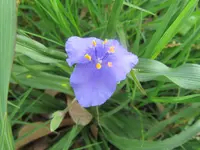
Giant spiderwort, Tradescantia gigantea, is a clump-forming perennial herb with tall, arching stems and narrow leaves that create a lush, fountain-like shape. It produces clusters of short-lived, three-petaled flowers that open in sequence, giving color for many days in the growing season.
This species is native to parts of Mexico and Central America, where it grows in open woodlands and moist, sunny clearings. It adapts well to garden beds or large containers and is considered moderately easy to grow when its basic needs are met.
Understanding how to care for giant spiderwort centers on providing consistent moisture, reasonably fertile, well-drained soil, and light ranging from bright shade to gentle sun, avoiding very dry or harsh exposed conditions.

Care Difficulty
Moderate Care

Light Preference
Partial Sun

Water Requirements
Moderate Water

Temperature Preference
Warm Climate

Hardiness Zone
8–11

Soil Texture
Loamy, Sandy, Organic-rich

Soil pH
Acidic (5.5–6.5), Slightly acidic (6.5–7.0)

Soil Drainage
Moist but well-drained

Fertilization
Light (every 4–6 weeks)
Scan your plant to receive care tips personalized for your specific plant
Available on iOS and Android
This sun-loving perennial performs best with bright exposure and some protection from harsh midday rays.
This plant prefers consistently moist but not waterlogged soil and responds best to observation-based watering.
This species grows best in mild to warm conditions and is sensitive to frost and prolonged cold.
This species prefers moderate ambient humidity but adapts to many homes.
This species thrives in loose, airy, moderately fertile substrate that drains quickly.
This species is well suited to container growing for patios, balconies, and small gardens.
This species benefits from light feeding but does not need heavy fertilization to perform well.
Thoughtful pruning keeps Tradescantia gigantea compact, tidy, and flowering well.
This plant is often grown in the ground, but container specimens or crowded clumps benefit from occasional transplanting.
Expansion of Tradescantia gigantea is most reliable through division and stem cuttings.
In many mild climates this species is fairly hardy but benefits from simple winter precautions, especially in colder regions.

Plant Health Check
Not sure what's wrong with your plant? Check your plant's health inside the app.
This species produces relatively large, triangular, three-petaled purple to violet flowers, typically 3–4 cm across, noticeably bigger than those of many other commonly grown Tradescantia species.
Individual flowers usually last only a single morning or day, but the plant forms many buds along its stems, so flowering can continue over an extended season when conditions are suitable.
Its stamens have showy, hair-covered filaments that often appear lighter than the petals, creating a distinct color and texture contrast that is characteristic for identifying the species.
Poor flowering often comes from plants crowded by shade, exhausted soil, or old, congested clumps. Improve light, top-dress with balanced fertilizer, and divide mature clumps every few years to renew vigor and restore blooms.
Keep your plants happy and healthy with plant identification, disease detection, and easy care guidance.


Hosta
Hosta 'Fortunei Albomarginata'
Inch Plant
Tradescantia 'Maiden's Blush'
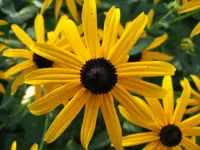
Orange coneflower
Rudbeckia fulgida
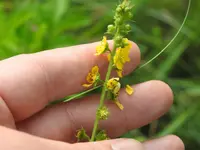
Agrimonie
Agrimonia bracteata
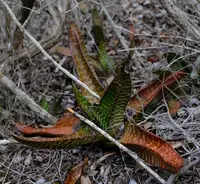
Bredasdorp Gasteria
Gasteria carinata var. carinata
Chinese perfume plant
Aglaia odorata
 POPULAR
Anthurium magnificum
Anthurium magnificum
Episcia lilacina
Episcia lilacina