Stolon management
Check the plant in late spring and gently lift or redirect creeping stems so they root in suitable spots, preventing unwanted spread into paths or neighboring beds.

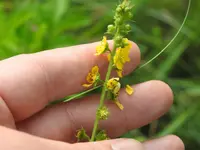
Agrimonie, Agrimonia bracteata, is a small perennial herb known for its slender, upright stems and rows of tiny yellow flowers held on long spikes. The foliage is composed of softly textured, divided leaves that give the plant a delicate but structured look in mixed borders or naturalized plantings.
This species typically occurs in temperate regions, often in meadows, open woodland edges, and light scrub where soils are reasonably well drained. It is generally undemanding, which makes it relatively simple to care for Agrimonie in gardens with moderate light, regular moisture, and non-waterlogged soil.
Once established, Agrimonia bracteata tends to be resilient, with a steady clumping habit and low maintenance requirements under stable outdoor conditions.

Care Difficulty
Easy Care

Light Preference
Full Sun

Water Requirements
Moderate Water

Temperature Preference
Cold Hardy

Hardiness Zone
4–8

Soil Texture
Sandy, Loamy, Silty

Soil pH
Acidic (5.5–6.5), Slightly acidic (6.5–7.0)

Soil Drainage
Moist but well-drained

Fertilization
Minimal (feed rarely)
Scan your plant to receive care tips personalized for your specific plant
Available on iOS and Android
This perennial herb performs best in bright outdoor conditions with moderate direct sun each day.
This species prefers evenly moist but never saturated soil, especially during active growth.
This hardy species tolerates a wide temperature range but has clear preferences for strong growth and flowering.
This species is adaptable and humidity is rarely a limiting factor for healthy growth.
Agrimonia bracteata prefers moderately moist, well‑structured ground with reliable drainage.
This species can be grown in containers if the pot supports its deep, fibrous root system.
This species is a modest feeder that benefits from light nutrition in lean soils during the active growing season.
Pruning Agrimonia bracteata is straightforward and mainly keeps the clump tidy and flowering well.
This plant is usually grown in the ground, with transplanting rather than container repotting as the main task.
Agrimonia bracteata is commonly propagated by seed or by careful division of mature clumps.
This hardy perennial usually needs minimal winter attention in temperate climates.

Plant Health Check
Not sure what's wrong with your plant? Check your plant's health inside the app.
This species occurs naturally in moist, light-dappled forest edges and clearings of East Asia, where it grows in humus-rich, slightly acidic to neutral soils rather than the drier, calcareous habitats preferred by several European Agrimonia species.
The species name bracteata refers to its conspicuous leafy bracts subtending the flowering spikes, which give the inflorescence a layered appearance that differs from the more slender, sparsely bracted spikes of related species.
Its small burr-like fruits are covered with hooked bristles that readily cling to animal fur and clothing, an adaptation that allows the plant to spread along forest paths and animal trails in its native range.
This species is a hardy perennial herb. The above-ground growth dies back in winter, but the root system survives and sends up fresh stems each growing season when temperatures and daylight increase.
Keep your plants happy and healthy with plant identification, disease detection, and easy care guidance.