Use Flood Trays
For container plants, stand pots in a shallow tray with 2–5 cm of water during the growing season to mimic marsh conditions and keep roots consistently moist without relying on frequent hand watering.

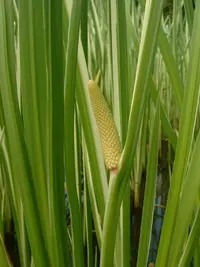
Sweet flag, Acorus calamus, is a semi-aquatic perennial often grown around ponds, water gardens, and very damp soil areas. It forms dense, upright fans of sword-like, aromatic leaves that resemble some grasses or irises.
In the wild, it typically grows along the edges of slow streams, marshes, and wetlands in temperate regions of Europe, Asia, and North America. Its strong preference for constant moisture makes it easy in boggy spots but unreliable in dry ground.
For those who want to care for sweet flag successfully, focus on consistently wet soil, cool to mild temperatures, and at least bright indirect light outdoors or in containers.

Care Difficulty
Easy Care

Light Preference
Full Sun

Water Requirements
Aquatic

Temperature Preference
Cold Hardy

Hardiness Zone
4–9

Soil Texture
Loamy, Clay, Organic-rich

Soil pH
Acidic (5.5–6.5), Slightly acidic (6.5–7.0)

Soil Drainage
Waterlogged tolerant

Fertilization
Minimal (feed rarely)
Scan your plant to receive care tips personalized for your specific plant
Available on iOS and Android
This wetland perennial prefers bright, gentle light rather than harsh, drying sun.
This species naturally grows in marshy or pond-edge conditions and prefers consistently wet roots.
This hardy marginal aquatic tolerates a wide range of outdoor temperatures when established.
This marsh plant needs very high humidity to stay healthy in typical home or garden conditions.
Acorus calamus thrives in saturated, organic-rich substrates rather than typical potting soil.
This species is suitable for container growing when the pot is managed like a mini bog or pond edge.
Acorus calamus grows well with modest feeding, especially in containers or nutrient-poor sites.
Pruning Acorus calamus focuses on tidying foliage and maintaining clump health rather than shaping.
Transplanting or dividing Acorus calamus helps control spread and refresh overgrown clumps.
Acorus calamus is most reliably propagated by rhizome division rather than seed.
Established Acorus calamus is quite cold hardy and usually needs only minimal winter care in most temperate climates.

Plant Health Check
Not sure what's wrong with your plant? Check your plant's health inside the app.
Genetic and historical evidence indicates that most Acorus calamus plants in Europe and North America are sterile triploids introduced from Asia, and the original wild diploid form is naturally distributed from India through parts of Central Asia and Eastern Europe.
Many widely cultivated A. calamus clones produce flowering spikes but almost never set viable seed, so the species commonly spreads by creeping rhizomes rather than by sexual reproduction in much of its current range.
The rhizomes contain essential oils rich in compounds such as beta-asarone, which give a strong spicy aroma; some chemotypes with high beta-asarone content are restricted or avoided in food use because this compound has shown carcinogenic effects in laboratory animals.

In North America, the species is considered naturalized rather than truly native, with historical records suggesting it was introduced by early European settlers who planted its rhizomes in wet areas for their fragrance and practical uses, allowing the plant to spread along waterways over subsequent centuries.
Leaf tips often brown from hard tap water, excessive fertilizer, or prolonged dryness at the roots. Strong sun with low humidity can also scorch foliage. Remove damaged leaves and adjust watering quality, feeding strength, and light exposure.
Keep your plants happy and healthy with plant identification, disease detection, and easy care guidance.