Secure Shoreline Edges
Plant in shallow shelves or low baskets at the pond margin so the roots anchor into stable sediment while the crown stays just below or at the water surface, which reduces uprooting from wave action or wildlife disturbance.


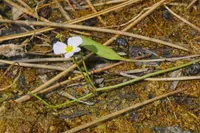
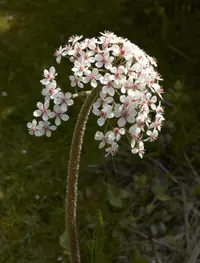
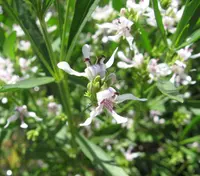
Lanceleaf water plantain (Alisma lanceolatum) is an aquatic or marginal plant commonly found along ponds, ditches, and slow streams. It forms clumps of narrow, lance-shaped leaves above shallow water or wet mud. In summer it sends up airy branching stems with many small, pale flowers that give a light, delicate look. The plant spreads by seed and short rhizomes, forming patches over time. It suits naturalistic water gardens and wildlife ponds, as it offers cover for aquatic life and a soft vertical accent. To care for lanceleaf water plantain, provide consistently wet conditions, full sun to light shade, and a nutrient-rich, muddy or loamy substrate.

Care Difficulty
Moderate Care

Light Preference
Full Sun

Water Requirements
Aquatic

Temperature Preference
Cool Climate

Hardiness Zone
5–9

Soil Texture
Loamy, Clay, Organic-rich

Soil pH
Slightly acidic (6.5–7.0), Neutral (7.0)

Soil Drainage
Waterlogged tolerant

Fertilization
Minimal (feed rarely)
Scan your plant to receive care tips personalized for your specific plant
Available on iOS and Android
This aquatic perennial prefers bright conditions in open, shallow water or wet mud.
This species is adapted to constantly wet conditions and often grows with its roots submerged.
This hardy marginal aquatic tolerates a wide temperature range in outdoor ponds and bogs.
This emergent aquatic prefers very high humidity and saturated air around foliage.
Alisma lanceolatum grows best in saturated, fine-textured substrates that stay wet but not anaerobic at the root zone surface.
This species is suitable for container growing when the pot is treated as a small bog or shallow pond.
Alisma lanceolatum in natural or nutrient-rich pond soils usually needs minimal additional fertilizer.
Pruning Alisma lanceolatum focuses on hygiene and controlling spread rather than shaping.
This emergent aquatic is more often transplanted within ponds or marsh beds than repotted indoors.
Alisma lanceolatum is commonly propagated by seed and by division of established clumps.
In most temperate climates, lanceleaf water plantain is cold hardy and needs little specific winter care.

Plant Health Check
Not sure what's wrong with your plant? Check your plant's health inside the app.
This aquatic species is characterized by long, narrow, lance-shaped leaves that often emerge well above shallow water, distinguishing it from the broader-leaved common water plantain Alisma plantago-aquatica.
It frequently occurs in water bodies and ditches rich in dissolved calcium carbonate, making it a useful indicator of hard, often alkaline, freshwater conditions in parts of Europe and western Asia.
Populations often establish on the exposed margins of rivers, reservoirs, and canals where water levels fluctuate, taking advantage of periodically bare mud that many competing plants cannot tolerate.

Genetic and morphological studies have shown that this species can hybridize naturally with Alisma plantago-aquatica in areas where their ranges overlap, creating intermediate plants that can complicate accurate field identification for botanists.
This species spreads by seed and short rhizomes, forming clumps that can slowly expand. It is not typically as aggressive as some invasive aquatics but can self-seed freely in suitable wet mud or shallow water.
Keep your plants happy and healthy with plant identification, disease detection, and easy care guidance.