Indian rhubarb Care (Darmera peltata)

Also known as: Umbrella Plant
Indian rhubarb

About Indian rhubarb

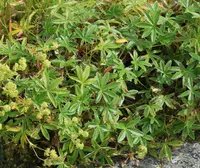
Indian rhubarb (Darmera peltata) is a clump-forming, rhizomatous perennial grown mainly for its bold, architectural foliage. It sends up rounded, umbrella-like leaves on tall stalks that create a dramatic, leafy canopy.

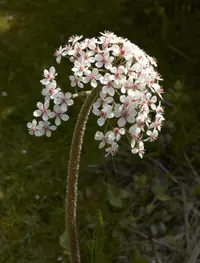
In spring, before the leaves appear, it produces clusters of small pink to white flowers on bare stems. The plant is native to damp stream banks and wet meadows in western North America, especially along the Pacific coast.

It is generally robust if given consistently moist soil and a cool root zone. Gardeners who understand how to care for Indian rhubarb usually find it reliable in pond margins, rain gardens, or other naturally damp spots.

Main Plant Requirements

Care Difficulty

Moderate Care

Light Preference

Partial Shade

Water Requirements

Keep Soil Moist

Temperature Preference

Cold Hardy

Hardiness Zone

5–7

Soil Texture

Loamy, Silty, Organic-rich

Soil pH

Acidic (5.5–6.5), Slightly acidic (6.5–7.0)

Soil Drainage

Waterlogged tolerant

Fertilization

Minimal (feed rarely)

Get Personalized Care Plan

Scan your plant to receive care tips personalized for your specific plant

Available on iOS and Android

How to Care for the Indian rhubarb

This moisture-loving perennial prefers bright, gentle light rather than harsh sun.

  • Provide 3–5 hours of morning sun with light or open shade the rest of the day; dappled light under trees suits Indian rhubarb well.
  • Avoid strong afternoon sun, which can scorch leaves and cause leaf edges to brown, especially in dry or windy conditions.
  • In hot summers, increase shade from June to August, while in cooler climates allow a bit more sun in spring and early autumn to support vigor.

This plant naturally grows along streams and pond edges, so it prefers consistently moist soil.

  • Aim for evenly moist soil; do not let the top 2–3 cm dry out completely, especially during active growth and flowering.
  • Use deep, infrequent soakings rather than light splashes, allowing excess water to drain so crowns do not sit in stagnant water that promotes rot.
  • In hot, windy weather, watch for drooping leaves and dry soil as cues to increase watering; yellowing, mushy stems indicate excess moisture or poor drainage around Darmera peltata.

This hardy perennial tolerates cold winters but grows best in cool to mild conditions.

  • Optimal growth occurs around 55–75°F (13–24°C), particularly during spring and early summer when foliage expands.
  • Dormant rhizomes survive down to about 0°F (−18°C) in the ground, provided soil is not waterlogged and has some mulching for insulation.
  • In hotter regions, plants manage short periods up to 85–90°F (29–32°C) if soil remains moist and roots are shaded; prolonged extreme heat can cause leaf scorch and earlier dormancy.

This moisture-loving perennial benefits from consistently high ambient humidity.

  • Target 60–80% humidity, similar to a damp streamside environment preferred by Indian rhubarb.
  • It tolerates brief dips to 40–50%, but prolonged dry air causes leaf edges to brown and curl.
  • Increase humidity outdoors by grouping plants near water features or using mulch to retain ground moisture.

Darmera peltata thrives in cool, consistently moist, organic-rich ground.

  • Use a deep, humus-rich loam with high compost content that stays evenly wet without becoming stagnant.
  • Aim for slightly acidic to neutral pH around 6.0–7.0 to support nutrient availability and root health.
  • Improve water retention and structure with leaf mold or well-rotted manure, and add fine bark to keep the mix open.
  • Avoid compacted clay, fast-drying sandy beds, or sites that alternate between waterlogging and complete dryness.

This species can grow in large containers if moisture and stability are carefully managed.

  • Choose a wide, heavy container to counterbalance tall foliage and prevent tipping in wind or on sloping ground.
  • Select a deep pot to allow rhizomes to spread horizontally while still being covered by 5–8 cm of substrate.
  • Use thick-walled clay or cement containers outdoors to moderate temperature swings and slow evaporation from the root zone.

Darmera peltata grows well in rich, moist soil and only needs light feeding in gardens.

  • In spring, top-dress around clumps with a 2–5 cm layer of compost to refresh nutrients.
  • Where growth is weak, use a balanced slow-release fertilizer (around 10-10-10) once in early spring.
  • For container-grown Indian rhubarb, apply half-strength balanced liquid feed every 4–6 weeks during active growth.
  • Stop feeding in late summer so plants can harden off before winter dormancy.

Darmera peltata needs simple, light pruning to keep clumps tidy and healthy.

  • In late fall or very early spring, cut back dead foliage at the base with clean hand pruners.
  • Remove damaged, yellowing, or torn leaves during the season to reduce disease risk and improve appearance.
  • Thin out crowded flower stalks only if needed to highlight stronger blooms and maintain clump shape.
  • Disinfect blades before and after use to avoid spreading fungal or bacterial problems.

This species is most often grown in the ground, where transplanting is rare but sometimes useful.

  • Transplant in early spring or early fall, when temperatures are mild and soil is moist.
  • Move clumps only when growth is very crowded, flowering declines, or plants outgrow their space.
  • Lift the root mass carefully, keeping as much soil around the rhizomes and fine roots as possible.
  • Replant at the same depth in rich, consistently moist soil and water thoroughly to settle roots.

Darmera peltata is most commonly propagated by division of its rhizomes.

  • Divide established clumps in early spring just as new shoots emerge, or in early fall.
  • Lift the plant and cut rhizomes into sections, each with at least 1–2 buds and healthy roots.
  • Plant divisions into moist, humus-rich soil, spacing them to allow mature leaf spread.
  • Keep soil consistently damp and provide partial shade until divisions are well established.

Darmera peltata is cold hardy in much of the US and usually needs minimal winter care.

  • After frost blackens foliage, cut leaves back to ground level to reduce disease carryover.
  • Apply a 5–8 cm layer of mulch over the root zone in colder climates for extra insulation.
  • Container-grown plants in very cold areas can be overwintered in an unheated but frost-free garage or shed.

Care Tips

Rhizome Division Timing

Lift and divide rhizomes only in early spring just as buds swell, then replant divisions at the same depth and water heavily to prevent desiccation and transplant shock.

Edge Containment

Install a shallow root barrier 20–30 cm deep around beds near ponds or streams to keep the colony from creeping into liners, marginal plantings, or nearby paths over several years.

Leaf Wind Protection

In exposed gardens, place low windbreaks such as dense perennials or a short fence on the prevailing-wind side to keep the large leaves from tearing and folding in strong gusts.

Winter Crown Protection

In colder areas, loosely mulch the crown with 5–8 cm of shredded leaves after the foliage dies back to buffer freeze–thaw cycles, then pull the mulch back from the crown in early spring to prevent rot.

Slug And Snail Management

Set up physical barriers such as copper tape around clumps and place slug traps just outside the foliage line in early spring, before new leaves fully expand, to protect emerging shoots when caring for Indian rhubarb.

Common Pests and Diseases

Slugs and snails

This pest feeds on the large leaves, leaving irregular holes and ragged edges, especially on young foliage in damp, shaded sites.

Solution

Hand-pick in the evening, use slug traps or iron phosphate bait around the clump, and reduce hiding places such as dense debris near the crown; copper barriers around small groups of plants can further limit damage when growing Indian rhubarb in very slug-prone areas.

Leaf spot

This disease causes brown to dark-purple spots or blotches on leaves, often with a lighter center and sometimes a yellow halo, which can make foliage look tattered over time.

Solution

Remove and discard affected leaves, keep overhead watering to a minimum, and improve spacing for better air movement; in persistent, severe cases, a labeled copper-based fungicide during early leaf-out can help reduce new infections.

Powdery mildew

This disease appears as white to gray powdery patches on the upper leaf surface, which can lead to yellowing and early leaf decline later in the season.

Solution

Increase air circulation by thinning surrounding vegetation, avoid excess nitrogen fertilization, and remove heavily affected leaves; if mildew recurs yearly, apply a labeled sulfur or potassium bicarbonate product at the first sign of the white coating.

Vine weevils

These insects chew characteristic notches along leaf edges as adults, while the larvae feed on roots and crowns, sometimes causing wilting or collapse of shoots in containers or very loose soils.

Solution

Inspect leaves at night and manually remove adults, then apply beneficial nematodes to the soil in late summer or early fall to target larvae; avoid keeping soil constantly waterlogged, which can favor root damage and mask early symptoms.

Aphids

These insects cluster on young stems and leaf undersides, sucking sap and causing distortion, sticky honeydew, and sometimes sooty mold growth on the large leaves.

Solution

Spray colonies off leaves with a firm jet of water, then follow with insecticidal soap or horticultural oil directed at the undersides of leaves; encourage natural predators such as lady beetles by avoiding broad-spectrum insecticides in the surrounding garden.

Interesting Facts

Early spring flowering

This species sends up its pink flower clusters on bare stems in early spring, often before any leaves appear, which allows pollinators to find the blooms easily in still-open habitats along streams and pond edges.

Huge peltate leaves

The leaves are peltate, meaning the stalk attaches near the center of the blade rather than the edge, forming large, umbrella-like discs that can reach up to 60 cm across and create strong shade at the soil surface.

Rhizomes stabilize banks

Its thick, creeping rhizomes knit through wet soils and help stabilize stream and pond banks, making the plant useful in erosion control plantings in suitable climates.

Botan icon

Did you know?

In its native habitats in northern California and Oregon, this plant often grows directly at the water’s edge or in very shallow water, tolerating seasonal flooding that would quickly kill many other common ornamental perennials.

FAQs about Indian rhubarb

This species spreads slowly by thick rhizomes, forming broad clumps over time. It is not usually aggressive but needs space beside ponds or streams. Contain the rhizomes with edging if nearby plants are being crowded.

Grow Healthy Plants with Botan Care

Keep your plants happy and healthy with plant identification, disease detection, and easy care guidance.

Botan plant care app — identify plants on mobile

Explore More Plants