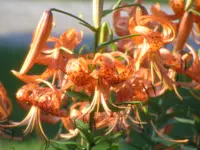
Spoon Sundew Care (Drosera glabripes)

Spoon Sundew

About Spoon Sundew

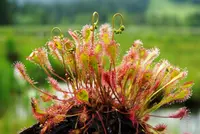
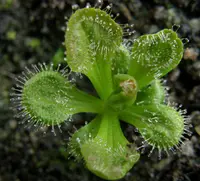
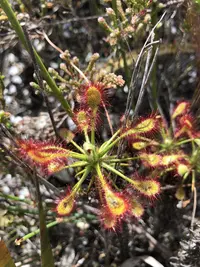
Drosera glabripes, commonly called spoon sundew, is a small, insect-eating carnivorous plant from South Africa’s Cape region. It typically forms compact rosettes with narrow stems topped by spoon-shaped leaves.

Each leaf is covered in sticky glandular hairs that trap insects, which supply most of the plant’s nutrients. This habit allows it to live in nutrient-poor, often sandy or peaty soils.

The plant prefers bright light, consistently damp conditions, and low-mineral, acidic substrates. Once these needs are met, many growers find it moderately straightforward to care for Spoon Sundew indoors or in sheltered outdoor setups.

Main Plant Requirements

Care Difficulty

Hard Care

Light Preference

Partial Sun

Water Requirements

Keep Soil Moist

Temperature Preference

Tropical / Frost Sensitive

Hardiness Zone

10–11

Soil Texture

Sandy, Peaty, Organic-rich

Soil pH

Strongly acidic (4.5–5.5)

Soil Drainage

Waterlogged tolerant

Fertilization

Minimal (feed rarely)

Get Personalized Care Plan

Scan your plant to receive care tips personalized for your specific plant

Available on iOS and Android

How to Care for the Spoon Sundew

This South African sundew prefers bright, gentle light that avoids harsh midday intensity.

  • Provide 4–6 hours of direct morning sun with bright, filtered light the rest of the day for strong growth and dew production in Spoon Sundew.
  • Allow light partial shade, especially from 11 a.m.–3 p.m.; prolonged harsh afternoon sun can scorch leaves and dry the peat too quickly.
  • In winter, move plants to the brightest frost-free spot available or use supplemental lighting for 10–12 hours to prevent weak, elongated leaves.

This species needs consistently moist, low-mineral conditions that mimic a bog habitat.

  • Keep the peat-based substrate evenly damp; allow only the top 0.5–1 cm to lighten in color before rewetting, avoiding complete drying.
  • Use the tray method with rain, RO, or distilled water for Drosera glabripes, keeping 0.5–2 cm of water in the saucer and letting it drain briefly between refills.
  • Reduce water depth in cooler, low-light seasons to prevent stagnant, sour-smelling substrate and blackened roots, signs of chronic overwatering and poor aeration.

This sundew prefers mild, frost-free conditions with stable, cool to warm temperatures.

  • Aim for 60–77°F (16–25°C) as the main growing range to support steady leaf and dew production.
  • Protect from frost; growth slows below 45°F (7°C) and tissue damage occurs near 32°F (0°C), so move containers or protect beds before hard cold snaps.
  • Tolerate short heat up to about 86°F (30°C) if humidity stays moderate and roots remain cool; increase shade and air movement during hot spells to limit stress.

This species prefers moderately high humidity but stays stable in average indoor air if kept evenly moist.

  • Aim for 50–70% humidity; avoid very dry heated rooms below about 35%.
  • Low humidity stress shows as stalled growth, weak dew production, and drying leaf tips.
  • Increase humidity with a nearby pebble tray or grouped plants, but avoid covering the pot or creating stagnant, dripping-wet air that encourages fungus.

Drosera glabripes needs a very low-nutrient, acidic, airy mix that stays moist but never waterlogged.

  • Use a 1:1 mix of sphagnum peat moss and coarse silica sand or perlite to keep texture open and nutrient levels low.
  • Ensure the mix drains freely yet retains constant moisture; it should feel springy and not compact into a solid mass.
  • Keep pH acidic, roughly 4.5–5.5, since mineral-rich or alkaline substrates quickly damage roots and reduce trapping efficiency.
  • Avoid regular potting mix, compost, manure, fertilizers, or hard tap water salts, which accumulate and burn sensitive roots.

This species adapts well to container culture when moisture and depth are managed carefully.

  • Choose a pot deep enough for its taproot, usually at least 10–12 cm, to avoid restricted root development.
  • Use plastic rather than unglazed clay to reduce evaporation and keep the peat-based mix evenly moist.
  • Stand the pot in a shallow saucer of rainwater or distilled water so moisture stays stable without flooding the crown.

Drosera glabripes is highly sensitive to nutrients and should not receive conventional fertilizer in its soil or water.

Pruning Drosera glabripes focuses on hygiene rather than shaping.

  • Trim dead or blackened leaves at the base with fine scissors during active growth, typically spring to early fall.
  • Remove any moldy or decaying insect remains from leaves to reduce fungal problems.
  • Avoid cutting healthy, dewy leaves, since this reduces trapping surface and weakens the plant.
  • Disinfect tools before use to limit disease spread between carnivorous plants.

Repotting Spoon Sundew is done infrequently and only when clear signs show the plant has outgrown its pot or medium has broken down.

  • Check for roots circling the pot, crowded rosettes, or compacted, algae-covered mix as indicators for repotting.
  • Plan repotting for late winter to early spring, about every 2–3 years, before strong new growth starts.
  • Use a low-mineral mix such as 1:1 sphagnum peat and perlite or silica sand, and avoid any added fertilizer.
  • Handle roots gently, keep the root ball slightly moist during transfer, and water thoroughly with pure water afterward to limit stress.

Drosera glabripes is commonly propagated by leaf cuttings, division, and seeds under controlled conditions.

  • Take healthy leaf cuttings in spring, lay them flat on live sphagnum or peat:sand mix, and keep in high humidity and bright, indirect light.
  • Divide clumps when repotting, separating rosettes with intact roots, then pot each division into fresh carnivorous mix.
  • Sow fresh seed on the surface of moist, acidic medium; do not cover, and maintain constant moisture and bright light for germination.
  • Use pure, low-mineral water and avoid feeding or fertilizing young plantlets until they form well-developed traps.

Winter care for Drosera glabripes depends on climate and container use, as the species dislikes prolonged hard freezes.

  • In regions with frost, grow in pots and move plants indoors to a bright, cool windowsill before temperatures drop below 40°F.
  • Outdoors in mild climates, ensure excellent drainage and shelter from cold winds to reduce crown damage.
  • Avoid letting trays freeze solid; water less often but never allow the medium to dry out completely during winter.

Care Tips

Mineral-free water

Use collected rainwater or reverse-osmosis water stored in a clean, covered container, and rotate containers regularly to prevent biofilm buildup that can stress roots.

Seasonal dormancy shift

In winter, shorten photoperiod and slightly reduce tray water depth rather than letting the pot dry, which helps mimic the cooler, slower-growth season without forcing full dormancy.

Flowering management

If plants are small or recently repotted, remove flower stalks early with clean scissors to conserve energy for leaf and root development, but allow flowering on well-established clumps for seed production.

Moss control

Periodically thin out dense live sphagnum or algae on the soil surface with tweezers so that light reaches the crown and new rosettes, reducing rot risk and crowding as part of caring for Spoon Sundew.

Gradual acclimation

When moving plants between indoor setups or into brighter greenhouse benches, increase light and airflow over 7–10 days to avoid leaf burn and sudden dew loss while you grow Drosera glabripes successfully.

Common Pests and Diseases

Aphids

These insects gather on tender growth and flower stalks, sucking sap and contaminating the sticky leaves so they lose trapping efficiency.

Solution

Rinse the plant gently with rainwater or distilled water to dislodge aphids without damaging the glands, then isolate the pot and repeat rinsing every few days; for persistent infestations, use a dilute insecticidal soap only on non-carnivorous tissues and avoid getting residues on the leaf traps.

Fungus gnats

These insects are attracted to the constantly moist substrate and crowds of larvae can damage fine roots and disturb the plant’s growth.

Solution

Allow only the surface layer of the medium to dry slightly between waterings while keeping the pot standing in a shallow tray, use yellow sticky traps above the pot to catch adults, and if larvae are heavy, treat the medium with a Bacillus thuringiensis israelensis (BTI) product that is safe for carnivorous plants.

Botrytis blight

This disease causes brown, water-soaked patches on leaves and flower stalks that develop into gray fuzzy mold under cool, stagnant conditions.

Solution

Remove and discard all affected leaves and flower stalks, increase air movement around the plant, reduce overhead wetting of foliage, and if needed apply a low-dose, carnivorous-plant-safe fungicide while keeping the plant in bright, cool, well-ventilated conditions to prevent recurrence.

Powdery mildew

This disease appears as white, powdery patches on leaves and petioles, which can reduce photosynthesis and weaken sticky tentacles.

Solution

Improve air circulation, avoid crowding plants, rinse affected foliage gently with clean water, and if symptoms persist, use a mild sulfur-based or other carnivorous-plant-safe fungicide, testing on a small area first because Drosera glabripes plant care is sensitive to chemical residues on the leaf surface.

Spider mites

These pests thrive in warm, dry air and cause fine stippling, dull patches, and webbing on leaves, leading to weakened traps and distorted new growth.

Solution

Increase humidity and gently shower the foliage with lukewarm distilled or rainwater to remove mites and webs, then repeat washes every few days; for severe cases, use a targeted miticide labeled safe for soft-leaved ornamentals and keep monitoring new growth for signs of renewed feeding.

Interesting Facts

Fynbos cliff specialist

This species is naturally restricted to a small area of the Cape Peninsula in South Africa, where it grows on sandstone cliffs and rocky slopes within fynbos shrubland, often in shallow, seasonally wet pockets of acidic sand.

Unusually glabrous leaves

Despite the species name meaning smooth-footed, referring to the hairless leaf stalks, the leaf blades themselves bear dense sticky tentacles that trap insects, making the contrast between smooth petioles and glistening leaf surfaces quite distinctive among local sundews.

Winter-growing strategy

In its native Mediterranean-type climate, this species is most active in the cool, moist winter months and tends to slow down or partially retreat in the hot, dry summer, matching the seasonal water availability of the Cape region.

Botan icon

Did you know?

Drosera glabripes is considered one of the more range-restricted Cape sundews and is sometimes treated by botanists as part of a closely allied species complex, which highlights ongoing scientific discussion about how to define species boundaries in this group of South African carnivorous plants.

FAQs about Spoon Sundew

Flowering is reduced by low light, nutrient buildup from mineral water or fertilizer, and stress from repotting or temperature extremes. Provide strong light, pure water, stable cool-temperate conditions, and avoid feeding the roots to restore blooming.

Grow Healthy Plants with Botan Care

Keep your plants happy and healthy with plant identification, disease detection, and easy care guidance.

Botan plant care app — identify plants on mobile

Explore More Plants