green dragon Care (Arisaema dracontium)

Also known as: dragon arum
green dragon

About green dragon

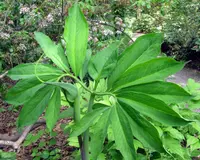
Green dragon, Arisaema dracontium, is a woodland perennial from eastern North America. It belongs to the arum family and grows from an underground tuber. The plant produces a single large, divided leaf and a narrow, curved flower structure that hides a spadix, giving it a subtle, unusual look. It later forms a dense cluster of bright red berries. In nature, green dragon occurs in moist, shaded forests and along stream banks. It prefers dappled light, consistently moist but well-drained soil, and rich organic matter. With the right shade and moisture, it is moderately easy to grow, and learning how to care for green dragon helps it form stable clumps over time.

Main Plant Requirements

Care Difficulty

Moderate Care

Light Preference

Partial Shade

Water Requirements

Keep Soil Moist

Temperature Preference

Cold Hardy

Hardiness Zone

4–9

Soil Texture

Loamy, Silty, Organic-rich

Soil pH

Acidic (5.5–6.5), Slightly acidic (6.5–7.0)

Soil Drainage

Moist but well-drained

Fertilization

Minimal (feed rarely)

Get Personalized Care Plan

Scan your plant to receive care tips personalized for your specific plant

Available on iOS and Android

How to Care for the green dragon

Arisaema dracontium grows best in light that mimics its native woodland understory.

  • Provide bright dappled shade or 2–4 hours of gentle morning sun, avoiding harsh midday and afternoon sun that can scorch foliage.
  • Site plants under open trees or on the north or east side of structures, where green dragon receives filtered light through most of the day.
  • In spring, more light is tolerated before canopy leaf-out; by summer, ensure consistent partial to full shade to prevent leaf yellowing and stress.

This woodland perennial prefers steadily moist, cool soil without prolonged saturation.

  • Water when the top 2–3 cm of soil feels slightly dry, aiming for evenly moist conditions during active growth in spring and early summer.
  • Use humus-rich, well-drained soil so moisture holds around the roots but excess water can drain away, reducing the risk of root rot.
  • Reduce watering after foliage dies back and the tuber goes dormant, and watch for drooping or crisping leaves as signs of underwatering during the growing season.

This species is a hardy woodland plant that tolerates cool winters and mild to warm summers.

  • Active growth occurs best around 60–75°F (16–24°C), typical of late spring woodland conditions with moderate day–night fluctuations.
  • The tuber survives winter cold down to about 0°F (−18°C) when planted in the ground under mulch, entering full dormancy during freezing months.
  • In summer, short periods up to 85–90°F (29–32°C) are tolerated if soil stays moist and shaded; extended heat with dry soil can stress and stunt growth.

This woodland aroid prefers moderate, slightly moist air similar to sheltered outdoor shade conditions.

  • Aim for 40–60% humidity; typical shaded garden or porch conditions usually meet this for green dragon.
  • Plants tolerate short dry spells but prolonged very dry air combined with heat can cause leaf edges to brown and droop.
  • Increase humidity outdoors by mulching heavily around the pot and grouping containers, or indoors by using a pebble tray rather than misting.

This species prefers loose, humus-rich soil that mimics moist woodland conditions.

  • Use a deep, loamy mix with high organic matter, such as 50% composted leaf mold, 30% garden loam, and 20% pine bark fines for structure.
  • Ensure steady drainage that stays evenly moist but never waterlogged by raising beds slightly or using tall containers with drainage holes.
  • Keep pH slightly acidic to neutral, around 6.0–7.0, avoiding strongly alkaline substrates that can limit nutrient uptake for Arisaema dracontium.
  • Improve aeration and prevent compaction by incorporating coarse sand or fine grit into heavier soils, and avoid pure clay or dense peat-only mixes.

This species can be grown in containers when given a deep, cool, and evenly moist root zone.

  • Choose a tall, narrow pot to provide vertical depth for the tuber while limiting excess surface area that dries out quickly.
  • Select a heavier material, such as ceramic or thick-walled clay, to stabilize the tall stem and prevent tipping in wind.
  • Elevate the container slightly on feet or blocks so drainage holes remain clear and excess water escapes rapidly after rain or irrigation.

Arisaema dracontium benefits from light, soil-building nutrition rather than heavy fertilization.

  • Use a thin layer of compost or leaf mold in early spring to enrich the soil around emerging shoots.
  • Apply a balanced, diluted liquid fertilizer (around 1/4–1/2 strength) once a month during the active growing season if growth seems weak.
  • Avoid feeding during dormancy and winter, as the corm is resting underground.
  • For green dragon in poor soils, a slow-release, low-dose forest-floor style fertilizer can support steady growth.

Arisaema dracontium requires minimal pruning, mainly to keep the planting clean and disease-free.

  • Cut back yellowing or dead foliage at the end of the growing season using clean, sharp scissors or pruners.
  • Remove any damaged or diseased leaves promptly to reduce fungal issues and improve airflow.
  • Avoid cutting green, healthy stems, since this can reduce photosynthesis and weaken the corm.
  • Do not shape the plant; its natural form is part of normal Arisaema dracontium growth.

This woodland species is usually grown in the ground and prefers infrequent disturbance once established.

  • Transplant only when clumps become crowded, growth declines, or stems emerge very close together.
  • Choose early spring, just as new shoots start to appear, to dig and move the corms with minimal shock.
  • Lift the clump carefully, keeping as much surrounding soil as possible around the roots and corms.
  • Replant at the same depth in moist, humus-rich soil, water gently, and shade the area until growth resumes.

Arisaema dracontium is typically propagated by division of corms and by seed under cool, moist conditions.

  • Divide mature clumps in early spring, separating offsets from the main corm with a clean, sharp knife.
  • Replant divisions at the same depth in well-drained, humus-rich soil, and keep evenly moist until established.
  • Sow fresh seeds in fall in a cold frame or outdoor pots; natural winter chilling aids germination.
  • Expect seed-grown plants to take several years to reach flowering size, so division is preferred for faster increase.

This species is cold hardy in much of the US and normally needs only simple winter care once established.

  • After frost blackens the foliage, allow stems to die back, then remove them to reduce disease carryover.
  • Apply a 5–7 cm layer of leaf mulch over the root zone in late fall to buffer freeze–thaw cycles.
  • In colder regions or with young plants, increase mulch depth and keep soil from staying waterlogged.

Care Tips

Mark Dormant Sites

Flag or label the exact spots where tubers grow before foliage dies back so you avoid disturbing or damaging them during fall cleanup or spring digging.

Lift And Divide

Every 3–5 years, lift clumps in late fall after dieback, gently separate offsets with clean tools, and replant them at the same depth to maintain vigor and expand the colony.

Use Woodland Mulch

Apply a loose 5–8 cm layer of shredded leaves or pine needles each fall to mimic forest litter, moderating soil temperature and protecting shallow roots and tubers.

Rodent Protection Ring

In areas with vole or chipmunk activity, plant tubers inside buried wire-mesh baskets or surround the planting hole with hardware cloth to reduce gnawing damage.

Check For Self-Seeding

Monitor surrounding soil for volunteer seedlings each spring and either thin, transplant, or remove them so the patch does not become overcrowded when growing green dragon.

Common Pests and Diseases

Slugs and snails

This pest group often feeds on emerging shoots, young spathes, and leaves, leaving irregular holes and ragged edges. Symptoms include slime trails on soil or foliage, especially after rain or in very damp sites.

Solution

Hand-pick at dusk, use copper barriers or shallow beer traps, and keep dense debris away from the crowns to reduce hiding places. If damage is heavy, apply iron phosphate slug bait around plants according to label directions, avoiding direct contact with stems and where pets forage.

Viral mosaic

This disease causes mottled, streaked, or distorted foliage, sometimes with uneven yellow or light-green patches between the veins. Symptoms include reduced vigor and misshapen leaves or inflorescences on affected clumps.

Solution

Promptly remove and destroy any plants showing clear mosaic patterns and distortion, and disinfect cutting tools with 10% bleach or 70% alcohol after use. Control sap-sucking insects nearby and avoid moving sap between plants when dividing or handling corms to limit virus spread.

Fungal leaf spots

This disease produces small water-soaked or brown spots on leaves that may enlarge, coalesce, and cause premature yellowing. Symptoms include more severe spotting in warm, wet weather or in dense, poorly ventilated plantings.

Solution

Remove and discard heavily spotted leaves and any fallen foliage to reduce spore sources. Improve air movement by thinning crowded clumps, water at soil level in the morning, and if spotting is persistent, use a labeled ornamental fungicide according to directions during wet periods.

Spider mites

These insects can occur during hot, dry spells and cause fine speckling, dull or bronzed foliage, and very fine webbing on the undersides of leaves. Symptoms include slowed growth and leaves that look dusty or faded when infestation is advanced.

Solution

Rinse leaf undersides thoroughly with a firm stream of water every few days and increase ambient humidity around the planting site if possible. For persistent infestations, apply insecticidal soap or horticultural oil, ensuring full coverage of leaf undersides and repeating as directed until populations drop.

Interesting Facts

Unusual jack-in-the-pulpit relative

This species is the only North American member of the dragon arums, with a long, tail-like spadix that can extend far beyond the hooded spathe and gives the plant its common name, green dragon.

Camouflaged woodland leaves

Its distinctive single leaf is deeply divided into 7–15 narrow leaflets that spread like a fan, helping it blend into moist woodland understories where it often grows among ferns and other shade plants.

Striking berry transformation

After flowering, the inflorescence develops into a dense spike of berries that change from green to bright orange-red by late summer, providing a conspicuous visual signal to birds that disperse the seeds.

Botan icon

Did you know?

This species is considered an indicator of relatively undisturbed, high-quality hardwood forests in parts of its range, so botanists sometimes use its presence to help assess the ecological integrity of woodland habitats.

FAQs about green dragon

Lack of blooming usually comes from plants being too young, crowded, or stressed by transplanting. Poor nutrient reserves, recent division, or deep shade also reduce flowering. Allow several seasons of stable growth before expecting reliable blooms.

Grow Healthy Plants with Botan Care

Keep your plants happy and healthy with plant identification, disease detection, and easy care guidance.

Botan plant care app — identify plants on mobile

Explore More Plants