Black cohosh Care (Actaea racemosa)

Also known as: black baneberry, Black Bugbane
Black cohosh

About Black cohosh

Black cohosh (Actaea racemosa) is a perennial woodland plant native to eastern North America. It grows in clumps with tall, upright flower stems above dense, divided foliage.

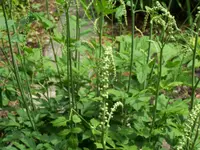
The plant produces slender, white flower spikes in summer, giving a soft, airy look in shaded beds and naturalistic plantings. It is commonly used in shade gardens and woodland borders.

Actaea racemosa prefers partial to full shade, consistent moisture, and humus-rich, well-drained soil. Once settled, it is long-lived but slow to establish.

Because it resents drying out and disturbance of its roots, it can be moderately challenging for beginners, so learning how to care for Black cohosh before planting is helpful.

Main Plant Requirements

Care Difficulty

Moderate Care

Light Preference

Partial Shade

Water Requirements

Keep Soil Moist

Temperature Preference

Cold Hardy

Hardiness Zone

3–8

Soil Texture

Loamy, Silty, Organic-rich

Soil pH

Acidic (5.5–6.5), Slightly acidic (6.5–7.0)

Soil Drainage

Moist but well-drained

Fertilization

Minimal (feed rarely)

Get Personalized Care Plan

Scan your plant to receive care tips personalized for your specific plant

Available on iOS and Android

How to Care for the Black cohosh

This woodland perennial prefers cool, shaded conditions with limited direct sun.

  • Provide 2–4 hours of gentle morning sun or bright dappled shade; avoid harsh afternoon sun to prevent leaf scorch on Black cohosh.
  • Site the plant under open tree canopies or on the north or east side of buildings, where light is filtered but not deep, dense shade.
  • In hotter summers, increase shade cover; in cooler, cloudy regions, allow a bit more morning sun to support flowering.

This species thrives in consistently moist, humus-rich soil that never fully dries out.

  • Aim for evenly moist ground; in typical garden beds, allow only the top 2–3 cm of soil to dry slightly before the next thorough soak.
  • During hot, dry periods, monitor Actaea racemosa every few days; drooping leaves that recover by evening suggest it needs deeper watering and better mulch coverage.
  • Watch for yellowing, limp foliage and sour-smelling soil as signs of overwatering or poor drainage; improve organic matter and drainage to protect the roots.

This hardy perennial is adapted to cool to moderate climates with cold winters.

  • Optimal growth occurs around 60–75°F (16–24°C), especially during active spring and early summer growth.
  • The plant tolerates winter lows near 0°F (-18°C) when well mulched and fully dormant, but young crowns benefit from extra leaf or bark mulch.
  • In summer, sustained heat above 86°F (30°C) can stress foliage; provide extra shade and moisture during heatwaves to limit leaf scorch and wilting.

This woodland perennial prefers moderately moist air but usually copes with typical outdoor humidity.

  • Aim for 40–60% humidity in sheltered, shaded planting sites to reduce leaf edge browning.
  • In prolonged hot, dry spells, low humidity plus dry soil causes drooping foliage and crisping leaf tips.
  • Increase local humidity outdoors by mulching heavily and grouping Black cohosh near other shade plants to slow evaporation.

This species needs consistently moist, deep, humus-rich soil that stays aerated and never waterlogged.

  • Use a loamy soil rich in organic matter, blending garden loam with 30–50% composted leaf mold or well-rotted compost.
  • Ensure slow, even drainage; soil should hold moisture yet crumble easily rather than smear or compact when squeezed.
  • Aim for slightly acidic to neutral pH, roughly 5.5–7.0, avoiding strongly alkaline or limy sites that reduce nutrient availability.
  • Improve aeration and drainage in heavier soils with fine bark, composted wood chips, or a small amount of coarse sand while avoiding dense clay pockets.

This species can be grown in large outdoor containers but needs extra attention to root space and moisture stability.

  • Choose a deep, heavy container to anchor tall flowering stalks and reduce tipping in wind.
  • Use a moisture-retentive mix in a tall pot so the lower root zone stays evenly damp between waterings.
  • Position the container where it is shaded and protected from hot reflective surfaces that overheat the root zone.

This woodland perennial benefits from modest feeding in richer garden soils but does not need heavy fertilization.

  • Apply a light layer of compost or well-rotted leaf mold in early spring as the primary nutrient source.
  • Optionally use a balanced slow-release fertilizer (around 10-10-10) at half strength once in late spring.
  • Avoid synthetic high-nitrogen products, which can reduce flowering and cause weak, soft growth.
  • Do not feed during fall and winter dormancy, as Black cohosh is not actively growing.

Actaea racemosa needs only light pruning to maintain health and tidy appearance.

  • Cut back flower stalks at the base after blooms fade if seed is not desired, to keep clumps neat.
  • In late fall or very early spring, remove dead, damaged, or diseased stems down to ground level.
  • Thin out congested stems lightly to improve air flow without cutting into the woody crown.
  • Use clean, sharp hand pruners and disinfect blades when removing diseased tissue.

This species is best grown in the ground and resents frequent disturbance, so transplant only when necessary.

  • Look for signs such as crowded crowns, declining vigor, or stunted, slow growth before deciding to move a clump.
  • Schedule transplanting for early spring or early fall, when temperatures are cool and soil moisture is stable.
  • Divide or lift the plant no more often than every 5–7 years to limit root stress and setback in flowering.
  • Dig a wide hole, keep the root ball as intact as possible, water thoroughly, and shade the plant until re-established.

Multiplying this plant is possible but somewhat slow, so propagation is usually limited to planned garden expansion rather than frequent division.

  • Divide mature clumps in early spring, lifting large sections with a sharp spade to keep roots intact.
  • Replant divisions at the same depth in moist, humus-rich soil, then water consistently until strong new growth appears.
  • Sow ripe seeds outdoors in fall; they need natural cold stratification to break dormancy and germinate.
  • Provide partial shade, even moisture, and minimal disturbance to young plants during their first 1–2 growing seasons.

This hardy perennial dies back to the ground and generally needs minimal winter care in most temperate gardens.

  • Tolerates typical winter frosts in USDA zones where it is commonly grown, with buds safely below soil level.
  • After hard frost, allow stems to dry, then cut them back to ground level to reduce disease carryover.
  • Apply a 5–8 cm layer of leaf mulch over the root zone in colder areas to moderate soil temperature.

Care Tips

Sturdy stalk support

Install low, unobtrusive stakes or a peony-style ring in late spring before the tall flower spikes elongate, so the stems stay upright in wind and rain without breaking at the base.

Cool root mulch

Maintain a 5–8 cm layer of shredded bark or leaf mold around the root zone to keep the soil evenly cool and moist, but pull mulch a few cm back from the crown to prevent rot.

Gradual site transition

When moving a plant to a shadier or brighter spot, shift it over 1–2 seasons by dividing and replanting pieces slightly closer to the new light conditions, which reduces shock and maintains flowering performance while growing Black cohosh.

Slug and snail management

In early spring, place slug traps or rough barriers (such as crushed gravel bands) around emerging shoots and remove hiding spots like dense ground debris to protect young foliage from chewing damage.

Long-term clump renewal

Every 6–8 years, divide the clump in early spring or early fall, replanting only the healthiest, firm root sections so the plant maintains strong bloom production and resists decline from overcrowding.

Common Pests and Diseases

Leaf spot

This disease causes irregular brown to purplish lesions on foliage, often with yellowing and premature leaf drop in moist, shaded plantings.

Solution

Remove and discard affected leaves, avoid overhead watering, and space plants to improve airflow; in repeatedly affected beds, clean up all plant debris in fall and consider rotating planting locations to reduce fungal spore buildup.

Rust

This disease produces small orange to brown pustules on the undersides of leaves, sometimes leading to distorted or yellowing foliage in dense woodland plantings.

Solution

Promptly remove and destroy infected leaves, thin surrounding vegetation to increase light and air movement, and keep irrigation directed at the soil surface rather than the foliage to limit spread.

Slugs and snails

These pests chew irregular holes in leaves, often leaving tattered foliage and shiny slime trails, especially in cool, damp shade where plants naturally grow.

Solution

Hand-pick slugs and snails in the evening, use beer traps or iron phosphate bait around clumps, and reduce hiding places by removing mulch that is too thick while still maintaining enough organic matter for Actaea racemosa care.

Leaf miners

These insects create winding, pale tunnels within the leaf tissue, which can reduce the ornamental quality of the foliage but rarely kill established plants.

Solution

Pinch off and discard affected leaves to remove larvae, encourage natural predators by avoiding broad-spectrum insecticides, and keep plants well watered and unstressed so new growth replaces damaged foliage quickly.

Aphids

These insects cluster on young shoots and flower stems, sucking sap and causing curling or distorted leaves, and may excrete sticky honeydew that attracts sooty mold on nearby surfaces.

Solution

Wash colonies off with a strong but controlled stream of water, prune heavily infested stems, and if needed apply insecticidal soap or neem oil, making sure to fully coat the undersides of leaves and repeat at 5–7 day intervals until populations decline.

Interesting Facts

Tall woodland flower spikes

This woodland perennial can send up flowering stems that reach about 1.5–2.5 m tall in ideal conditions, rising well above most surrounding understory plants and making its white flower wands very visible to pollinators.

Specialist pollinator visitors

The tiny, brush-like flowers produce pollen but almost no nectar, so the plant mainly attracts pollen-feeding insects such as small bees, syrphid flies, and beetles that crawl along the long racemes while foraging.

Late-season woodland bloomer

In much of its native eastern North American range, this species flowers relatively late in the season, often from late June into August, providing resources for insects after many spring woodland wildflowers have finished blooming.

Botan icon

Did you know?

The roots of this species were widely used by several Indigenous peoples of North America long before European contact, and it later became one of the first North American native plants to enter European pharmacopoeias in the 19th century, where its rhizome was officially listed and studied as a medicinal drug in multiple national formularies.

FAQs about Black cohosh

Lack of flowers usually comes from plants being too young, too dry, or in deep shade. This species often needs 3–4 years to flower well, plus consistently moist soil and dappled light, not heavy competition from roots.

Grow Healthy Plants with Botan Care

Keep your plants happy and healthy with plant identification, disease detection, and easy care guidance.

Botan plant care app — identify plants on mobile

Explore More Plants