harvestlice Care (Agrimonia parviflora)

Also known as: swamp agrimony, harvestlice agrimony
harvestlice

About harvestlice

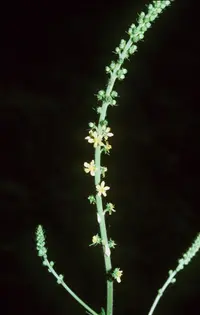
Harvestlice, Agrimonia parviflora, is a perennial herb in the rose family, known for its slender, upright stems and small yellow flowers held in narrow spikes. After flowering, it forms burr-like seed clusters that cling to fur and clothing, which helps with seed dispersal.

This species is native to much of eastern North America, where it grows in open woods, meadows, and along roadsides and stream edges. It generally prefers sun to light shade, with moderately moist, well-drained soils.

Its hardy nature, tolerance of different soil types, and low pest pressure make it relatively straightforward to establish, especially in naturalistic or wildflower plantings. Gardeners who want to learn how to care for harvestlice mostly focus on giving it enough light and space to self-seed.

Main Plant Requirements

Care Difficulty

Easy Care

Light Preference

Full Sun

Water Requirements

Moderate Water

Temperature Preference

Cold Hardy

Hardiness Zone

4–9

Soil Texture

Sandy, Loamy, Silty

Soil pH

Acidic (5.5–6.5), Slightly acidic (6.5–7.0)

Soil Drainage

Moist but well-drained

Fertilization

Minimal (feed rarely)

Get Personalized Care Plan

Scan your plant to receive care tips personalized for your specific plant

Available on iOS and Android

How to Care for the harvestlice

Agrimonia parviflora grows best in bright outdoor conditions with moderate direct sun.

  • Provide 4–6 hours of direct sun daily, ideally morning sun with light afternoon shade to reduce heat stress.
  • Plant in an open spot or woodland edge where it receives dappled light during the hottest midday hours, as full intense afternoon sun can scorch foliage.
  • In summer, monitor for pale, weak stems as a sign of too little light; caring for harvestlice in cooler climates may allow slightly more direct sun exposure.

This species prefers steadily moist but not saturated soil during the growing season.

  • Water when the top 2–4 cm of soil feel dry, allowing moisture to reach the deeper root zone without leaving standing water.
  • In spring and summer, adjust watering after rain events, focusing on well-drained loam so roots of Agrimonia parviflora receive air as well as moisture.
  • Watch for yellowing, limp foliage as a sign of overwatering and crisp, browning leaf edges as an indicator of underwatering, then adjust frequency accordingly.

This hardy perennial tolerates a wide temperature range typical of temperate climates.

  • Active growth occurs best around 65–80°F (18–27°C), with strongest development in mild, stable late-spring and early-summer conditions.
  • Mature plants survive winter down to about 0–5°F (−18 to −15°C) when well rooted, dying back above ground but resprouting in spring.
  • During hot spells above 90°F (32°C), provide soil moisture and some afternoon shade, as prolonged extreme heat can slow growth and stress foliage.

This species tolerates a wide humidity range and rarely needs special humidity management outdoors.

  • Target 40–60% relative humidity if grown indoors, similar to typical household air.
  • Harvestlice handles brief drier air but may show browned leaf edges and slower growth if kept very arid for long periods.
  • Increase humidity indoors only if air is extremely dry by grouping plants or placing a shallow water tray nearby, without wetting the roots.

Agrimonia parviflora prefers moderately moist, well-aerated soil that never stays waterlogged.

  • Use a loamy mix with 40–60% mineral soil, 20–30% compost, and 10–20% coarse sand for structure and nutrients.
  • Aim for slightly acidic to neutral pH, around 6.0–7.0, which supports balanced nutrient availability.
  • Improve drainage and aeration by blending in coarse sand or fine gravel rather than peat-heavy media that compact easily.
  • Avoid heavy clay that holds standing water or very pure sand that dries out and leaches nutrients too quickly.

This species can be grown in containers if the pot is deep and stable enough for its fibrous root system and upright stems.

  • Choose a container at least 25–30 cm deep to allow vertical root development and prevent the plant from drying out too fast.
  • Select a heavier material like ceramic or thick-walled terracotta to reduce tipping risk from tall, leafy stems.
  • Ensure generous drainage holes and elevate the pot slightly so excess water exits quickly and does not pool under the base.

Agrimonia parviflora, often called harvestlice, usually needs minimal fertilization in average garden soil.

  • For poor or very sandy soils, apply a light layer of compost once in early spring to support new growth.
  • Use a balanced, slow-release fertilizer (around 10-10-10) at half strength if foliage looks pale or growth weak.
  • Limit feeding to 1–2 times during the growing season, avoiding mid-summer and late-season applications.
  • Do not fertilize in winter or dormancy, as inactive roots cannot use added nutrients effectively.

Pruning Agrimonia parviflora is straightforward and mainly focused on maintaining health and preventing self-seeding spread.

  • Cut back spent flowering stems in late summer or early fall to reduce self-seeding and keep a tidy clump.
  • Remove dead, damaged, or crossing stems at ground level using clean, sharp pruning shears.
  • Thin crowded shoots lightly in early spring to improve air flow and reduce foliar disease risk.
  • Avoid hard cutting into the crown, as light, selective trimming preserves the plant’s natural habit and flowering.

This species is usually grown in the ground, so care focuses more on transplanting than on container repotting.

  • Plan transplanting for early spring or early fall when weather is cool and soil moisture is moderate.
  • Move plants when growth slows, clumps become congested, or stems appear weaker in the center.
  • Dig a wide root ball, keep soil around the roots, and transplant quickly into a similar or slightly richer, well-drained soil.
  • Water deeply after transplanting, then keep soil evenly moist for 1–2 weeks to reduce root stress and support re-establishment.

Agrimonia parviflora is most commonly propagated by seed or careful division of established clumps.

  • Collect ripe seed in late summer, then sow outdoors in fall so natural winter chilling breaks dormancy.
  • For indoor sowing, stratify seed in moist medium at 35–40°F for 6–8 weeks before spring germination.
  • Divide mature clumps in early spring, lifting the root mass and separating sections with several buds and roots.
  • Replant divisions promptly at the same depth, water well, and keep soil lightly moist until new growth is established.

This hardy perennial typically needs little special winter care in most temperate climates.

  • Established plants tolerate normal frosts and winter lows in much of the US without damage.
  • In colder zones or exposed sites, apply a 5–7 cm mulch layer after the ground cools to buffer freeze–thaw cycles.
  • For container-grown plants, move pots to a sheltered, unheated area to prevent root freeze and excessive drying.

Care Tips

Support Tall Stems

Install low, unobtrusive ring stakes or short pea netting around the clump in early spring so the slender flowering stems stay upright and do not lodge or snap in wind or heavy rain.

Encourage Dense Colonies

When clumps spread by rhizomes, lift and replant outer sections every 2–3 years along the bed edge to form a denser colony and maintain a clear boundary between this plant and neighboring species.

Time Harvest Correctly

For medicinal or craft use, cut the upper 15–25 cm of stems when about half the flowers on each spike are open, then dry them in loose bundles in a shaded, well-ventilated area to preserve color and aroma.

Monitor Seed Spread

If you do not want this species to self-sow, shear off the seed heads as soon as the burr-like fruits begin to develop, before they dry and cling to clothing or animal fur.

Wildlife-Safe Edging

Use shallow mulch paths or low stone edging around planting areas instead of solid landscape fabric so the plant can naturalize in a controlled strip while still allowing ground-dwelling wildlife to move through the site when growing harvestlice.

Common Pests and Diseases

Aphids

These insects cluster on young stems, undersides of leaves, and flower spikes, sucking sap and causing distortion or sticky honeydew deposits. This pest is often attracted to the tender new growth and can stunt stems if populations are high.

Solution

Dislodge colonies by spraying plants with a firm stream of water, then follow with an application of insecticidal soap or a light horticultural oil, coating stems and leaf undersides. Encourage or protect natural predators such as lady beetles and avoid high nitrogen fertilization, which promotes the soft growth aphids prefer.

Leaf spot

This disease causes small to medium brown or purplish lesions on leaves that may merge, leading to early yellowing and drop of lower foliage. Symptoms include more severe spotting in dense, moist stands or during extended wet weather.

Solution

Remove and destroy heavily spotted leaves and any dense thatch around plants to reduce moisture retention and inoculum. Improve air movement by thinning nearby vegetation, water at soil level in the morning, and if the problem is persistent in plantings of harvestlice indoor care, use a labeled broad-spectrum fungicide as a last resort.

Powdery mildew

This disease produces white or gray powdery patches on upper leaf surfaces and sometimes on stems, which can reduce photosynthesis and vigor late in the season. Symptoms include curling or yellowing leaves in severe cases.

Solution

Increase spacing and airflow around plants and avoid overhead irrigation, especially in the evening. Remove and discard heavily infected foliage and, if needed, apply a sulfur or potassium bicarbonate fungicide early in the infection period, following label directions carefully.

Spider mites

These tiny pests feed on the undersides of leaves, causing fine stippling, bronzing, and in severe cases partial leaf drop, often during hot, dry weather. This pest may also leave very fine webbing between leaves and stems.

Solution

Rinse foliage thoroughly with water, focusing on leaf undersides, and repeat several times per week to knock down populations. If needed, use insecticidal soap or a light horticultural oil, and maintain moderate humidity and reduced dust to make conditions less favorable for mites.

Interesting Facts

Hooked burr dispersal

Its small spiny fruits form burrs with hooked bristles that readily cling to animal fur and clothing, allowing the seeds to travel far from the parent plant along forest trails and field edges.

Late-summer bloomer

This species flowers later in the season than many related agrimonies, often producing tall spikes of tiny yellow flowers from mid to late summer in moist, partially shaded habitats of eastern North America.

Moist-habitat specialist

Unlike several other agrimony species that prefer drier soils, this plant is strongly associated with moist bottomlands, stream banks, and damp thickets, where it often grows among grasses and sedges.

FAQs about harvestlice

This species spreads mainly by seed and small burr-like fruits that cling to fur and clothing. In average garden soil it forms loose colonies, not dense mats, but unwanted seedlings should be pulled before they set seed.

Grow Healthy Plants with Botan Care

Keep your plants happy and healthy with plant identification, disease detection, and easy care guidance.

Botan plant care app — identify plants on mobile

Explore More Plants