Sand surface dressing
Add a 1–2 cm top layer of coarse sand or fine grit around the plant to keep the stem base dry, reduce rot risk, and mimic the free-draining desert surface it is adapted to.

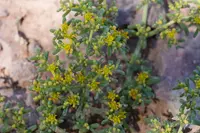
Hureim, Zygophyllum simplex, is a small desert shrub adapted to very dry, sandy habitats. It often forms low, spreading clumps with fleshy, paired leaves. The foliage helps the plant store water and cope with intense sun and wind in arid regions of North Africa and the Middle East. Small, pale yellow flowers appear close to the stems and develop into dry seed capsules. This strong drought tolerance is its main trait, making it suitable only for very bright, lean, and dry conditions. Gardeners who want to care for hureim need to provide fast-draining soil, minimal watering, and plenty of direct light.

Care Difficulty
Moderate Care

Light Preference
Full Sun

Water Requirements
Low Water

Temperature Preference
Warm Climate

Hardiness Zone
10–12

Soil Texture
Sandy, Rocky

Soil pH
Neutral (7.0), Slightly alkaline (7.0–7.5)

Soil Drainage
Well-drained

Fertilization
Minimal (feed rarely)
Scan your plant to receive care tips personalized for your specific plant
Available on iOS and Android
Zygophyllum simplex prefers strong, direct light that mimics its desert habitat.
This desert species needs sparse, deep watering and fast-drying soil to stay healthy.
This plant thrives in hot, arid conditions but suffers in frost and prolonged chill.
This desert annual accepts very dry air and does not need extra humidity.
This species prefers very loose, mineral, fast-draining soil that mimics desert sands.
This species can be grown in containers if the pot is set up to drain and dry quickly.
This desert annual generally needs no fertilizer, but light feeding can support growth in very poor soils when caring for hureim.
Pruning needs for Zygophyllum simplex are minimal and mostly corrective.
This species is usually grown in the ground, so focus on careful transplanting rather than frequent repotting.
Zygophyllum simplex is most commonly propagated from seed rather than vegetative methods.
This warm-desert annual has low winter-care needs, as it typically completes its life cycle before cold weather in most climates.

Plant Health Check
Not sure what's wrong with your plant? Check your plant's health inside the app.
This desert shrub is a halophyte, meaning it can grow in very salty soils that exclude many other plants, and it often colonizes saline sand flats and coastal deserts in North Africa and the Middle East.
Its small, fleshy leaves function as water-storage organs, helping the plant survive long dry periods in arid habitats with minimal rainfall.
The plant’s branching root system and low, tufted growth form help bind loose sand and contribute to stabilizing dunes and sandy soils in desert ecosystems.

In several arid regions of North Africa and the Middle East, this species is recognized as a valuable forage plant, since its salty, succulent tissues can provide both food and moisture for grazing animals such as camels, sheep, and goats when other vegetation is scarce.
This species behaves as an annual in most habitats, completing its life cycle in a single growing season. In especially mild, stable climates, short-lived perennial behavior is possible, but garden cultivation usually treats it as an annual.
Keep your plants happy and healthy with plant identification, disease detection, and easy care guidance.