White Lupin Care (Lupinus albus)

Also known as: fig bean, wolf bean, field lupin
White Lupin

About White Lupin

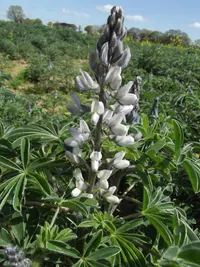
White lupin, Lupinus albus, is an annual flowering legume grown for both ornamental use and seed production. It forms upright, bushy plants with palm-shaped leaves and dense spikes of white, sometimes faintly blue-tinted, flowers.

This species is native to the Mediterranean region but is now cultivated in many temperate areas for its attractive display and soil-improving qualities. It prefers sunny, open sites with well-drained, slightly acidic to neutral soil.

The plant is relatively easy to grow where soil drainage is good, but it dislikes waterlogged or very compacted ground. Understanding how to care for White Lupin mainly involves providing enough sun, moderate moisture, and lean, not overly rich, soil.

Main Plant Requirements

Care Difficulty

Moderate Care

Light Preference

Full Sun

Water Requirements

Moderate Water

Temperature Preference

Cool Climate

Hardiness Zone

6–9

Soil Texture

Sandy, Loamy

Soil pH

Acidic (5.5–6.5), Slightly acidic (6.5–7.0)

Soil Drainage

Well-drained

Fertilization

Minimal (feed rarely)

Get Personalized Care Plan

Scan your plant to receive care tips personalized for your specific plant

Available on iOS and Android

How to Care for the White Lupin

This annual legume prefers bright conditions in open ground for sturdy growth and flowering.

  • Provide 6–8 hours of direct sun daily; in hot inland areas, give morning sun with light afternoon shade to reduce stress.
  • Tolerates light partial shade (around 4–5 hours sun), but flowering and stem strength decline as shade increases.
  • In late spring and summer, monitor for leaf scorch or drooping in intense afternoon sun and use nearby taller plants to cast filtered shade if needed.

This species needs consistent but not excessive moisture in freely draining soil.

  • Water when the top 3–5 cm of soil feels dry, then soak the root zone deeply and allow excess to drain away.
  • During cool, rainy periods, reduce or skip watering to avoid waterlogged soil, root rot, and yellowing, soft foliage in Lupinus albus.
  • In warmer, dry spells, expect faster drying; watch for dull, slightly drooping leaves as a cue to water, but avoid standing water around the crown.

This cool-season annual grows best in mild conditions without extreme heat or hard frost.

  • Optimal growth occurs around 55–70°F (13–21°C), especially during early development and flowering stages in spring.
  • Plants tolerate light frost down to about 25–28°F (-4 to -2°C), but repeated freezes or colder snaps can damage buds and young foliage.
  • In hot summers above 80–85°F (27–29°C), flowering declines and plants may finish early, so schedule sowing to place peak growth in cooler months.

Lupinus albus handles a wide humidity range and usually does not need special humidity management outdoors.

Lupinus albus prefers well-aerated, sandy to loamy soil with free drainage.

  • Use a mix of roughly 60–70% sandy or loamy topsoil with 30–40% coarse sand or fine grit to keep pores open.
  • Maintain soil pH around 6.0–7.5; avoid strongly acidic or alkaline conditions that limit nutrient uptake.
  • Incorporate only modest amounts of well-rotted compost, as overly rich, high-nitrogen substrates promote weak, lush growth and fewer flowers.
  • Avoid compacted, heavy clay or waterlogged sites; raised beds or mounded rows help improve drainage and root oxygen levels.

This species can be grown in containers, but only when pots mimic its preference for deep, free-draining root conditions.

  • Choose a tall, deep container (at least 30–40 cm) to accommodate the long taproot and reduce root binding near the base.
  • Use a rigid, heavier pot material to stabilize the plant against wind, as tall flower spikes can make containers top-heavy.
  • Elevate the container slightly on pot feet or bricks so drainage holes stay clear and excess water escapes rapidly.

Lupinus albus fixes nitrogen and needs only modest feeding in average garden soil.

  • For poor soils, apply a light top-dressing of well-rotted compost in early spring before strong growth starts.
  • If using fertilizer, choose a low-nitrogen, balanced NPK such as 5-10-10 to avoid lush, weak foliage.
  • Feed once at the start of the growing season; avoid repeated applications through summer.
  • Use fertilizer at half the label strength and skip feeding entirely in winter or dormancy.

Pruning Lupinus albus focuses on maintaining flowering performance and removing weak growth.

  • In late spring to early summer, deadhead spent flower spikes down to the first strong leaf to encourage rebloom.
  • Cut back any dead, damaged, or diseased stems at the base using clean, sharp hand pruners.
  • Thin out crowded stems after flowering to improve air circulation and reduce fungal problems.
  • In late fall, trim dry, collapsed foliage close to soil level while leaving crowns intact for next year.

Lupinus albus has a deep taproot and dislikes disturbance, so transplanting must be done carefully.

  • Transplant young plants only when roots lightly fill the pot or growth stalls, usually in the first season.
  • Move plants in early spring or early fall, avoiding hot, dry weather that stresses the taproot.
  • Lift with a deep, wide soil ball to keep the taproot intact and minimize root breakage.
  • Replant immediately into loose, well-drained soil and water thoroughly, then keep evenly moist until established.

Propagation of Lupinus albus is most reliable from seed rather than division or cuttings.

  • Sow seeds in late winter to early spring under cover, or directly outdoors after frost has passed.
  • Scarify hard seed coats by gently nicking or rubbing with sandpaper, then soak 12–24 hours to improve germination.
  • Use a free-draining seed mix, keep at 60–70°F, and maintain light, even moisture, not waterlogging.
  • Transplant seedlings while small, handling carefully to avoid damaging the emerging taproot.

Lupinus albus is reasonably cold hardy in many temperate climates and usually needs minimal winter care.

  • After foliage dies back, cut stems near ground level, leaving the crown undisturbed.
  • Apply a 5–8 cm layer of mulch around the root zone in late fall to buffer freeze–thaw cycles.
  • In very cold or exposed sites, add extra mulch or use a breathable fabric to shield crowns from severe frost.

Care Tips

Support Tall Spikes

Install low, unobtrusive stakes or a mesh support on the windy side of the bed before flowering starts, so the tall, heavy flower spikes stay upright and do not snap in storms.

Encourage Deep Roots

Water less frequently but more deeply in the establishment phase, encouraging roots to grow down rather than stay near the surface, which makes plants more drought-resilient and stable.

Rotate Planting Area

Move the planting site at least every 3–4 years to reduce soil-borne diseases and avoid nutrient imbalances, especially if you grow Lupinus albus as a repeated crop or green manure.

Manage Self-Seeding

If you do not want volunteer plants the following year, cut and remove seed pods as they begin to brown, or conversely leave selected pods on the healthiest plants to dry fully for controlled seed collection.

Check For Nodulation

Gently lift one young plant and inspect roots for small, pale pink nodules from nitrogen-fixing bacteria; if they are absent, inoculate seeds or soil with the appropriate Rhizobium strain before the next round of caring for White Lupin.

Common Pests and Diseases

Brown spot

This disease causes dark brown to black spots on leaves, often with a yellow halo, and can lead to premature leaf drop and reduced flowering.

Solution

Remove and discard heavily infected leaves, avoid overhead watering, and increase spacing for better airflow; in humid regions, use a copper- or chlorothalonil-based fungicide labeled for ornamentals at the first signs of spotting, following label directions carefully.

Anthracnose

This disease produces elongated, sunken lesions on stems, pods, and leaf stalks, sometimes causing twisting, breakage, and poor seed set.

Solution

Promptly remove and destroy affected stems and pods, keep foliage dry by watering at soil level, and rotate planting areas for at least 3–4 years; in recurrent problem areas, start from certified disease-free seed and apply a suitable ornamental fungicide preventively during cool, wet periods as part of general Lupinus albus care instructions.

Powdery mildew

This disease appears as white, powdery patches on upper leaf surfaces, which can cause leaf yellowing, distortion, and reduced vigor in dense stands.

Solution

Improve air circulation by thinning crowded plants, avoid excess nitrogen fertilization, and water in the morning so foliage dries quickly; at early onset, treat with a sulfur, potassium bicarbonate, or horticultural oil product labeled for powdery mildew, making sure leaves are fully coated but not dripping.

Aphids

These insects cluster on young stems, leaf undersides, and flower spikes, sucking sap and causing curling, distortion, and sticky honeydew that can attract sooty mold.

Solution

Spray plants with a strong stream of water to dislodge colonies, then apply insecticidal soap or a light horticultural oil to leaf undersides and tender growth, repeating every 5–7 days as needed; encouraging lady beetles and other natural predators by avoiding broad-spectrum insecticides also helps keep populations low.

Lupin aphid

This pest is a large, pale gray to whitish aphid that forms dense colonies on stems and flower spikes, leading to wilting, stunted growth, and poor flowering, especially in midsummer.

Solution

Cut back and discard heavily infested flower spikes and stems, then treat remaining growth with insecticidal soap or a low-odor horticultural oil, ensuring full coverage of colonies; monitor weekly during peak season and remove volunteer lupins nearby to reduce reservoir populations.

Interesting Facts

Ancient Mediterranean crop

Lupinus albus was domesticated in the Mediterranean region several thousand years ago and was widely cultivated by ancient Greek and Roman civilizations as a protein-rich legume and soil-improving crop.

Alkaloid-rich wild forms

Wild and traditional forms of this species often contain high levels of bitter quinolizidine alkaloids, which protect the plant from herbivores; modern low-alkaloid lines were developed through breeding to make the seeds suitable for food and feed.

Phosphorus foraging ability

The roots of this species form dense clusters called proteoid or cluster roots that exude organic acids, allowing the plant to access phosphorus in poor, insoluble soils more effectively than many other crops, which is important knowledge for Lupinus albus plant care in low-input farming systems.

Botan icon

Did you know?

Archaeobotanical finds show that seeds of this species have been recovered from ancient Egyptian and Greek sites, indicating that it was intentionally stored and traded as a food and fodder resource millennia before many modern grain legumes became widespread.

FAQs about White Lupin

Lack of flowers usually comes from too much shade, excess nitrogen fertilizer, or plants that are still immature. Ensure full sun, avoid high-nitrogen feeds, and do not let developing flower spikes be removed during routine deadheading.

Grow Healthy Plants with Botan Care

Keep your plants happy and healthy with plant identification, disease detection, and easy care guidance.

Botan plant care app — identify plants on mobile

Explore More Plants