Establish deep rooting
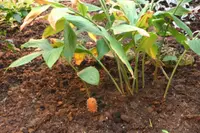
During the first season, water more slowly but deeply and avoid frequent shallow watering so the plant develops a strong taproot that will better tolerate summer drought and support tall flowering stems.

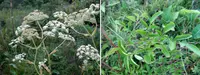
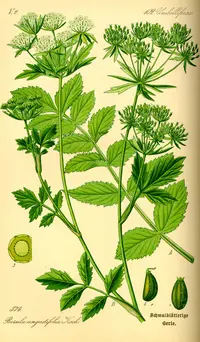
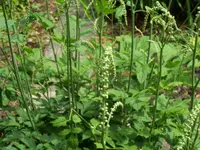
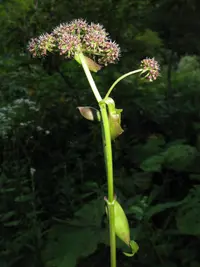
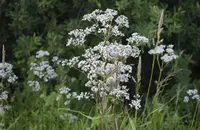
Hairy angelica (Angelica venenosa) is a perennial herb in the carrot family, native to dry open woods, rocky slopes, and prairies in eastern North America. It forms tall, branched stems with divided leaves and airy, greenish-white flower clusters that attract many pollinators.
This species has a somewhat wild, untamed look and usually suits naturalistic or meadow-style plantings better than formal beds. It prefers full sun to light shade, with well-drained but not bone-dry soil.
Once established, it can be moderately hardy but may be short-lived outside its preferred conditions, so care for hairy angelica focuses on siting and soil rather than frequent intervention.

Care Difficulty
Moderate Care

Light Preference
Partial Sun

Water Requirements
Moderate Water

Temperature Preference
Cold Hardy

Hardiness Zone
4–8

Soil Texture
Sandy, Loamy, Organic-rich

Soil pH
Acidic (5.5–6.5), Slightly acidic (6.5–7.0)

Soil Drainage
Moist but well-drained

Fertilization
Minimal (feed rarely)
Scan your plant to receive care tips personalized for your specific plant
Available on iOS and Android
Angelica venenosa grows best in bright, open sites with some protection from harsh afternoon sun.
Angelica venenosa prefers consistently moist, not saturated, soil in its natural meadow or open woodland habitats.
This species is a hardy perennial that tolerates a wide temperature range but grows best in moderate conditions.
Angelica venenosa handles a wide humidity range but prefers moderately moist air without extremes.
Angelica venenosa grows best in deep, consistently moist, well-drained soil with plenty of organic matter.
This species can be grown in containers, but it performs best when given a deep, stable setup outdoors.
Angelica venenosa is a native wildflower that usually needs only modest feeding, especially in fertile garden soil.
Pruning Angelica venenosa is mainly about tidiness and seed control rather than shaping.
Angelica venenosa is usually grown in the ground, where transplanting young plants with minimal root disturbance is most successful.
Raising Angelica venenosa is most reliable from seed, as the plant forms a taproot and does not respond well to division.
Angelica venenosa is cold hardy in much of its native range and usually needs minimal winter care once established.

Plant Health Check
Not sure what's wrong with your plant? Check your plant's health inside the app.
This species is unusual among angelicas for thriving in very dry, nutrient-poor, sandy or rocky soils of the eastern United States, especially in open pine-oak woodlands and barrens where many umbellifers cannot persist.
Its fruits are covered with coarse hairs and prominent ribs, a combination that helps botanists distinguish it from related species and may aid in short-distance dispersal by catching on passing animals or litter.
Although widespread in the eastern US overall, it is considered rare or of conservation concern in several states because of habitat loss and the decline of dry, open woodland and barrens ecosystems.

The species was formally described by the American botanist John Torrey in the 19th century, and modern floras still treat it as a well-defined taxon despite the complex and sometimes confusing taxonomy within North American angelicas.
This species is not widely recorded as highly toxic, but related umbellifers can cause skin irritation or be harmful if misidentified. Treat it as potentially unsafe to eat. Keep pets and children from chewing stems, leaves, or roots.
Keep your plants happy and healthy with plant identification, disease detection, and easy care guidance.