Deep staking support
Install a sturdy stake or slim bamboo tripod when plants are still under 20–25 cm tall so developing hollow stems grow straight and are protected from wind damage later in the season.

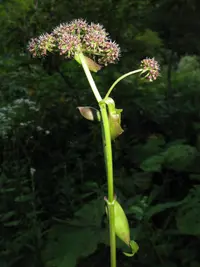
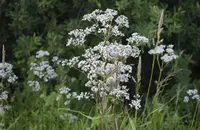
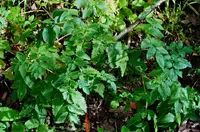
Angelica decursiva is a perennial herb in the carrot family, forming clumps of upright, hollow stems with divided, fern-like leaves. It produces umbrella-shaped clusters of small white flowers, followed by aromatic seeds.
This species is native to East Asia, where it grows in mountain meadows and open woodland edges, usually in cool, moist conditions. Its hardy nature and strong taproot make it resilient once established, but it prefers consistent moisture and well-drained, fertile soil.
Light to partial shade and protection from extreme heat generally make it easier to care for Angelica decursiva in gardens or specialty collections.

Care Difficulty
Moderate Care

Light Preference
Partial Shade

Water Requirements
Regular Water

Temperature Preference
Cool Climate

Hardiness Zone
5–8

Soil Texture
Loamy, Silty, Organic-rich

Soil pH
Acidic (5.5–6.5), Slightly acidic (6.5–7.0)

Soil Drainage
Moist but well-drained

Fertilization
Minimal (feed rarely)
Scan your plant to receive care tips personalized for your specific plant
Available on iOS and Android
This species prefers bright, cool conditions with protection from strong midday sun.
This plant prefers consistently moist, not waterlogged, soil.
This temperate species prefers cool to mild conditions with protection from hard frost.
This species prefers moderately moist air and reacts if conditions become too dry.
Soil preparation for this species focuses on moisture retention with reliable drainage.
This plant can be grown in containers if the pot is chosen to support its deep root system and upright growth.
This plant grows in relatively poor soils and usually needs only light, targeted feeding in cultivation.
Pruning needs for Angelica decursiva are minimal and mostly focused on hygiene and seed control.
This species is more often transplanted in the garden than grown long term in containers.
Propagation of this biennial or short-lived perennial is usually done from fresh seed.
In suitable temperate climates, this hardy species generally needs only basic winter care.

Plant Health Check
Not sure what's wrong with your plant? Check your plant's health inside the app.
This species is naturally distributed in temperate East Asia, especially in China, Korea, and Japan, where it typically grows on sunny to lightly shaded mountain slopes and forest edges.
Like other members of the Apiaceae family, it produces compound umbels of small white flowers that offer accessible nectar and pollen, making it an important resource for a variety of pollinating insects during its blooming period.
The dried root, known as Qianhu in traditional Chinese herbal commerce, has been documented in pharmacopoeias for centuries and is still cultivated and traded as a standardized raw material under strict quality controls.

Angelica decursiva has been repeatedly confused in historical herb markets with the unrelated herb Peucedanum praeruptorum, leading to regulatory efforts and modern pharmacognostic studies that focus on microscopic and chemical identification to avoid mislabeling and substitution.
This species behaves as a short-lived perennial or biennial, depending on climate and growing conditions. It usually forms foliage in the first year, flowers and sets seed in the second, then gradually declines afterward.
Keep your plants happy and healthy with plant identification, disease detection, and easy care guidance.