Host tree selection
Establish this ectomycorrhizal fungus under compatible native trees such as tanoak or coast live oak, and avoid disturbing mature root zones where fruiting bodies have been seen in previous seasons.

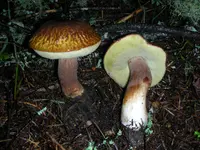
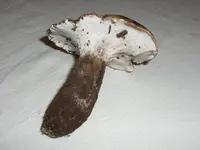
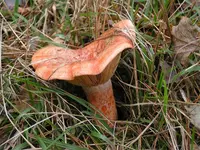
Boletus fibrillosus is a wild, fleshy mushroom rather than a typical garden plant. It forms stout, often dark brown caps with a thick stem and a pore surface instead of gills, typical of bolete fungi. This species grows on the ground in forested areas, usually in association with trees, and appears seasonally when conditions are moist.
It is not commonly cultivated, so detailed guidance on how to care for Boletus fibrillosus in home settings is limited. Its growth depends on specific tree partners, natural soil fungi communities, and stable moisture, which makes deliberate cultivation challenging for most growers.

Care Difficulty
Hard Care

Light Preference
Partial Shade

Water Requirements
Keep Soil Moist

Temperature Preference
Cool Climate

Hardiness Zone
Unknown

Soil Texture
Loamy, Silty, Organic-rich

Soil pH
Acidic (5.5–6.5), Slightly acidic (6.5–7.0)

Soil Drainage
Moist but well-drained

Fertilization
Minimal (feed rarely)
Scan your plant to receive care tips personalized for your specific plant
Available on iOS and Android
This woodland fungus depends on specific forest light conditions rather than direct open sun exposure.
This species relies on stable, moderately moist forest soil rather than direct irrigation.
This fungus fruits best in cool to mild conditions typical of temperate woodlands.
Humidity plays no meaningful role in the development or fruiting of Boletus fibrillosus, which is managed primarily through broader outdoor forest moisture conditions.
This ectomycorrhizal fungus grows in the ground in association with tree roots, so soil management focuses on supporting its woodland habitat rather than preparing a conventional planting mix.
This species is not suitable for container growing, as it depends on complex, in-ground mycorrhizal relationships with host trees that cannot be replicated in pots.
This ectomycorrhizal fungus relies on its tree partners for nutrition and does not benefit from direct fertilization.
Boletus fibrillosus is a wild mushroom species and does not require or respond to pruning in the way vascular plants do.
This fungus grows in soil in association with host tree roots and is not suited to normal repotting or transplanting.
In natural settings, Boletus fibrillosus spreads mainly through spores and expansion of underground mycelium, which is difficult to manage intentionally at home.
This species is adapted to local outdoor conditions within its native range and needs no targeted winter care from gardeners.

Plant Health Check
Not sure what's wrong with your plant? Check your plant's health inside the app.
The cap of this west-coast bolete often develops a very dark brown to almost black, dry, velvety surface that can crack with age, exposing paler flesh beneath and giving mature specimens a distinctive mottled look in the forest litter.
When the pale yellow pores or cut flesh are bruised or exposed, they typically stain bluish to grayish, a chemical oxidation reaction of pigment compounds that helps distinguish this species from several similar dark-capped boletes.
This species is strongly associated with conifer and mixed woodlands along the Pacific coast of North America, forming ectomycorrhizal partnerships with trees such as Douglas-fir and tanoak, which means its fine root-fungus network helps host trees absorb water and nutrients more efficiently.
This bolete is generally regarded as inedible or of unknown edibility. Some closely related species are toxic, so identification mistakes are easy. For safety, it is best not to eat this fungus at all.
Keep your plants happy and healthy with plant identification, disease detection, and easy care guidance.