Engelmann's Prickly Pear Care (Opuntia engelmannii)

Also known as: cactus apple, Small Round-Leaved Pricklypear, Texas prickly-pear, Cow Tongue Prickly Pear, Cow's Tongue Cactus, Desert Prickly Pear, Discus Prickly Pear
Engelmann's Prickly Pear

About Engelmann's Prickly Pear

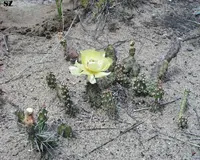
Engelmann's prickly pear, Opuntia engelmannii, is a shrubby cactus native to arid regions of the southern United States and northern Mexico. It forms dense clumps of flat, oval pads with sharp spines and tiny hair-like bristles. In spring, it often produces showy yellow flowers followed by edible reddish fruits that attract wildlife. This species is adapted to heat, sun, and drought, which generally makes it low-maintenance in suitable climates. To care for Engelmann's Prickly Pear, most growers focus on providing strong light, excellent drainage, and avoiding excess moisture around the roots.

Main Plant Requirements

Care Difficulty

Easy Care

Light Preference

Full Sun

Water Requirements

Low Water

Temperature Preference

Cold Hardy

Hardiness Zone

8–11

Soil Texture

Sandy, Loamy, Rocky

Soil pH

Slightly acidic (6.5–7.0), Slightly alkaline (7.0–7.5)

Soil Drainage

Well-drained

Fertilization

Minimal (feed rarely)

Get Personalized Care Plan

Scan your plant to receive care tips personalized for your specific plant

Available on iOS and Android

How to Care for the Engelmann's Prickly Pear

This cactus thrives in strong, direct sun typical of arid and semi-arid landscapes.

  • Provide 6–10 hours of direct sun daily; full, unobstructed southern or western exposure suits Engelmann's Prickly Pear best outdoors.
  • Allow for light afternoon shade in very hot climates, especially on young plants, to reduce sunscald and pad yellowing.
  • In winter, sun is lower and weaker, so plants in marginal sites benefit from the brightest available position, avoiding dense shade from buildings or trees.

This species is highly drought tolerant and requires infrequent, careful watering.

  • Water only when the top 5–8 cm of soil are completely dry; in the ground this often means several weeks between waterings in warm seasons.
  • Use fast-draining, gritty soil and raised or sloped sites so water never pools around the pads, reducing root rot risk in Opuntia engelmannii.
  • Reduce or stop supplemental watering in cool months; prune watering further if pads become soft, translucent, or black-spotted, which indicates overwatering.

This desert cactus is adapted to hot summers and cool, dry winters with brief cold spells.

  • Aim for active growth in 70–95°F (21–35°C); it tolerates hotter periods if soil drains quickly and air circulation is good.
  • Mature plants typically survive down to about 10–15°F (-12 to -9°C) when dry, but repeated hard freezes can scar or kill young pads.
  • Keep it as dry as possible in cold weather, since wet soil combined with frost greatly increases tissue damage and root loss risk.

This cactus handles a wide humidity range and rarely needs special humidity management indoors or outdoors.

  • Target 20–50% humidity, as very dry air suits its desert adaptation and helps prevent fungal problems.
  • Dry air is well tolerated; issues arise more from excess moisture than from low humidity.
  • Signs of humidity stress include soft, water-soaked pads or black spots, so increase air movement rather than adding moisture.

This species prefers very fast-draining, mineral-rich soil that mimics rocky desert conditions.

  • Use a coarse, sandy or gritty mix, such as 50–70% mineral components (pumice, crushed granite, coarse sand) with the rest low-organic cactus mix.
  • Ensure sharp drainage; water should pass through the pot within seconds and not leave the mix soggy or compacted.
  • Aim for slightly acidic to slightly alkaline pH, roughly 6.0–8.0, which Opuntia engelmannii tolerates well in most landscapes.
  • Avoid dense clay, peat-heavy, or compacted substrates and improve aeration by increasing grit whenever water lingers longer than a few minutes.

This species is suitable for container growing when the pot is chosen to manage its spreading, pad-forming habit.

  • Select a wide, relatively shallow pot to accommodate lateral root spread and the horizontal growth of pads without tipping.
  • Choose a heavy material such as clay or ceramic to provide ballast against wind and the weight of mature pads.
  • Elevate the pot slightly on feet or blocks so drainage holes clear the ground and water exits rapidly after rainfall or irrigation.

This desert cactus needs minimal feeding, but light nutrition supports container-grown Engelmann's Prickly Pear during active growth.

  • Use a diluted balanced liquid fertilizer (around 10-10-10) at 1/4–1/2 strength for potted plants in spring–summer.
  • Apply every 4–6 weeks during the growing season only; skip feeding for in-ground plants in lean, sandy soils.
  • Stop fertilizing in fall and winter to allow proper dormancy and prevent weak, frost-sensitive growth.
  • Avoid high-nitrogen lawn fertilizers and keep any compost or slow-release product sparse to prevent rot.

Pruning Opuntia engelmannii is mainly for safety, shape control, and plant health rather than vigor.

  • Best time is late winter to early spring before strong new growth starts.
  • Remove dead, damaged, diseased, or crossing pads, and thin crowded areas to improve light and airflow.
  • Use long-handled loppers or a sharp knife plus thick gloves and tongs to handle spiny pads safely.
  • Cut pads cleanly at the joint to refine shape; avoid heavy cuts that remove most flowering-age segments.

This cactus is usually grown in-ground, but container plants or young clumps sometimes need transplanting for space and drainage.

  • Transplant or repot in late spring when soil is warm and the plant is actively growing.
  • Look for roots circling the pot, water draining poorly, or slowed growth as signs a container plant needs more space.
  • Plan to move container plants only every 3–5 years, stepping up 1 pot size with a gritty, fast-draining cactus mix.
  • Reduce root stress by withholding water 3–5 days before moving, handling the root ball gently, then watering lightly after settling.

New plants are most often produced from pads, making multiplication straightforward for gardens and restoration plantings.

  • Use pad cuttings in late spring or early summer when growth is active and temperatures are warm.
  • Cut a healthy, mature pad at the joint, then air-dry 5–10 days until a dry callus forms on the cut surface.
  • Plant the callused pad upright in very well-drained cactus soil, burying the base 2–3 cm, and stake if needed.
  • Keep in bright light with warm temperatures and very light, infrequent watering until roots form in several weeks.

This species is fairly cold hardy, but winter care depends on climate and whether plants grow in ground or containers.

  • Mature plants in well-drained soil tolerate light freezes and short dips near 10–15°F when kept dry.
  • In colder or wet-winter climates, add a 5–8 cm layer of gravelly mulch around the root zone for insulation and drainage.
  • Move containers under cover or indoors to a bright, cool, very dry spot before hard freezes arrive.

Care Tips

Root-zone gravel

Place a 2–5 cm layer of coarse gravel or crushed rock directly under and around the planting hole to improve drainage at the root zone and reduce the risk of rot in heavy or compacted soils.

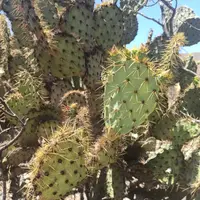
Pad staking support

Use short, wide plant stakes or rocks to brace newly planted pads for the first 4–6 weeks so they stay upright and stable while new anchoring roots form.

Controlled pad propagation

Detach only fully mature, firm pads in late spring, let the cut ends callus in a dry, shaded place for 7–10 days, then plant them just 2–3 cm deep to root quickly with minimal rot risk when growing Engelmann's Prickly Pear.

Spine-safe handling

Handle pads with folded newspaper, thick leather gloves, or grill tongs, and keep a roll of duct tape or commercial cactus glochidia remover nearby to pull out fine spines from skin if needed.

Winter moisture management

In regions with wet winters, plant on a slight mound or in a raised bed and avoid organic mulches near the base so excess water sheds away from the crown and pads stay drier during cold, soggy periods.

Common Pests and Diseases

Cochineal scale

This pest appears as white, cottony or crusty patches on cactus pads that exude deep red liquid when crushed. Symptoms include yellowing pads and reduced vigor as insects feed on the plant’s juices.

Solution

Physically remove colonies with a strong jet of water, then wipe remaining insects off pads with cotton swabs dipped in 70% isopropyl alcohol, taking care not to over-saturate tissue. For heavier infestations, use a horticultural soap or light horticultural oil labeled for cacti, applied in the evening to avoid sunburn, and repeat every 7–10 days until new pads stay clean.

Cactus mealybugs

These insects hide in pad joints and roots, forming small white, woolly clusters and causing pads to shrivel or grow poorly. This pest weakens plants by sucking sap and can promote sooty mold through honeydew production.

Solution

Inspect pad joints and the soil line, then dab visible insects with 70% isopropyl alcohol on a cotton swab and remove heavily infested pads. For persistent problems, repot in fresh, gritty soil after washing roots, then apply insecticidal soap or a systemic insecticide labeled for succulents according to Opuntia engelmannii care instructions.

Cactus longhorn beetle

This pest is a large dark beetle whose larvae bore into pads and stems, causing collapse or sudden wilting of segments. Symptoms include oozing wounds, hollow pads, and black frass at entry points.

Solution

Remove and destroy infested pads immediately, cutting back into firm, unbored tissue and disinfecting tools between cuts. Reduce habitat by keeping the area around plants free of dense weeds and leaf litter, and in regions where this beetle is common, consider physical barriers or night hand-picking of adults during their active season.

Fusarium stem rot

This disease causes sunken, brown to black lesions that spread internally, often starting from wounds or insect damage. Symptoms include softening pads, internal discoloration, and eventual pad collapse.

Solution

Cut out affected tissue well into healthy, green areas using a sterile knife, and discard all infected material rather than composting it. Improve drainage, protect plants from mechanical injury, and avoid overhead watering to keep pads dry, which reduces the chance of new infections.

Anthracnose

This disease produces circular, tan to dark spots on pads that may develop pinkish spore masses in humid conditions. Symptoms include coalescing lesions that deform pads and reduce photosynthetic area.

Solution

Prune and dispose of infected pads promptly and disinfect cutting tools between cuts to prevent spread. Increase sun exposure and air movement, keep water off pads, and when conditions stay humid, apply a copper-based fungicide labeled for cacti according to label rates until new growth appears clean.

Interesting Facts

Desert nurse plant

Young saguaro and other cactus seedlings in the Sonoran Desert often establish under the shade of this species, which reduces heat and water stress and improves their survival.

Cold-hardy desert cactus

This prickly pear tolerates brief drops below freezing and survives in habitats that experience both hot summers and occasional winter frosts, an adaptation uncommon among many lowland desert cacti.

Wildlife food and shelter

Its fruits and pads are an important food source for desert animals such as javelinas and rodents, while the dense, spiny clumps provide nesting and protection sites for small birds.

Botan icon

Did you know?

In parts of the southwestern United States and northern Mexico, this prickly pear forms extensive, almost continuous thickets that can shape local plant communities by limiting livestock movement and creating distinct microhabitats for native desert species.

FAQs about Engelmann's Prickly Pear

Both pads (nopales) and ripe fruits are edible when carefully de-spined and peeled. They are used fresh, cooked, or made into jams. Always remove spines and tiny glochids, which can irritate skin and mouth.

Grow Healthy Plants with Botan Care

Keep your plants happy and healthy with plant identification, disease detection, and easy care guidance.

Botan plant care app — identify plants on mobile

Explore More Plants