Rotate For Symmetry
Turn the pot 90° every 2–3 weeks so rosettes develop evenly and do not lean toward the light, which keeps the plant compact and balanced when growing Short Oxtongue.

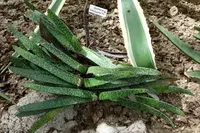
Short oxtongue, Gasteria brachyphylla, is a compact succulent from South Africa, related to aloe. It forms low rosettes of thick, tongue-shaped leaves with mottled markings. Growth is slow, and the plant stays small, which makes it suitable for windowsills and small indoor spaces.
In nature it grows in rocky, shaded habitats, adapting to bright but indirect light and drying out between rains. Its fleshy leaves store water, so it tolerates some neglect and missed waterings. This resilience makes it forgiving for beginners learning how to care for Short Oxtongue.
It prefers a fast-draining, gritty soil mix and careful watering rather than constant moisture. Under stable indoor conditions it can live for many years and occasionally produce tall flower spikes with tubular, hanging blooms.

Care Difficulty
Easy Care

Light Preference
Partial Shade

Water Requirements
Low Water

Temperature Preference
Tropical / Frost Sensitive

Hardiness Zone
10–11

Soil Texture
Sandy, Loamy, Rocky

Soil pH
Acidic (5.5–6.5), Slightly acidic (6.5–7.0)

Soil Drainage
Well-drained

Fertilization
Minimal (feed rarely)
Scan your plant to receive care tips personalized for your specific plant
Available on iOS and Android
This compact succulent prefers bright, indirect light and gentle sun exposure to avoid leaf damage.
This succulent stores water in its leaves and needs thorough but infrequent watering to stay healthy.
This species prefers mild, stable temperatures and does not tolerate frost.
This succulent tolerates a wide humidity range and usually does not need special humidity management indoors.
Use a very fast-draining, gritty mix that mimics rocky, sandy ground for Gasteria brachyphylla.
This species is well suited to container growing in small spaces and collections.
Gasteria brachyphylla is a low-demand succulent that benefits from light, controlled feeding during active growth.
Gasteria brachyphylla needs minimal pruning, mainly for hygiene and to maintain a compact rosette.
This compact succulent prefers to be slightly root-bound and needs infrequent repotting.
This species is most commonly propagated from offsets, with seeds used less often in home settings.
This succulent is not frost hardy and needs indoor protection in regions with freezing winters.

Plant Health Check
Not sure what's wrong with your plant? Check your plant's health inside the app.
This species naturally grows as a small, compact succulent on rocky slopes and cliff ledges in South Africa’s Western Cape, often wedged into shallow crevices rather than deep soil.
Its short, triangular leaves have a rough, sandpapery surface with raised, pale tubercles, an adaptation that helps reduce water loss and diffuse intense sunlight in its arid habitat.
In its native winter-rainfall region, it is physiologically adapted to grow mainly in the cooler, wetter months and slow down in the hot, dry summer, a pattern that influences Gasteria brachyphylla plant care in cultivation.

Wild populations of this species are often highly localized and fragmented, with small colonies confined to specific sandstone or shale outcrops, which makes habitat disturbance a particular concern for its long-term conservation.
This succulent grows slowly, usually adding only a few new leaves each year and staying compact for a long time. Growth is faster with consistent warmth, bright light, and sparse but regular watering, especially during the active spring–summer period.
Keep your plants happy and healthy with plant identification, disease detection, and easy care guidance.