Barrow's Bolete Care (Boletus barrowsii)

Also known as: White King Bolete
Barrow's Bolete

About Barrow's Bolete

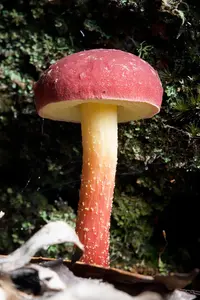
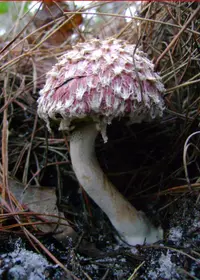
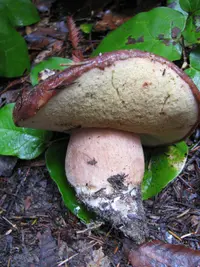
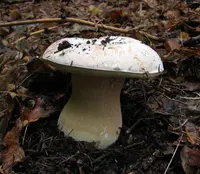
Barrow's bolete, Boletus barrowsii, is an ectomycorrhizal mushroom that grows in association with trees rather than as a typical leafy houseplant. It forms stout, pale to tan caps with thick, white to cream stalks and a pore surface instead of gills. This species is native to western North America, often found in coniferous or mixed woodlands, appearing in scattered groups on the forest floor.

It is considered a desirable wild edible and does not adapt well to standard home cultivation. Successful attempts to care for Barrow's Bolete usually focus on maintaining healthy host trees and suitable outdoor soil conditions with consistent moisture and good drainage.

Main Plant Requirements

Care Difficulty

Hard Care

Light Preference

Partial Shade

Water Requirements

Moderate Water

Temperature Preference

Cool Climate

Hardiness Zone

Unknown

Soil Texture

Loamy, Sandy, Organic-rich

Soil pH

Slightly acidic (6.5–7.0)

Soil Drainage

Well-drained

Fertilization

Minimal (feed rarely)

Get Personalized Care Plan

Scan your plant to receive care tips personalized for your specific plant

Available on iOS and Android

How to Care for the Barrow's Bolete

This wild ectomycorrhizal fungus relies on suitable light conditions for its oak or conifer hosts rather than direct sun on the mushrooms themselves.

  • Site host trees where they receive 4–6 hours of direct morning sun with light afternoon shade, which supports healthy tree growth and stable soil moisture for Barrow's Bolete.
  • Favor bright, dappled woodland light under open-canopy pines or oaks; partial shade (about 30–60% canopy cover) helps maintain cooler, moister soil for mycelium.
  • Avoid fully exposed, dry south-facing slopes where intense summer sun overheats and desiccates upper soil layers, reducing fruiting frequency and shrinking mushroom size.

This species depends on consistent, naturally moist but not waterlogged soil around its tree partners.

  • Aim for soil that returns to a fresh, slightly moist feel between rains, allowing the top 2–5 cm to dry lightly without cracking or becoming powdery.
  • Ensure excellent drainage with a loose, well-aerated mineral soil; persistent puddling or sour, swampy odor signals poor conditions for Boletus barrowsii mycelium.
  • In dry seasons, observe host trees and ground layer plants; wilting foliage, shrinking leaf size, and very hard soil indicate drought stress that can sharply reduce fruiting.

This fungus fruits best in mild conditions while its underground mycelium tolerates a broader range.

  • Optimal fruiting typically occurs around 55–70°F (13–21°C) in late summer to fall, when days cool and soil retains moderate moisture.
  • Mycelium in the soil can survive winter lows near 20°F (-6°C) under insulating leaf litter, but repeated freeze–thaw at bare, exposed sites can damage fine hyphae.
  • Sustained extreme heat above 90°F (32°C) with dry soil sharply reduces fruiting; partial canopy shade and litter cover buffer root-zone temperatures through hot spells.

Humidity is not a meaningful factor for Barrow's Bolete, which develops outdoors in natural forest conditions.

Boletus barrowsii develops best in undisturbed, well-structured forest soil rather than artificial mixes.

  • Prefers loose, friable, sandy-loam soil with abundant organic leaf litter over compacted or clay-heavy substrates.
  • Requires rapid drainage with no standing water, as prolonged saturation disrupts the mycelium that forms around tree roots.
  • Performs best in slightly acidic to neutral conditions, roughly pH 5.5–7.0, typical of coniferous and mixed woodlands.
  • Avoid fertilized, heavily tilled, or highly amended garden beds, which can suppress the native fungi and roots it associates with.

This species is not suitable for true container growing, as it depends on complex, long-term root associations with mature trees.

This ectomycorrhizal fungus relies mainly on its tree partner for nutrition, so direct fertilization is rarely needed or helpful for Barrow's Bolete.

Pruning is not applicable to Boletus barrowsii, as it is a wild mycorrhizal mushroom rather than a plant with shoots or branches.

This species is not suited to normal repotting, since it lives in symbiosis with tree roots in undisturbed soil.

  • Transplant only if moving young host trees that already carry the fungus, keeping as much native soil around the root ball as possible.
  • Plan any move in cool, moist weather to limit stress on both tree roots and fungal mycelium.
  • Minimize disturbance by avoiding shaking soil from roots or breaking larger roots during transplanting.
  • Water gently after transplanting to settle soil, then maintain even moisture rather than waterlogging the site.

Propagation of Boletus barrowsii is complex and usually left to natural spore dispersal and mycelium spread in suitable forests.

No special winter care is needed, as this wild ectomycorrhizal mushroom survives as mycelium in the soil of its natural range.

Care Tips

Host tree selection

Choose a site with mature pine or fir trees, since this mycorrhizal species depends on forming root partnerships and will not fruit reliably without an appropriate conifer host.

Minimal soil disturbance

Limit digging, tilling, and heavy traffic in the fruiting area so the underground mycelium network and tree roots remain intact, which supports consistent mushroom production over several seasons.

Targeted mulching

Apply a thin, loose layer (1–3 cm) of pine needles or coarse conifer wood chips around host trees to conserve moisture and mimic natural forest litter without smothering the soil surface.

Gentle harvest technique

Cut mushrooms at the base with a clean knife instead of pulling them up, and lightly press disturbed soil back in place to protect the mycelium for future flushes when growing Barrow's Bolete.

Spore distribution practice

After collecting firm caps for eating, slice older or overripe caps and scatter them across suitable conifer areas so their spores can help colonize new spots over time.

Common Pests and Diseases

Mycophagous slugs

This pest feeds on developing fruiting bodies, often hollowing caps and stems and leaving irregular rasped patches and slime trails. Damage is most common in moist habitats and can render mushrooms unfit for consumption.

Solution

Hand-pick slugs in the evening or early morning, use simple physical barriers such as copper tape or coarse sand around key fruiting areas, and reduce dense groundcover that offers daytime shelter. In gardens or managed sites, targeted iron phosphate slug baits can be used around but not directly on fruiting bodies, following label directions carefully.

Fungal gnat larvae

These insects lay eggs in soil and duff where larvae tunnel through young buttons, causing distorted or collapsing fruiting bodies with small entry holes. Symptoms include soft, water-soaked tissue and rapid decay from the inside out.

Solution

Improve surface drainage and avoid heavy, continuous surface watering in managed landscapes to reduce breeding conditions. Where control is needed, use yellow sticky traps to reduce adult populations and apply a targeted Bacillus thuringiensis israelensis (Bti) product to the surrounding soil according to label instructions.

Hypomyces infection

This disease is caused by parasitic fungi such as Hypomyces species that overgrow fruiting bodies with a white, yellow, or reddish crust. Symptoms include deformed caps, loss of pores, and a firm, chalky surface that eventually prevents normal spore release.

Solution

Promptly remove and discard any parasitized mushrooms from the site to limit local spore buildup. Avoid disturbing or transporting infected material, and encourage good air movement and natural litter decomposition so that new, healthy fruiting bodies can develop in less contaminated microhabitats; this approach supports practical Boletus barrowsii care instructions in wild or semi-managed settings.

Bolete fly maggots

These insects, often from genera such as Pegomya or related flies, lay eggs on or in young boletes and the hatching maggots tunnel through the flesh. Symptoms include small surface punctures, browning tunnels in the stem and cap, and crumbly, infested tissue.

Solution

Harvest fruiting bodies as soon as they reach usable size to stay ahead of heavy infestation and cut stems in the field to check for tunneling, leaving infested material behind to decompose. In managed grounds, avoid leaving piles of overmature boletes, which can attract more egg-laying adults.

Bacterial soft rot

This disease affects overly moist or damaged fruiting bodies, leading to soft, foul-smelling, water-soaked decay that spreads rapidly through the cap and stem. Symptoms include slimy texture, discoloration, and collapse of affected mushrooms.

Solution

Reduce mechanical damage during harvest, avoid handling mushrooms with wet or dirty tools, and do not leave wounded fruiting bodies on saturated soil. In gardens or parks, improve surface drainage and avoid overhead irrigation where these boletes fruit, so that caps dry quickly after rain and are less prone to bacterial invasion.

Interesting Facts

Rocky Mountain specialist

This species is native to western North America, especially the southern Rocky Mountains and adjacent highlands, where it is most often found in montane pine and mixed conifer forests rather than lowland woods.

Mycorrhiza with pines

It forms ectomycorrhizal associations with several pine species, exchanging mineral nutrients and water from the soil for carbohydrates from the tree, and is particularly frequent with ponderosa pine in many parts of its range.

Confusion with porcini

It is closely related to Boletus edulis and can look very similar in the field, but typically shows a paler, more uniformly whitish cap and a thicker, lighter stipe, which help experienced foragers separate it from other brown-capped boletes.

Botan icon

Did you know?

This species was only formally described to science in 1976 by mycologist Harry D. Thiers, despite being well known to regional mushroom hunters, and it was named in honor of New Mexico naturalist C. J. Barrows, who helped document its distinctive features.

FAQs about Barrow's Bolete

This species is considered a choice edible mushroom when correctly identified and cooked. It must be harvested fresh, free from insect damage, and never eaten raw. Always confirm identification with local experts or reputable field guides before consumption.

Grow Healthy Plants with Botan Care

Keep your plants happy and healthy with plant identification, disease detection, and easy care guidance.

Botan plant care app — identify plants on mobile

Explore More Plants