Pineapple Bolete Care (Boletellus ananas)

Pineapple Bolete

About Pineapple Bolete

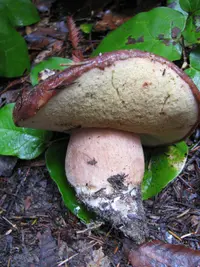
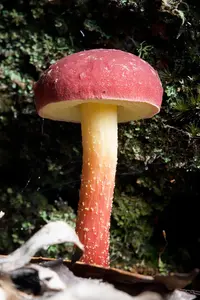
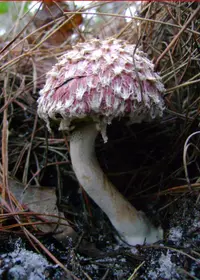
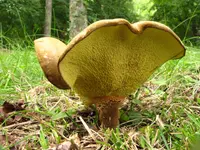
Pineapple bolete (Boletellus ananas) is a wild mushroom, not a typical houseplant. It forms thick, fleshy caps with a rough, shaggy surface that often shows yellow, red, and brown tones, somewhat resembling a pineapple rind. The stout stalk usually has fine scales or fibers.

This species occurs mainly in forests, often near pines or other conifers, where it grows from soil rich in organic matter. It forms a mycorrhizal partnership with tree roots, which makes it difficult to cultivate at home, so guides on how to care for Pineapple Bolete focus mostly on identification and habitat rather than true cultivation.

Main Plant Requirements

Care Difficulty

Hard Care

Light Preference

Partial Shade

Water Requirements

Keep Soil Moist

Temperature Preference

Warm Climate

Hardiness Zone

Unknown

Soil Texture

Loamy, Organic-rich

Soil pH

Acidic (5.5–6.5)

Soil Drainage

Moist but well-drained

Fertilization

Minimal (feed rarely)

Get Personalized Care Plan

Scan your plant to receive care tips personalized for your specific plant

Available on iOS and Android

How to Care for the Pineapple Bolete

This ectomycorrhizal fungus prefers dappled woodland light rather than full, open sun.

  • Aim for bright, filtered light under trees, with only 1–3 hours of gentle morning sun and full protection from strong afternoon sun to prevent drying of soil and mycelium.
  • Allow partial to deep shade (around 20–60% of full sun), mimicking forest floor conditions where Pineapple Bolete typically fruits near its host trees.
  • In summer, leaf canopy usually provides enough shade; in early spring or after pruning, add mulch or leaf litter to protect from sudden increases in light and surface heat.

This woodland mushroom depends on consistently moist, not saturated, soil around its tree hosts.

  • Maintain evenly moist soil by using natural rainfall where possible; the upper 2–3 cm should feel slightly moist but not puddled when checked by hand.
  • Increase watering frequency during hot, dry periods so the top 5 cm never dries out completely, as Boletellus ananas fruiting bodies decline quickly in dry soil.
  • Ensure the site drains well within a few hours after heavy rain; prolonged standing water, sour odor, or slimy mycelium indicate overwatering and poor aeration.

This species fruits best in mild to warm conditions typical of late summer to early autumn woodland climates.

  • Optimal fruiting usually occurs around 60–75°F (16–24°C), with the underground mycelium remaining active over a broader range when soil moisture is stable.
  • Tolerates cool conditions down to about 40°F (4°C) in soil, but hard frost and repeated freeze–thaw cycles can damage fruiting bodies at the surface.
  • Handles short warm spells up to roughly 85°F (29°C) if shaded and moist; extended heat and dry winds reduce fruiting and may cause caps to crack and desiccate.

This ectomycorrhizal fungus prefers moist, humid forest conditions but tolerates brief drying at the surface.

  • Aim for 60–80% humidity around developing fruiting bodies, mimicking damp woodland air.
  • Dry air can cause caps to crack and pores to brown prematurely, shortening the display period.
  • Increase humidity outdoors with thick leaf litter and light misting of surrounding mulch, avoiding direct spraying on caps.

Boletellus ananas develops best in loose, organic-rich forest-type substrates with excellent drainage.

  • Use a coarse, humus-rich mix that mimics woodland soil, such as composted leaf mold blended with pine needles and a little sand.
  • Ensure rapid drainage so water never pools; excess moisture around the base encourages rot of associated roots and fungal structures.
  • Aim for slightly acidic to neutral conditions, roughly pH 5.5–7.0, which favor typical ectomycorrhizal tree partners.
  • Improve aeration by incorporating chunky materials like fine bark chips, keeping the substrate open rather than compacted.

This species is not well suited to container growing because it depends on complex mycorrhizal relationships with tree roots.

Boletellus ananas is a mycorrhizal fungus that does not need direct fertilization, but benefits from a naturally nutrient-rich, undisturbed soil environment.

Boletellus ananas does not require true pruning, but some hygiene practices help maintain a healthy fruiting area.

  • Remove spent or decaying fruiting bodies by cutting them at the base to limit mold and insect buildup.
  • Avoid disturbing the underlying soil or tree roots, since the fungus depends on fine root associations.
  • Use a clean, sharp knife rather than pulling mushrooms, which can damage the mycelium network.

Transplanting Boletellus ananas is rarely successful because the fungus depends on stable mycorrhizal associations with host tree roots.

  • Treat the site as permanent; do not expect to move the fungus like a potted plant.
  • If soil or trees must be relocated, move a generous block of soil containing roots and mycelium in cool, moist weather.
  • Keep the root–soil mass shaded and evenly moist during any move to reduce stress on both tree and fungus.
  • Avoid frequent disturbance; long-term stability supports ongoing fruiting.

Propagation of Boletellus ananas is specialized and mainly relies on spores forming new mycorrhizal relationships with suitable host trees.

  • Spore-based spread occurs naturally; allow mature caps to release spores near compatible tree species.
  • Maintain undisturbed leaf litter and moderate soil moisture to support mycelium development.
  • Avoid fungicides and heavy soil compaction, which can disrupt spore germination and root colonization.
  • Introducing colonized soil from an existing site near similar hosts may help, but success rates are unpredictable.

Boletellus ananas is generally cold hardy in its natural range and needs minimal intentional winter care in the ground.

  • Allow natural leaf litter to remain as a light mulch over the root zone of host trees.
  • Avoid deep digging or soil disturbance around host roots in winter.
  • Container-grown host trees, if any, should be moved to a frost-sheltered but cool spot to protect roots and fungal partners.

Care Tips

Log selection

Choose fresh, non-rotten hardwood logs or large branches with intact bark and a diameter of 10–20 cm, since firm, undecayed wood supports better mycelium colonization and longer fruiting.

Shaded placement

Place inoculated wood in a consistently shaded, wind-sheltered spot, such as under dense shrubs or trees, to reduce moisture loss and prevent caps from sun-scorching during development.

Moisture buffering

Cover the colonized log base with a 2–5 cm layer of leaf litter or wood chips and keep nearby soil evenly moist to create a humid microclimate that encourages reliable fruiting.

Gentle harvesting

Cut mushrooms at the base with a clean, sharp knife rather than pulling them out, which helps protect the underlying mycelium and reduces the risk of introducing pathogens into the wood.

Seasonal monitoring

In warm, wet periods check the site every 1–2 days for new fruiting bodies and remove any decaying mushrooms promptly to reduce mold buildup and keep the fruiting area cleaner when caring for Pineapple Bolete.

Common Pests and Diseases

Mycophagous springtails

These insects feed on developing fruiting bodies and mycelium, causing pitting, tunneling, and deformation of caps and stems. Symptoms include ragged pore surfaces and small, jumping white or gray insects in the substrate or around the mushrooms.

Solution

Reduce excess surface moisture, improve drainage, and avoid waterlogged litter or mulch where the fungus is fruiting. For cultivation beds, remove heavily infested fruiting bodies, gently disturb and aerate the top layer of substrate, and, if needed, apply a targeted, mushroom-safe biological control such as entomopathogenic nematodes according to label directions.

Fungus gnat larvae

These insects live in moist organic substrates and feed on fungal mycelium, sometimes hollowing out young stems and causing collapse of small fruiting bodies. Symptoms include thinning or stunted mushrooms and tiny dark adult gnats flying low over the substrate.

Solution

Allow the upper layer of substrate or mulch to dry slightly between waterings, remove decaying plant material that holds excess moisture, and use fine mesh or sticky traps to reduce adult populations. In cultivation settings, apply Bacillus thuringiensis israelensis (BTI) products to the substrate following label instructions to target larvae without harming the fungus more than necessary.

Slug and snail grazing

These pests chew irregular holes in caps and stems, often leaving only the woody core of the stem and a trail of slime. Symptoms include missing pore tissue, scalloped cap edges, and slime trails on or near fruiting bodies.

Solution

Hand-pick slugs and snails in the evening or early morning and remove nearby hiding places such as boards, dense debris, and overturned pots. Where pressure is high, use physical barriers like copper tape, rough mineral rings, or iron phosphate bait placed away from the main fruiting area, following label directions to limit non-target impacts.

Mold contamination

This disease arises when competing molds colonize the same woody substrate, producing patches of green, gray, or white fuzzy growth that can overrun Boletellus ananas mycelium. Symptoms include discolored, powdery or cottony growth on wood or soil and suppression or distortion of normal fruiting bodies.

Solution

Remove and discard heavily contaminated substrate or fruiting bodies and improve air movement around the site to keep surfaces from staying constantly wet. Avoid overwatering, reduce dense organic layers that trap humidity, and, in managed beds, replace affected wood with fresh, well-seasoned material that drains freely.

Bacterial blotch

This disease causes water-soaked, slimy, or oily-looking spots on caps, often turning yellow-brown and soft in prolonged wet conditions. Symptoms include localized soft rot, unpleasant odor, and deterioration starting where water droplets persist on the mushroom surface.

Solution

Minimize overhead watering and standing water on caps by watering at the substrate level and timing irrigation for early in the day so surfaces dry quickly. Remove and dispose of affected fruiting bodies, increase airflow, and avoid crowding or heavy mulch layers that trap moisture around the mushrooms.

Interesting Facts

Pineapple-like cap scales

The cap surface develops coarse, erect reddish scales on a yellow background that resemble the pattern of a pineapple rind, which inspired both its common name and the species epithet ananas.

Bluing stem reaction

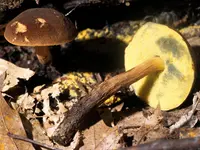
When the stem surface is bruised or cut, it often shows a noticeable blue or bluish-green staining due to oxidative reactions of pigmented compounds in the tissue, a trait used by mycologists for identification.

Mycorrhizal with pines

This species forms ectomycorrhizal associations with pine trees, exchanging mineral nutrients and water from the soil for carbohydrates produced by its host through photosynthesis.

Botan icon

Did you know?

Boletellus ananas has a longitudinally striate spore ornamentation visible under a microscope, with elongated spores bearing fine ridges rather than being smooth, which helps distinguish it from many other boletes with similar appearance.

FAQs about Pineapple Bolete

This species is generally considered edible when properly identified and cooked, but quality is variable and can be low. It may be confused with inedible or untested look-alikes, so inexperienced foragers should avoid consumption or seek expert confirmation.

Grow Healthy Plants with Botan Care

Keep your plants happy and healthy with plant identification, disease detection, and easy care guidance.

Botan plant care app — identify plants on mobile

Explore More Plants