Substrate rotation
Rotate or slightly shift the colonized wood or mulch pieces every few months to expose new surfaces, which encourages fresh fruiting and helps reduce localized mold buildup when growing rhubarb bolete outdoors.

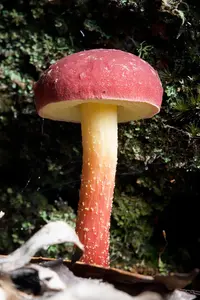
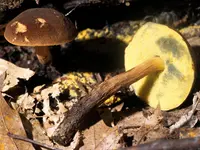
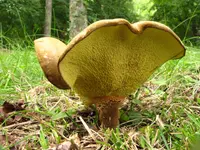
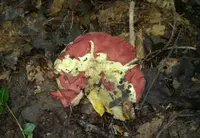
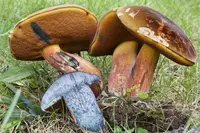
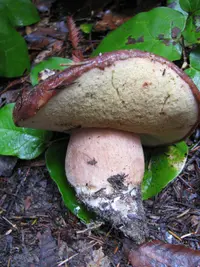
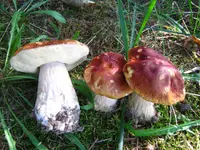
The rhubarb bolete, Boletellus obscurococcineus, is a mycorrhizal fungus that forms a partnership with tree roots rather than growing as a typical garden plant. It produces thick, sturdy stems and caps in deep red to reddish brown tones, often with a somewhat shaggy or textured surface.
This species is usually found in forested areas, especially with conifers or mixed woodland, where it appears seasonally in moist, organic-rich soil. Gardeners who care for rhubarb bolete or attempt cultivation should know it depends on living host trees, which makes deliberate growing challenging. It prefers undisturbed, humid, shaded environments and does not adapt well to conventional container culture.

Care Difficulty
Hard Care

Light Preference
Partial Shade

Water Requirements
Regular Water

Temperature Preference
Warm Climate

Hardiness Zone
Unknown

Soil Texture
Loamy, Sandy, Organic-rich

Soil pH
Acidic (5.5–6.5)

Soil Drainage
Moist but well-drained

Fertilization
Minimal (feed rarely)
Scan your plant to receive care tips personalized for your specific plant
Available on iOS and Android
This ectomycorrhizal mushroom prefers bright woodland conditions with filtered light rather than open, exposed sun.
Boletellus obscurococcineus depends on consistently moist, not waterlogged, soil around its tree partners.
This species fruits best in mild to warm conditions and is sensitive to both hard frost and extreme heat.
Humidity is a minor factor, as this ectomycorrhizal fungus grows best in naturally moist, shaded outdoor forest conditions rather than controlled indoor air.
This fungus relies on living tree roots in undisturbed forest soil, so recreating its substrate focuses on structure and organic content rather than a standard plant potting mix.
This species is not suitable for container growing, because it depends on long-term ectomycorrhizal association with mature tree roots in open ground.
This ectomycorrhizal fungus depends mainly on its tree host for nutrients, so direct fertilizing of Boletellus obscurococcineus is rarely necessary.
There is no true pruning for Boletellus obscurococcineus, but limited fruiting-body removal can guide appearance and reduce disease spread.
This species forms a symbiotic relationship with tree roots, so transplanting focuses on moving or establishing the host rather than the fungus itself.
Deliberate propagation of Boletellus obscurococcineus is challenging because it relies on a specific mycorrhizal partnership with tree roots.
This bolete is generally cold hardy in its suitable climate and needs minimal direct winter care once established with its host tree.

Plant Health Check
Not sure what's wrong with your plant? Check your plant's health inside the app.
The spores of this species are not smooth; they have distinctive longitudinal ridges and are covered in a reddish pigment, which helps separate it microscopically from many similar boletes with smooth, pale spores.
Young fruiting bodies often show a vivid deep red to rhubarb‑colored pore surface that can fade or change with age and handling, a feature that inspired the common name rhubarb bolete in some field guides.
This fungus is known primarily from eastern Asia and parts of Australasia, where it associates with local tree species, and it has not been reliably documented as a native species in Europe or North America despite visual similarities to other red boletes.

This species forms ectomycorrhizal associations with trees, meaning its underground fungal threads closely wrap around fine roots and exchange mineral nutrients for sugars, playing a direct role in forest nutrient cycling and tree health in the habitats where it occurs.
This mushroom is considered inedible or of very poor culinary value. It has tough, fibrous flesh and may cause gastrointestinal upset. It is not recommended for consumption, especially given the risk of misidentification with toxic boletes.
Keep your plants happy and healthy with plant identification, disease detection, and easy care guidance.