Boletus roodyi Care

Boletus roodyi

About Boletus roodyi

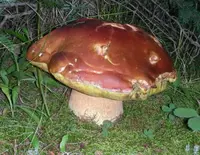
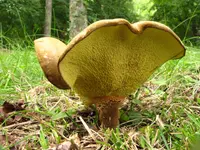
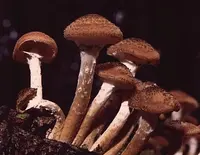
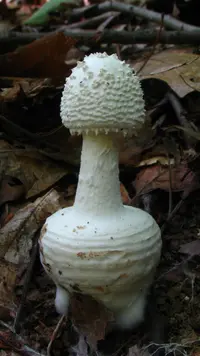
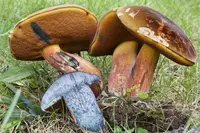
Boletus roodyi is a fleshy mushroom-forming fungus, not a leafy houseplant. It grows from soil as a stout stem with a thick cap, often in earthy brown tones. The pores under the cap replace the gills seen in many other mushrooms.

This species is typically found in forested areas, forming mycorrhizal partnerships with tree roots, which makes it difficult to grow in typical home or garden conditions. It relies on specific soil fungi and host trees, so attempts to care for Boletus roodyi at home are rarely successful.

In nature, it favors undisturbed woodland soils with consistent moisture and dappled light, rather than direct sun or compacted ground.

Main Plant Requirements

Care Difficulty

Moderate Care

Light Preference

Partial Shade

Water Requirements

Moderate Water

Temperature Preference

Warm Climate

Hardiness Zone

Unknown

Soil Texture

Loamy

Soil pH

Slightly acidic (6.5–7.0)

Soil Drainage

Well-drained

Fertilization

Minimal (feed rarely)

Get Personalized Care Plan

Scan your plant to receive care tips personalized for your specific plant

Available on iOS and Android

How to Care for the Boletus roodyi

This ectomycorrhizal mushroom prefers dappled woodland light rather than open sun.

  • Provide 2–4 hours of weak, filtered light daily under trees, avoiding direct midday sun that can overheat the soil surface and dry the mycelium.
  • Site Boletus roodyi in partial shade with broken canopy cover, such as north or east sides of woodland edges or among shrubs and leaf litter.
  • In summer, protect from intense afternoon sun; in cooler seasons slightly more open light is acceptable as long as the soil does not bake or crack.

This fungus depends on consistently moist, but not saturated, soil around its tree partners.

  • Aim for evenly moist upper soil, allowing the top 2–3 cm to lose surface sheen before the next thorough soaking from rain or supplemental irrigation.
  • Use well-drained, humus-rich soil; standing water or heavy clay promotes rot and absence of fruiting, while deep leaf litter helps retain moderate moisture.
  • Watch for caps failing to appear in dry spells as a sign the mycelium is stressed, and reduce added water if the site smells sour or soil feels sticky and compacted.

This species fruits best in mild conditions typical of temperate woodlands.

  • Optimal fruiting occurs around 55–70°F (13–21°C), with vegetative mycelium able to persist slightly outside this range in the soil.
  • Short exposures down to about 32°F (0°C) are usually tolerated in soil, but repeated hard frosts or frozen, bare ground reduce fruiting success.
  • Sustained heat above 80°F (27°C), especially with dry air and hot sun on the forest floor, can halt fruiting, so rely on canopy shade and leaf litter to buffer temperature swings.

Humidity plays little role in the development of Boletus roodyi compared with host tree association and soil conditions.

This ectomycorrhizal fungus relies on suitable forest soil around host trees rather than managed potting mixes.

  • Target a loose, well-aerated, organic-rich loam with abundant leaf litter and fine roots from suitable host trees.
  • Ensure rapid drainage by avoiding compacted clay; aim for soil that feels crumbly and never stays waterlogged after rain.
  • Maintain slightly acidic to neutral conditions around pH 5.5–7.0, avoiding liming or heavy ash additions that push pH higher.
  • Encourage natural structure by leaving coarse woody debris and partially decomposed leaves instead of tilling or heavily disturbing the soil.

This species is not suitable for container growing because it depends on complex underground associations with mature tree roots that cannot be replicated in pots.

This wild mycorrhizal fungus, Boletus roodyi, is not fertilized directly but depends on its tree partners and soil health.

Pruning is not applicable to Boletus roodyi, as it is a wild ectomycorrhizal mushroom rather than a manageable garden plant.

This species is not suited to repotting or transplanting, since its mycelium is tightly integrated with host tree roots in the soil.

  • Transplant attempts usually fail because disturbing the mycelium breaks the connection with host roots.
  • If study or relocation is essential, move a generous intact block of surrounding soil and roots.
  • Carry soil blocks cool and shaded, and replant at the same depth and orientation.
  • After replanting, keep the area evenly moist but not waterlogged to limit additional stress.

Propagation of Boletus roodyi is specialized and rarely practical for home growers, as it requires complex mycorrhizal relationships.

No specific winter care is needed for this hardy woodland fungus, which is adapted to natural seasonal temperature swings.

Care Tips

Host tree selection

Establish mycorrhizal association by inoculating soil near compatible host trees such as oaks or related hardwoods rather than trying to grow it in isolated beds or containers.

Minimal soil disturbance

Limit digging, raking, or heavy foot traffic over the inoculated area so the fine fungal network in the top 5–10 cm of soil remains intact and can support reliable fruiting.

Leaf litter management

Maintain a light layer of natural leaf litter under host trees to protect the mycelium from drying yet occasionally thin or shift thick mats so developing mushrooms can emerge without deformity.

Moisture pulse scheduling

Apply deep, infrequent irrigation to the root zone of host trees during dry periods, then stop watering for several days to mimic natural rain–dry cycles that can trigger fruiting when growing Boletus roodyi.

Flag and map zones

Mark and map productive fruiting spots with discreet flags or garden markers so future maintenance, mulching, and any soil amendments avoid damaging the established fungal patches.

Common Pests and Diseases

Mycelial parasitism

This disease involves invasion of the Boletus mycelium by other competitive fungi in the soil or decaying wood. Symptoms include patchy, weak, or disappearing fruiting in areas where the fungus previously produced mushrooms reliably.

Solution

Remove and discard any obviously contaminated woody debris or substrate, then replace with fresh, clean material from a different source. Improve site hygiene by avoiding burying kitchen scraps or diseased plant waste nearby, and if cultivating, rotate to a new area with low disturbance and good drainage to support healthy mycelial regrowth as part of Boletus roodyi care instructions.

Fungal gnat larvae

These insects lay eggs in moist organic matter, and the larvae feed on fine mycelium and young primordia. Symptoms include reduced or aborted mushroom formation and small tunnels or damage at the base of young fruiting bodies.

Solution

Reduce constantly wet conditions by allowing the substrate surface to dry slightly between waterings and avoid standing water. Use fine mesh over vents or containers to block adult gnats, and if needed apply a biological larvicide containing Bacillus thuringiensis israelensis (Bti) to the substrate according to label directions to target larvae without harming the fungus significantly.

Slugs and snails

These pests feed directly on developing and mature fruiting bodies, often overnight. Symptoms include irregular holes, shredded caps, and slime trails on or near the mushrooms.

Solution

Hand-pick slugs and snails in the evening or early morning and remove nearby hiding spots such as boards and dense ground litter. Use physical barriers such as copper tape around contained beds or collars, and apply iron phosphate slug baits around but not on the fruiting area, following label guidance to limit non-target impact.

Bacterial soft rot

This disease causes localized watery, soft, and foul-smelling decay of mushroom tissue, often starting at damaged areas. Symptoms include slimy patches, discoloration, and rapid collapse of affected fruiting bodies in warm, wet conditions.

Solution

Remove and discard affected mushrooms as soon as soft, wet spots appear, taking care not to smear decayed tissue onto healthy ones. Reduce overhead watering, avoid splashing soil onto caps, and increase air movement around the fruiting area so that surfaces dry more quickly after rain or irrigation.

Mite infestation

These pests are tiny arthropods that feed on spores, mycelium, or damaged tissue on mushrooms and substrate. Symptoms include fine pitting on caps, dusty or moving specks on surfaces, and slow decline in fruiting quality over time.

Solution

Limit introduction of infested compost, straw, or decaying material by sourcing clean substrate and storing it off the ground. If mites are present, remove heavily infested debris, reduce excessive moisture, and, in controlled cultivation, consider introducing predatory mites compatible with mushroom production to reduce pest populations without chemical treatments.

Interesting Facts

Taxonomic uncertainty

Boletus roodyi was described relatively recently and its exact placement within the Boletus sensu lato group has been debated, with some authors treating it cautiously until more molecular data clarify its relationships.

Regional distribution

This species is known only from limited localities in the southeastern United States, making it a regionally restricted bolete rather than a broadly distributed species.

Identification challenges

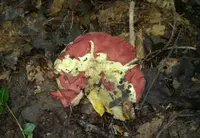
Field identification of this fungus can be difficult because it resembles several other red- or orange-capped boletes, so mycologists rely on a combination of subtle macroscopic traits and microscopic spores to separate it confidently from look-alikes.

FAQs about Boletus roodyi

This species is a wild bolete mushroom, and its edibility is not well established in the scientific literature. It should be treated as inedible and left unconsumed to avoid potential gastrointestinal upset or more serious poisoning.

Grow Healthy Plants with Botan Care

Keep your plants happy and healthy with plant identification, disease detection, and easy care guidance.

Botan plant care app — identify plants on mobile

Explore More Plants