Ruby Porcini Care (Boletus rubriceps)

Also known as: Ruby King Bolete
Ruby Porcini

About Ruby Porcini

Ruby porcini, Boletus rubriceps, is a fleshy, mycorrhizal mushroom that forms a symbiotic partnership with tree roots, especially pines and spruces. It is not a leafy plant but a fruiting body of an underground fungal network.

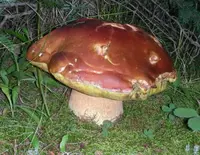
This species shows a reddish to wine-colored cap, thick pale stalk, and dense, white to yellowish pore surface instead of gills. It typically appears in montane conifer forests of the southwestern United States.

It is considered a desirable edible bolete, but accurate identification is critical before harvest. For those who want to understand how to care for Ruby Porcini in a home setting, the focus is usually on maintaining suitable host trees and undisturbed, moist, well-drained soil outdoors, rather than container growing.

Main Plant Requirements

Care Difficulty

Hard Care

Light Preference

Partial Shade

Water Requirements

Keep Soil Moist

Temperature Preference

Cool Climate

Hardiness Zone

3–8

Soil Texture

Loamy, Sandy, Organic-rich

Soil pH

Acidic (5.5–6.5), Slightly acidic (6.5–7.0)

Soil Drainage

Moist but well-drained

Fertilization

Minimal (feed rarely)

Get Personalized Care Plan

Scan your plant to receive care tips personalized for your specific plant

Available on iOS and Android

How to Care for the Ruby Porcini

This wild bolete prefers bright forest edges with moderated sunlight rather than exposed open ground.

  • Aim for dappled or filtered light under pines or mixed conifers, with about 3–5 hours of gentle morning sun and shade or high, broken canopy in the afternoon.
  • Tolerates light to moderate shade, but dense, dark woodland reduces fruiting, so choose sites with an open understory or thinned canopy for Ruby Porcini.
  • Avoid full, unbroken midday sun in hot, dry climates, which overheats soil and dries the mycelium; light levels can be higher in cool, high-elevation sites with moist soil.

Boletus rubriceps depends on consistently moist, not saturated, soil around host tree roots.

  • Allow the upper 2–5 cm of forest soil or mulch to start drying slightly between soakings, then water deeply so moisture penetrates 10–15 cm into the root zone.
  • Increase watering during hot, dry periods when leaf litter dries quickly, and reduce or stop supplemental water once cool, regular autumn rains resume.
  • Watch for signs of overwatering such as sour, swampy smells or standing water; very cracked, dusty soil and sparse fruiting indicate chronic underwatering or drought stress.

This species fruits best in cool to mild conditions typical of montane conifer forests.

  • Optimal fruiting occurs around 55–70°F (13–21°C), with the underground mycelium remaining active across a somewhat broader cool range when soil stays moist.
  • It tolerates brief dips near 28–32°F (-2–0°C), but hard, prolonged frost damages young fruiting bodies and can pause development until a thaw.
  • Sustained heat above 80–85°F (27–29°C), especially with dry soil, sharply reduces fruiting; partial shade, mulch, and steady moisture help buffer temperature swings.

This mycorrhizal mushroom prefers moderately moist, not saturated, air conditions close to natural woodland levels.

  • Aim for ambient humidity around 50–70% when attempting to cultivate Ruby Porcini in controlled conditions.
  • It tolerates brief drops to 30–40%, but prolonged very dry air dehydrates developing fruiting bodies and caps.
  • Watch for cracked, tough caps or shriveling pore surfaces as low-humidity stress, and raise humidity using fine misting or a humidifier without wetting the substrate heavily.

This ectomycorrhizal fungus requires a loose, well-drained, organic-rich forest-type substrate rather than standard potting soil.

  • Use a mix mimicking conifer or mixed woodland floor: coarse sand or fine gravel, decomposed leaf litter, and well-rotted wood pieces.
  • Ensure the substrate is loose and crumbly to maintain aeration around tree roots that partner with Boletus rubriceps.
  • Keep drainage high so water moves through quickly, avoiding standing water that favors competing fungi and root rot in host trees.
  • Aim for slightly acidic conditions, roughly pH 5.0–6.5, and avoid compacted clay, heavy peat-only mixes, or highly fertilized media.

This species is generally unsuitable for true container cultivation because it depends on complex mycorrhizal partnerships with mature tree roots.

This ectomycorrhizal mushroom relies on its tree partners for nutrition and usually needs no direct fertilization.

Boletus rubriceps is not pruned, as it is a wild mycorrhizal fungus rather than a managed ornamental plant.

This fungus is not suited to normal repotting, since its life cycle depends on forming mycorrhiza with living tree roots in soil.

  • Transplant only by moving associated host trees or intact turf/soil blocks containing the natural root–fungus system.
  • Avoid disturbing the root zone; heavy digging, tilling, or soil removal can disrupt fungal hyphae and reduce future fruiting.
  • Any relocation attempt is best done during cool, moist weather to limit stress on tree roots and fungal partners.

Boletus rubriceps propagation in home settings is unreliable because it requires a specific symbiosis with host tree roots, not standard plant techniques.

Cold-hardy mycelium in the soil generally needs no targeted winter care in typical temperate climates.

Care Tips

Host tree matching

Establish mycelium only under compatible pine, spruce, or fir species from the same region, since this ectomycorrhizal fungus needs a suitable conifer partner to fruit reliably.

Minimal soil disturbance

Once inoculated, avoid tilling, raking deeply, or compacting the soil over the inoculation zone, because mycelial networks are easily damaged and reduced disturbance strongly improves long‑term productivity when growing Ruby Porcini.

Leaf litter management

Maintain a loose layer of conifer needles and leaves 2–5 cm thick over the inoculated area to conserve moisture and provide a stable microclimate, but clear thick, matted layers that start to repel water.

Targeted watering zone

When irrigating inoculated trees, water the dripline area (under the outer canopy edge) rather than the trunk base, as this is where most feeder roots and associated mycelium produce fruiting bodies.

Seasonal marking system

Use small, discreet ground markers or a simple grid map to record where mushrooms emerged in previous years, so you can focus monitoring and gentle spot‑watering on the most productive zones without disturbing new fruiting sites.

Common Pests and Diseases

Fungus gnat larvae

This pest targets the moist substrate used to cultivate the mushroom mycelium. Larvae feed on mycelium and developing primordia, leading to poor or aborted fruiting bodies.

Solution

Use fine insect mesh on vents and doors, sticky traps to monitor adults, and keep entry points screened. If larvae are present, allow the substrate surface to dry slightly between misting, remove heavily infested blocks or trays, and apply a biological control such as Bacillus thuringiensis israelensis (Bti) according to label directions.

Mite infestation

These insects often arrive on contaminated substrate or in unfiltered air and feed on mycelium or young fruiting bodies. Symptoms include pitted, deformed caps and slowed colonization.

Solution

Discard heavily infested substrate and clean all surfaces, tools, and shelving with a 10% bleach solution, then rinse. Improve filtration of incoming air, avoid bringing in unsterilized organic material, and maintain good sanitation around the growing area to prevent reintroduction while growing Ruby Porcini.

Green mold (Trichoderma)

This disease appears as dense white mycelium that quickly turns green and powdery on substrate surfaces. Symptoms include stalled colonization and collapse of nearby mushroom mycelium.

Solution

Immediately remove and seal contaminated blocks or trays to prevent spore spread, and clean the area with a disinfectant. Review sterilization or pasteurization steps, lower excess humidity on exposed substrate surfaces, and improve air exchange to reduce condensation that favors Trichoderma growth.

Bacterial blotch

This disease causes oily, water-soaked spots that may turn yellow to brown on caps and stipes. Symptoms include a slimy surface and rapid deterioration of affected fruiting bodies in overly wet, stagnant conditions.

Solution

Reduce overhead misting, focus on humidifying the room air rather than directly wetting caps, and increase gentle air circulation to dry surfaces within 1–2 hours after spraying. Remove and discard affected mushrooms, disinfect harvest tools, and avoid handling caps with wet or dirty hands to limit spread.

Interesting Facts

Rocky Mountain specialist

This species is native to high-elevation conifer forests of the southern Rocky Mountains, where it forms particularly strong associations with ponderosa pine, spruce, and fir on well-drained, often sandy or rocky soils.

Distinctive red cap

Mature fruiting bodies develop a dry, velvety cap that ranges from deep red to wine-red, a feature that helps distinguish it from many brown-capped porcini relatives in the same forests.

Non-staining pore surface

Unlike some red-capped boletes that bruise blue, its yellow to olive pore surface typically shows little to no blue staining when handled or cut, which is a key field character for accurate identification.

Botan icon

Did you know?

Molecular studies in the 2010s showed that this mushroom, long treated as a regional color form of other porcini, is genetically distinct enough to warrant recognition as its own species, helping clarify the diversity of North American porcini-like boletes.

FAQs about Ruby Porcini

Yes, this species is considered a choice edible bolete when correctly identified and harvested in good condition. Always confirm identification with a reliable field guide or expert, since some red-capped boletes can cause digestive upset.

Grow Healthy Plants with Botan Care

Keep your plants happy and healthy with plant identification, disease detection, and easy care guidance.

Botan plant care app — identify plants on mobile

Explore More Plants