


Spore-friendly placement
Leave a few mature, undamaged caps in place to drop spores near compatible host trees such as oaks or pines, which helps maintain and slowly expand future fruiting patches.

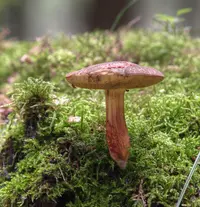
Red-cracking bolete, Xerocomellus chrysenteron, is a fleshy wild mushroom rather than a traditional garden plant. It forms thick, soft caps with a dry, often cracked surface that reveals red tones in the skin and yellowish flesh below. The short, sturdy stem usually shows fine red streaks.
This species grows on the ground in woodlands, especially with hardwood trees, across temperate regions of Europe and North America. It relies on a mycorrhizal relationship, where its underground threads exchange nutrients with tree roots, so it cannot be grown like a potted plant. For those studying how to care for Red-cracking Bolete, conditions that favor healthy trees and undisturbed leaf litter are most relevant.

Care Difficulty
Moderate Care

Light Preference
Partial Shade

Water Requirements
Regular Water

Temperature Preference
Cool Climate

Hardiness Zone
5–10

Soil Texture
Loamy, Sandy, Organic-rich

Soil pH
Acidic (5.5–6.5), Slightly acidic (6.5–7.0)

Soil Drainage
Moist but well-drained

Fertilization
Minimal (feed rarely)
Scan your plant to receive care tips personalized for your specific plant
Available on iOS and Android
This mycorrhizal fungus prefers woodland light conditions rather than full open sun.
This species relies on consistently moist, not saturated, forest soil maintained through natural rainfall and ground cover.
This fungus fruits best in mild, temperate woodland conditions with cool to warm air and stable soil temperatures.
Humidity is not a significant factor for Xerocomellus chrysenteron, which develops fruiting bodies outdoors in open air.
Xerocomellus chrysenteron fruits best in loose, aerated soil closely mimicking its natural woodland conditions.
This species is not well suited to container growing because it relies on complex mycorrhizal relationships with tree roots in open ground.
Xerocomellus chrysenteron grows as a mycorrhizal fungus and usually does not need direct fertilization when associated with healthy host trees.
Xerocomellus chrysenteron is a wild mushroom, not a garden shrub, so intentional pruning is neither required nor appropriate.
This ectomycorrhizal fungus is adapted to natural soil with host tree roots and is not suited to normal repotting or transplanting.
Spreading Xerocomellus chrysenteron intentionally in gardens is unreliable because it depends on complex partnerships with tree roots.
This fungus is naturally cold hardy in its native range and requires no special winter care in gardens or woodlands.

Plant Health Check
Not sure what's wrong with your plant? Check your plant's health inside the app.
Mature fruiting bodies typically show a dry, dull brown to reddish cap surface that cracks into irregular patches, revealing a contrasting pinkish to yellowish flesh in the fissures, which is the origin of the common name red-cracking bolete.
When the pale yellow flesh is cut or bruised, it usually turns a weak bluish tone, especially above the tubes, due to oxidation of pigmented compounds; this reaction is variable in intensity but is a useful field character for Xerocomellus chrysenteron care instructions.
This species forms ectomycorrhizae, a type of root symbiosis, with several broadleaf trees such as oaks, beeches, and birches, helping host trees absorb nutrients like nitrogen and phosphorus while receiving carbohydrates in return.

Molecular studies over the last two decades showed that the traditional broad genus Xerocomus contained several distinct lineages, and as a result this species was reassigned to the segregate genus Xerocomellus, making it one of the type species that helped define the modern concept of Xerocomellus as separate from Xerocomus.
This species is generally regarded as edible but of modest culinary value, with soft flesh and mild flavor. Accurate identification is critical, as similar boletes may cause stomach upset. Always cook thoroughly and avoid very old, waterlogged, or heavily infested specimens.
Keep your plants happy and healthy with plant identification, disease detection, and easy care guidance.

southern ginseng
Gynostemma pentaphyllum
alder roll-rim
Paxillus filamentosus
American Abrupt-Bulbed Lepidella
Amanita abrupta
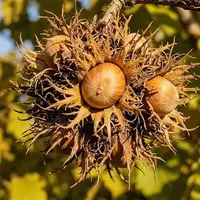
Turkish hazelnut
Corylus colurna
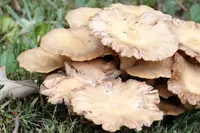
ringless honey fungus
Desarmillaria tabescens
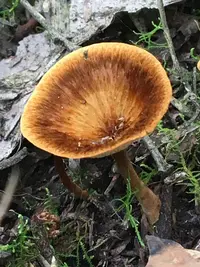
Coltricia australica
Coltricia australica
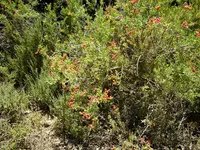
nitre bush
Nitraria billardierei
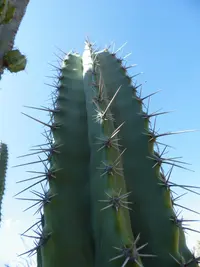
Stenocereus stellatus
Stenocereus stellatus