Establish strong leader
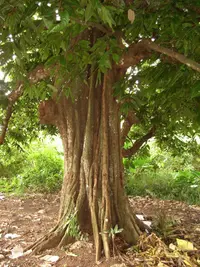
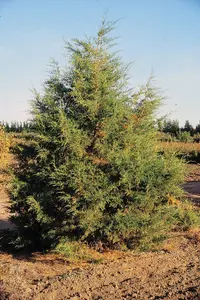
In the first 3–5 years, select one straight central stem and remove or shorten competing upright shoots in late winter so the tree develops a single strong leader that resists storm damage later.

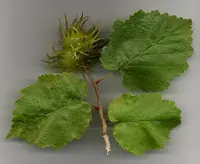
Turkish hazelnut, Corylus colurna, is a long-lived deciduous tree grown mainly for its strong structure, dense crown, and edible nuts. It develops a straight trunk with a pyramidal shape when young, becoming broader and more rounded with age.
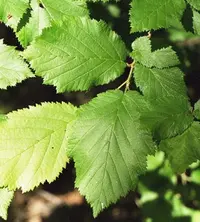
The bark turns attractively scaly over time, and the foliage provides reliable summer shade and yellow fall color. In its natural range it occurs in southeastern Europe and western Asia, often on rocky slopes and mountain forests.
This species is valued in urban landscapes because it tolerates cold, wind, road salt, and air pollution, which makes it easier to establish than many shade trees. It prefers sun, moderately moist, well-drained soil, and understanding these needs is key to how to care for Turkish hazelnut.

Care Difficulty
Easy Care

Light Preference
Full Sun

Water Requirements
Moderate Water

Temperature Preference
Cold Hardy

Hardiness Zone
4–7

Soil Texture
Loamy, Sandy, Clay

Soil pH
Acidic (5.5–6.5), Slightly acidic (6.5–7.0)

Soil Drainage
Well-drained

Fertilization
Minimal (feed rarely)
Scan your plant to receive care tips personalized for your specific plant
Available on iOS and Android
This species develops best as a sun-loving landscape tree with some tolerance for light shade.
This tree prefers evenly moist but not saturated soil, especially during establishment.
This hardy tree tolerates a wide temperature range once established.
Humidity is not a significant concern for Corylus colurna, which adapts well to typical outdoor air levels.
Soil preparation strongly influences establishment and health of Corylus colurna.
This species is generally unsuitable for long‑term container growing due to its eventual large size and deep root system.
Corylus colurna is a hardy tree that usually needs only modest fertilization when establishing or on very poor soils.
Pruning Corylus colurna is mainly about structural training and removal of problem wood rather than heavy shaping.
Corylus colurna is usually field-grown and transplanted young, as long-term container culture is uncommon.
Propagation of Corylus colurna is most often done from seed and is slow, so it is usually handled by nurseries.
Corylus colurna is a cold-hardy deciduous tree that generally needs minimal winter care in most temperate climates.

Plant Health Check
Not sure what's wrong with your plant? Check your plant's health inside the app.
This species develops a very regular, narrow pyramidal to columnar crown with a strong central leader, which makes it structurally different from the more spreading common hazel. That growth form allows it to be used as a long-lived street and avenue tree in urban design.
Unlike many hazels with shallower roots, Turkish hazel forms a pronounced taproot and sturdy framework roots. This deep root system improves drought tolerance and anchorage, making it stable in windy and dry sites once established.
Its small, round nuts are enclosed in a deeply fringed, tough husk and have an especially hard shell compared to most cultivated hazelnuts. The kernels are edible and sweet but are not widely grown commercially because they are difficult to extract at scale.

Turkish hazel shows notable tolerance to urban air pollution, compacted soils, and reflected heat, which has led urban foresters in several US and European cities to test it as a resilient alternative to more common street trees such as lindens and maples when planning long-term, climate-adapted plantings.
This species is moderate-growing, not truly fast. Young trees typically add 30–45 cm of height per year under good conditions. Growth slows as the tree matures and focuses more on trunk thickening and crown development.
Keep your plants happy and healthy with plant identification, disease detection, and easy care guidance.