


Leave Host Intact
Do not remove or disturb the woody substrate where this fungus is growing, as it relies on the decaying log or stump for nutrients and will decline if the host wood is cut up, burned, or moved frequently.

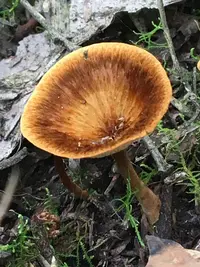
Coltricia australica is a small, woody, bracket fungus rather than a typical leafy plant. It forms thin, rosette-like caps with concentric brown and yellow zones and a velvety surface. The undersides carry pores instead of gills.
This species usually grows on soil or decaying wood in eucalyptus forests and heathlands, mainly in Australia and nearby regions. It often appears in groups, slowly expanding in loose rings on the forest floor.
Because it is a specialized wood- and litter-decay fungus, it is not commonly cultivated at home and can be challenging to maintain. Those who want to learn how to care for Coltricia australica should understand its need for undisturbed, nutrient-poor, well-drained substrates and consistently cool, moist, woodland-like conditions.

Care Difficulty
Moderate Care

Light Preference
Partial Shade

Water Requirements
Moderate Water

Temperature Preference
Warm Climate

Hardiness Zone
Unknown

Soil Texture
Sandy, Loamy, Organic-rich

Soil pH
Acidic (5.5–6.5), Slightly acidic (6.5–7.0)

Soil Drainage
Well-drained

Fertilization
Minimal (feed rarely)
Scan your plant to receive care tips personalized for your specific plant
Available on iOS and Android
This ectomycorrhizal fungus prefers stable woodland light rather than direct exposure.
This fungus depends on consistently moist, well-drained soil around its tree partners rather than direct watering of the fruiting bodies.
This species is adapted to mild to warm forest conditions with moderate seasonal shifts.
This bracket fungus does not have meaningful humidity requirements for cultivation, as it is not typically grown in controlled indoor conditions.
This wood-decaying fungus is not grown in conventional soil but can be encouraged on suitable woody substrates.
This species is poorly suited to container growing and is usually managed on outdoor logs or woody beds rather than in pots.
This wood-decaying fungus usually grows on nutrient-poor soils and does not need routine feeding in cultivation.
Coltricia australica does not need structural pruning, but fruiting bodies can be tidied for appearance or sanitation.
This species is usually established outdoors on soil or woody substrate rather than grown in containers.
Propagation is specialized because this fungus relies on spores and mycelium rather than typical plant structures.
In most mild, frost-free to light-frost climates, this fungus needs no special winter care beyond stable habitat.

Plant Health Check
Not sure what's wrong with your plant? Check your plant's health inside the app.
The fruiting bodies often show a distinct pattern of pores that becomes more irregular toward the margin, which helps distinguish it from similar brown, zoned polypores in the field.
This species commonly appears on sandy or nutrient-poor soils in association with Australian eucalypt and heathland vegetation, reflecting its adaptation to low-fertility environments.
Unlike many woody polypores that persist for several years, the brackets of this species are comparatively thin and often degrade within a season under natural conditions.

Coltricia australica has been documented forming ectomycorrhizal associations with native Australian trees, meaning its fine root-like fungal filaments wrap around tree root tips and help the host access nutrients in poor soils while receiving sugars in return.
This is a small bracket fungus that fruits on soil or wood and does not spread aggressively like invasive plants. It slowly colonizes organic matter and usually appears in scattered patches rather than forming dense, smothering carpets.
Keep your plants happy and healthy with plant identification, disease detection, and easy care guidance.

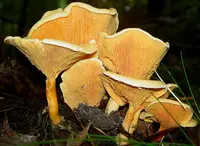
False Chanterelle
Hygrophoropsis aurantiaca
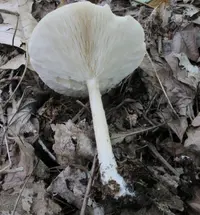
Collybia alboflavida
Collybia alboflavida
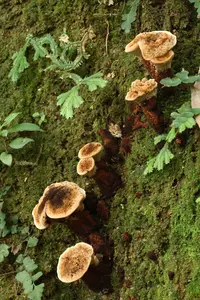
Coltricia montagnei
Coltricia montagnei
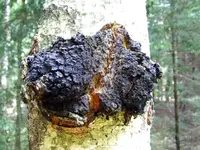
chaga
Inonotus obliquus
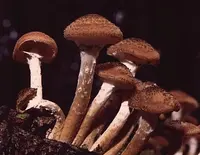
honey mushroom
Armillaria ostoyae
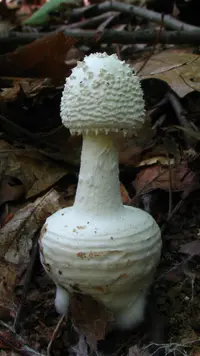
American Abrupt-Bulbed Lepidella
Amanita abrupta
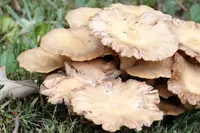
ringless honey fungus
Desarmillaria tabescens
clustered toughshank
Collybiopsis confluens