Spore-friendly mulching
Apply a loose 2–5 cm layer of leaf litter or coarse wood chips over the inoculated area to protect developing mycelium, retain moisture, and mimic the natural forest floor without compacting the soil.

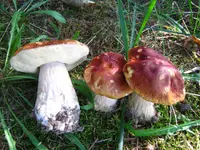
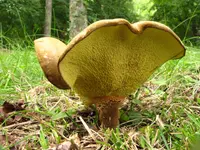
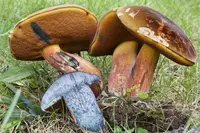
Porcino, often called Chippewa bolete, is a fleshy, mycorrhizal fungus, not a leafy plant. It forms thick, stout stems with smooth brown caps and pale pores underneath instead of gills. Boletus chippewaensis typically grows on the ground in mixed or coniferous forests, often in cooler regions of North America.
This species depends on tree roots, so it cannot be kept like a usual houseplant or potted specimen. For anyone wanting to learn how to care for porcino, the focus is on understanding its forest habitat, stable moisture, and well-drained, organic-rich soils rather than conventional indoor culture.

Care Difficulty
Hard Care

Light Preference
Partial Shade

Water Requirements
Regular Water

Temperature Preference
Cool Climate

Hardiness Zone
Unknown

Soil Texture
Loamy, Sandy, Organic-rich

Soil pH
Acidic (5.5–6.5)

Soil Drainage
Moist but well-drained

Fertilization
Minimal (feed rarely)
Scan your plant to receive care tips personalized for your specific plant
Available on iOS and Android
This woodland mushroom prefers dappled forest light rather than open sun exposure.
This mycorrhizal fungus depends on consistently moist, not saturated, forest soil.
This species favors cool to mild conditions typical of temperate woodlands.
This ectomycorrhizal fungus prefers moist forest air but is not managed by precise indoor humidity control.
This species grows in undisturbed, forest soils rather than prepared potting mixes.
This wild ectomycorrhizal species is not suitable for container growing because it depends on complex root and soil relationships in natural forest settings.
Boletus chippewaensis forms a mycorrhizal partnership with host trees and generally does not benefit from direct fertilization.
Boletus chippewaensis is a wild mycorrhizal fungus, so pruning focuses only on managing nearby host vegetation, not the fungus itself.
This fungus grows in symbiosis with tree roots, so transplanting focuses on preserving the host tree’s root zone rather than moving Boletus chippewaensis itself.
This species is not typically propagated in gardens, as successful establishment relies on complex mycorrhizal relationships with suitable host trees.
This North American porcini is naturally cold hardy and needs no specific winter care in the ground.

Plant Health Check
Not sure what's wrong with your plant? Check your plant's health inside the app.
This species is a North American member of the porcini group, producing stout, brown-capped fruiting bodies with a pale pore surface that slowly stains slightly darker but not blue when bruised, which helps distinguish it from many toxic look-alike boletes.
It forms ectomycorrhizal partnerships, a type of root-fungus symbiosis, mainly with conifers and sometimes hardwoods in Great Lakes and northern forest regions, and typically appears on the ground in summer to early autumn after periods of rain.
It is characterized by a dry to slightly velvety brown cap, a thick pale stipe that may show fine reticulation near the top, a white to yellowish pore layer that does not bruise blue, and firm white flesh with a mild taste and mushroom scent, features used by field mycologists to separate it from similar boletes.
This species is considered an edible wild mushroom and is related to other porcini-type boletes. Accurate identification is critical, since some similar boletes can cause stomach upset. Local foraging guides and mycology groups are strongly recommended.
Keep your plants happy and healthy with plant identification, disease detection, and easy care guidance.