Cane renewal
Every winter or very early spring, cut out the oldest, dullest canes at ground level to keep a young framework of 2–3 year-old stems, which show the best silver-white bark.

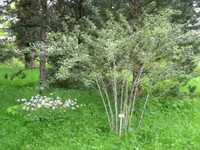
Ghost bramble, Rubus thibetanus, is a deciduous shrub grown mainly for its striking white to pale gray, thorny canes that stand out in winter. The arching stems create a dense, textured thicket that contrasts well with darker evergreens.
This species is native to high-altitude regions of China, where it grows on slopes and forest margins. In gardens, it is valued more for structure and seasonal interest than for its small, dark fruits.
It is generally robust and cold-hardy, but the thorns make pruning and placement more demanding. To care for ghost bramble successfully, provide sun to light shade, reasonably moist but well-drained soil, and enough space for its spreading habit.

Care Difficulty
Moderate Care

Light Preference
Full Sun

Water Requirements
Moderate Water

Temperature Preference
Cold Hardy

Hardiness Zone
6–9

Soil Texture
Sandy, Loamy, Clay

Soil pH
Acidic (5.5–6.5), Slightly acidic (6.5–7.0)

Soil Drainage
Moist but well-drained

Fertilization
Minimal (feed rarely)
Scan your plant to receive care tips personalized for your specific plant
Available on iOS and Android
Rubus thibetanus grows best in bright, open conditions with some protection from harsh afternoon sun.
This shrub prefers evenly moist, well-drained soil rather than frequent, shallow watering.
This hardy bramble tolerates a wide temperature range but performs best in cool to moderate climates.
Rubus thibetanus tolerates a wide humidity range and rarely needs special humidity adjustments outdoors or in unheated spaces.
Rubus thibetanus grows best in deep, moist, well‑drained loam with moderate organic content.
This species can be grown in large containers if adequate root volume and stability are provided.
Rubus thibetanus benefits from modest feeding but often grows well in reasonably fertile garden soil.
Pruning helps keep Rubus thibetanus safe to handle, within bounds, and flowering well.
Ghost bramble is usually grown in the ground, so focus on careful transplanting rather than frequent repotting.
Rubus thibetanus is commonly propagated vegetatively to keep plant characteristics consistent.
This shrub is cold hardy in much of the US and usually needs only light winter attention.

Plant Health Check
Not sure what's wrong with your plant? Check your plant's health inside the app.
This species is prized for its arching, thorny stems that turn a striking white to ghostly silver in winter once the leaves fall, creating a strong contrast against dark soil or evergreen plants.
It is naturally distributed in mountainous areas of western China, especially Sichuan, where it grows on slopes and thickets, adapting to cool-temperate climates with distinct seasons.
The plant produces small pale pink to white flowers in summer, followed by dark purple to black fruits that are technically edible but usually considered seedy and of low ornamental or culinary value.

In winter, mature plants can form dense, interlacing thickets of pale stems that provide effective cover and perching structure for small birds in gardens and naturalized plantings, particularly where other deciduous shrubs leave more open, exposed spaces.
This species spreads by suckering and arching stems that root where they touch the ground. In good conditions it can form thickets, so use root barriers, regular pruning, and thoughtful placement near boundaries or smaller plants.
Keep your plants happy and healthy with plant identification, disease detection, and easy care guidance.