Site preparation
Before planting, clear the area of dense turf and competing roots in a 30–60 cm radius so the fungus can more easily form mycorrhiza with the host pine roots.

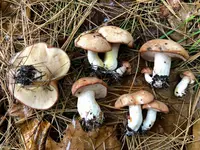
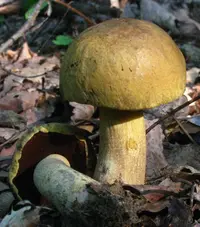
Butterball, Suillus weaverae, is a fleshy, mycorrhizal mushroom that forms a partnership with the roots of pine trees. It appears as smooth, rounded yellow to tan caps with a sponge-like pore surface underneath instead of gills.
This species typically occurs in North American pine forests, often fruiting in groups on the ground among needles and moss. It is considered an edible wild mushroom but should only be collected by people confident in identification.
For those interested in how to care for Butterball, conditions that mimic its natural habitat are important: cool to mild temperatures, consistent soil moisture, and association with suitable pine hosts are key factors for success.

Care Difficulty
Moderate Care

Light Preference
Partial Shade

Water Requirements
Moderate Water

Temperature Preference
Cool Climate

Hardiness Zone
Unknown

Soil Texture
Loamy, Sandy, Organic-rich

Soil pH
Acidic (5.5–6.5)

Soil Drainage
Moist but well-drained

Fertilization
Minimal (feed rarely)
Scan your plant to receive care tips personalized for your specific plant
Available on iOS and Android
This mycorrhizal fungus prefers light conditions similar to open pine or mixed woodland edges.
Watering focuses on maintaining evenly moist, well-drained soil around the host tree rather than the fungus itself.
This species favors cool to mild conditions typical of temperate conifer forests.
Humidity is not a major factor for Suillus weaverae, which grows outdoors in natural conditions.
This ectomycorrhizal fungus needs specific outdoor soil conditions rather than a standard potting setup.
This species is not suitable for long-term container growing, as it relies on forming ectomycorrhizal relationships with host tree roots in open ground.
This ectomycorrhizal mushroom naturally partners with pine roots and usually needs no additional fertilizer in the ground.
Suillus weaverae does not require pruning in the usual horticultural sense, but fruiting bodies and debris can be tidied when needed.
This species is not suited to typical pot culture, so focus on careful transplanting of its pine hosts or mycorrhizal habitat.
Suillus weaverae is normally sustained by spores and its association with compatible pine roots, so targeted propagation is specialized and uncertain.
In suitable climates this fungus is cold hardy and usually needs no special winter care beyond maintaining a stable forest-like habitat.

Plant Health Check
Not sure what's wrong with your plant? Check your plant's health inside the app.
This species forms ectomycorrhizal associations mainly with eastern white pine (Pinus strobus), exchanging mineral nutrients and water for photosynthates from the tree roots.
Mature fruiting bodies characteristically show a slimy, yellow to yellow-brown cap surface when moist, a diagnostic feature used by mycologists to separate it from similar Suillus species.
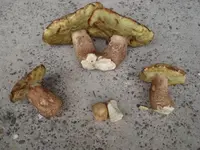
Instead of gills, the underside of the cap bears tightly packed, small, angular pores that release spores, a trait that helps distinguish it from gilled mushrooms in mixed conifer forests.
This species is considered an edible wild mushroom when correctly identified and thoroughly cooked. However, similar-looking species can be harmful. For safety, rely on expert identification and local guidelines before consuming any wild-collected material.
Keep your plants happy and healthy with plant identification, disease detection, and easy care guidance.