


Substrate wood refresh
Renew the hardwood-rich substrate every 1–2 years by adding fresh, partially decomposed beech or oak chips to maintain the nutrient profile this saprotrophic fungus needs for reliable fruiting.

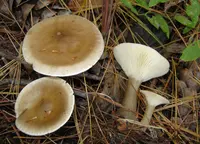
Ampulloclitocybe clavipes, often called club foot, is a small to medium mushroom-forming fungus, not a typical houseplant. It produces pale, funnel-shaped caps on sturdy, club‑like stems. In nature it grows on forest floors of Europe and North America, usually among leaf litter and conifer needles. It can appear in loose groups or scattered colonies. This species is sometimes collected in the wild, but its variable chemistry and confusion with other fungi make it unsuitable for casual foraging or home cultivation. Those interested in how to care for Club Foot in controlled conditions usually focus on maintaining cool, moist, shaded environments and wood‑rich substrates that mimic its natural woodland habitat.

Care Difficulty
Moderate Care

Light Preference
Partial Shade

Water Requirements
Keep Soil Moist

Temperature Preference
Cool Climate

Hardiness Zone
Unknown

Soil Texture
Loamy, Silty, Organic-rich

Soil pH
Acidic (5.5–6.5), Slightly acidic (6.5–7.0)

Soil Drainage
Moist but well-drained

Fertilization
Minimal (feed rarely)
Scan your plant to receive care tips personalized for your specific plant
Available on iOS and Android
This woodland fungus prefers cool, shaded to semi-shaded forest conditions rather than direct sun exposure.
This species relies on consistently moist, but not waterlogged, forest floor conditions to fruit well.
This fungus fruits best in cool to mild outdoor conditions typical of autumn woodlands.
This fungus prefers consistently moist, cool air but does not require tightly controlled humidity.
This woodland fungus grows best in loose, organic-rich, evenly moist substrates that mimic leaf litter on the forest floor.
This species is difficult but possible to maintain in containers under controlled, cool outdoor or sheltered conditions.
Ampulloclitocybe clavipes is a saprophytic fungus that obtains nutrients from decaying organic matter and does not need conventional fertilizing like a houseplant.
Ampulloclitocybe clavipes is not pruned like a typical ornamental plant; management focuses on hygiene around fruiting areas.
This fungus is usually left in place; if moved, the goal is to disturb the mycelium, the underground fungal network, as little as possible.
Intentional propagation of Ampulloclitocybe clavipes is uncommon and technically demanding, usually left to specialist mycologists rather than home growers.
In temperate climates this fungus is naturally cold hardy and typically needs no special winter care beyond maintaining a suitable habitat.

Plant Health Check
Not sure what's wrong with your plant? Check your plant's health inside the app.
This species can cause a disulfiram-like reaction when alcohol is consumed shortly before or after eating it, leading to flushing, nausea, and cardiovascular symptoms in some people. The exact chemical compound responsible has not been definitively identified, so many modern field guides now recommend avoiding it as an edible mushroom.
Mature fruiting bodies often show a noticeably swollen, club-shaped lower stem, which inspired the common name club foot. This feature, combined with the pale buff gills that run slightly down the stem, helps distinguish it from similar funnel-shaped mushrooms.
The species commonly fruits in coniferous and mixed woodlands of temperate regions in Europe and North America. It is typically found on soil among leaf litter and moss, often near spruce, fir, or pine, reflecting a preference for cool, moist forest floors.

Molecular research has led to several reclassifications of this species, which was long placed in the genus Clitocybe; DNA-based phylogenetic studies showed it belonged in a distinct lineage, resulting in the creation of the genus Ampulloclitocybe with this mushroom as its type species.
This mushroom is generally considered inedible or at least not recommended. It can cause disulfiram‑like reactions with alcohol, leading to nausea, flushing, and other unpleasant symptoms. Safer, well‑characterized edible fungi are a better choice.
Keep your plants happy and healthy with plant identification, disease detection, and easy care guidance.

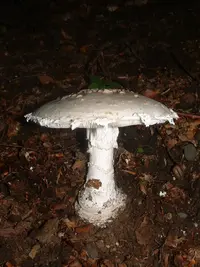
European Pine Cone Lepidella
Amanita strobiliformis
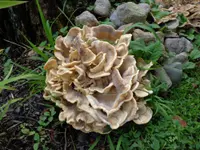
Black-staining Polypore
Meripilus sumstinei
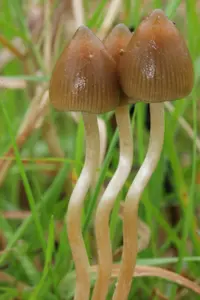
liberty cap
Psilocybe semilanceata
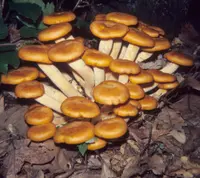
jack-o'-lantern mushroom
Omphalotus illudens
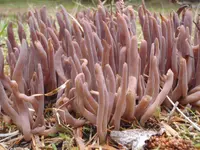
Purple Spindles
Alloclavaria purpurea
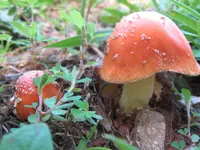
False Caesar's Mushroom
Amanita parcivolvata
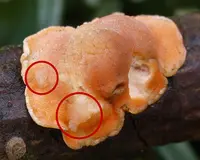
Orange Disco
Aleurodiscus amorphus
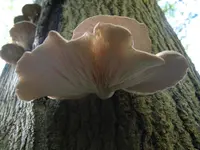
oyster mushroom
Pleurotus ostreatus