Host tree selection
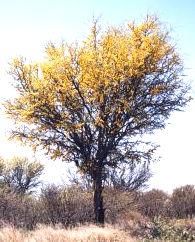
Establish this mycorrhizal fungus only near compatible pines or oaks, since the fungus depends on living host tree roots rather than organic substrates like compost or wood chips.

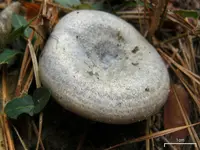
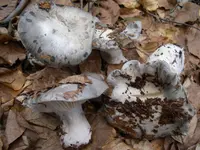
Silver-blue milkcap, Lactarius paradoxus, is a wild mushroom rather than a typical cultivated plant. It forms mycorrhizal partnerships with pine and oak roots, helping trees absorb water and nutrients. Caps are often bluish to gray-green with reddish tones underneath, and the broken gills exude a characteristic milky latex.
This species is native to eastern North America and appears in mixed woodlands, usually in late summer to fall. It is not commonly grown at home, since successful cultivation requires establishing complex root and soil relationships with suitable host trees.
For those interested in how to care for Silver-blue Milkcap in a woodland setting, focus on maintaining healthy, undisturbed tree habitat with moist, well-drained, slightly acidic soil and leaf litter.

Care Difficulty
Hard Care

Light Preference
Partial Shade

Water Requirements
Regular Water

Temperature Preference
Cool Climate

Hardiness Zone
5–9

Soil Texture
Loamy, Sandy, Organic-rich

Soil pH
Strongly acidic (4.5–5.5), Acidic (5.5–6.5)

Soil Drainage
Moist but well-drained

Fertilization
Minimal (feed rarely)
Scan your plant to receive care tips personalized for your specific plant
Available on iOS and Android
This ectomycorrhizal mushroom prefers dappled woodland light rather than open sun.
This forest fungus depends on consistently moist, not saturated, soil around its tree partners.
This species fruits best in mild to warm conditions typical of late summer to autumn woodlands.
This ectomycorrhizal mushroom needs consistently moist, humid forest-like conditions rather than dry air.
This species grows best in undisturbed, moist, aerated forest soil closely associated with host tree roots.
This species is generally unsuitable for container growing because it depends on long-term ectomycorrhizal association with tree roots in open ground.
This mycorrhizal fungus gains nutrients mainly through its tree partner, so Silver-blue Milkcap needs little to no direct fertilization.
As a wild ectomycorrhizal mushroom, Lactarius paradoxus does not require horticultural pruning.
This fungus grows in symbiosis with pine and oak roots, so management focuses on site establishment rather than repotting.
Practical propagation of Lactarius paradoxus for home growers is challenging and rarely attempted directly.
In its native range this fungus is naturally cold hardy and typically needs no deliberate winter care.

Plant Health Check
Not sure what's wrong with your plant? Check your plant's health inside the app.
When cut or broken, the gills exude a bluish to violet milk that slowly turns green as it reacts with air, a distinctive feature among milkcap mushrooms.
This species forms ectomycorrhizal associations with pines in the southeastern United States, exchanging mineral nutrients from the soil for sugars produced by the tree.
Mature fruiting bodies often show a mix of blue, green, and reddish-brown tones on the cap, making it one of the more visually distinctive Lactarius species in North American pine woods.

Lactarius paradoxus was named for its paradoxical, or unusual, combination of traits within the genus, especially the striking blue-violet milk and atypical coloration that made its placement among related species taxonomically puzzling when first described.
This mushroom is considered edible but is not widely collected due to its limited distribution and sometimes mixed reports on quality. Always confirm identification with an expert, as similar Lactarius species can be mildly toxic or cause stomach upset.
Keep your plants happy and healthy with plant identification, disease detection, and easy care guidance.