Rosy Brittlegill Care (Russula rosea)

Rosy Brittlegill

About Rosy Brittlegill

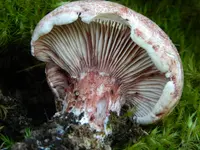
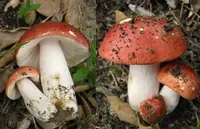
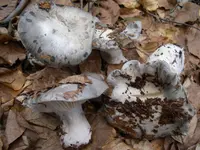
Rosy brittlegill (Russula rosea) is a woodland mushroom, not a true plant, known for its stout stem and pink to rose-red cap with pale gills. The cap surface is usually smooth and slightly brittle, which is typical for Russula species.

This species grows on the ground in broadleaf and mixed forests, often forming mycorrhizal partnerships with trees such as beech. It appears in late summer to autumn in temperate regions.

Identification is not always straightforward, since it can resemble other pink Russula species, some of which are inedible. Because of this similarity, it is considered challenging for those who want to care for Rosy Brittlegill in a managed woodland or outdoor setting.

Russula rosea prefers undisturbed, humus-rich forest soil with consistent moisture and dappled to moderate shade where its tree partners can thrive.

Main Plant Requirements

Care Difficulty

Hard Care

Light Preference

Partial Shade

Water Requirements

Keep Soil Moist

Temperature Preference

Cool Climate

Hardiness Zone

Unknown

Soil Texture

Loamy, Silty, Organic-rich

Soil pH

Strongly acidic (4.5–5.5), Acidic (5.5–6.5)

Soil Drainage

Moist but well-drained

Fertilization

Minimal (feed rarely)

Get Personalized Care Plan

Scan your plant to receive care tips personalized for your specific plant

Available on iOS and Android

How to Care for the Rosy Brittlegill

This woodland fungus prefers gentle, filtered light similar to that found on a forest floor.

  • Provide dappled or filtered light under deciduous trees, with roughly 2–4 hours of soft morning sun and bright shade the rest of the day.
  • Avoid harsh, direct midday or afternoon sun, which can dry leaf litter and reduce humidity needed for Rosy Brittlegill to form healthy fruiting bodies.
  • In summer, denser canopy shade is acceptable, but excessive shade from evergreen cover can reduce fruiting, especially in late summer–autumn.

Russula rosea relies on naturally moist, well-drained woodland soil rather than direct watering of the mushrooms themselves.

  • Aim for soil that stays slightly moist in the top 3–5 cm, with good leaf-litter cover; allow brief surface drying between rains rather than prolonged saturation.
  • Improve drainage with loose organic matter; standing water, anaerobic smell, or slimy caps indicate overwatering and poor aeration in the substrate.
  • During dry, hot periods, light irrigation of the surrounding soil and leaf litter can help maintain moisture, but strong, direct spraying on emerging caps can damage them.

This species fruits best in mild, temperate conditions with cool to warm air and consistently cool, moist soil.

  • Target ambient temperatures around 55–70°F (13–21°C) during main fruiting, with cool nights that keep soil and leaf litter damp.
  • It tolerates down to about 32°F (0°C) in the soil, but hard frost or repeated freeze–thaw can damage fruiting bodies and reduce visible mushrooms.
  • Sustained heat above 80°F (27°C), especially with low humidity, shortens cap lifespan and may halt fruiting until cooler, wetter weather returns.

Humidity is not a significant controllable factor for Russula rosea, as it is a wild ectomycorrhizal mushroom dependent on forest soil moisture rather than air moisture.

Russula rosea grows in the ground in association with tree roots and cannot be maintained in standard potting mixes like a typical houseplant.

  • This species fruits in humus-rich forest soil with abundant leaf litter, twigs, and decomposing wood that supply organic matter and host tree roots.
  • Natural substrates are usually well-aerated, loose, and free-draining, avoiding persistent waterlogging that would exclude oxygen from fungal hyphae.
  • It typically occupies slightly acidic to neutral soils, roughly pH 5.0–7.0, common under broadleaf trees in temperate woodlands.
  • Artificial mixes such as peat, compost, perlite, or bark alone cannot replace the complex tree-root and soil-microbe network required for its full life cycle.

This species is not suitable for container growing because it relies on living tree roots and complex woodland soil conditions that containers cannot realistically provide.

This woodland mycorrhizal fungus does not need routine fertilization and usually thrives in nutrient-balanced forest soils.

Pruning is not applicable to Russula rosea because it is a wild ectomycorrhizal mushroom, not a conventional garden plant.

Transplanting this mycorrhizal mushroom is rarely successful because it depends on a stable symbiosis with tree roots.

  • Avoid disturbing established host trees and surrounding soil where fruiting bodies appear.
  • If attempting cultivation, inoculate suitable tree seedlings in containers rather than moving wild colonies.
  • Transplant only during cool, moist periods to limit stress to both tree roots and fungal mycelium.
  • Keep the root zone evenly moist and shaded after any soil disturbance to support fungal recovery.

Propagation of this ectomycorrhizal species is specialized and not practical for typical home growers.

This temperate woodland fungus is naturally cold hardy and requires no specific winter care from gardeners.

Care Tips

Host tree matching

Survey the site for compatible ectomycorrhizal host trees such as beech, oak, or spruce, since this fungus needs an established tree partner rather than open lawn or annual beds.

Minimize soil disturbance

Keep raking, digging, and tilling to a minimum around known fruiting spots so the underground mycelium network remains intact and can fruit reliably year after year.

Maintain leaf litter

Leave a thin, natural layer of leaf litter and small twigs under host trees to protect mycelium from drying out and to provide a steady supply of organic material for long‑term colony health.

Thoughtful path placement

Route garden paths and heavy foot traffic away from regular fruiting areas to avoid repeated compaction, which can reduce aeration and water movement in the upper 5–10 cm of soil.

Gentle harvesting method

When caring for Rosy Brittlegill in a managed woodland or garden, cut fruiting bodies at the base with a clean knife instead of pulling, and leave small or damaged specimens in place to complete spore release.

Common Pests and Diseases

Mycophagous slugs

These pests feed on the caps and gills, leaving large ragged holes and slime trails on and around the fruiting bodies.

Solution

Hand-pick slugs during damp evenings, use physical barriers such as copper tape or coarse grit around fruiting areas, and reduce dense groundcover that holds moisture; if pressure is high, deploy iron phosphate slug pellets used according to label directions, placed away from children, pets, and wildlife use areas.

Fungal larvae (maggots)

This pest consists of fly larvae that tunnel through caps and stems, causing spongy, discolored, and collapsing fruiting bodies.

Solution

Harvest mushrooms promptly when young and firm, discard infested specimens, and keep the forest floor or garden bed free of rotting mushrooms that attract egg-laying flies; in managed settings, fine mesh covers over likely fruiting spots can physically block adult flies from accessing the mushrooms.

Parasitic moulds

This disease appears as white, grey, or slightly colored fuzzy growth on caps and gills, leading to rapid softening and decay of the fruiting bodies.

Solution

Remove and discard any affected mushrooms immediately to limit spore spread, avoid overhead watering in cultivated woodland beds, and thin surrounding vegetation slightly to improve air movement so caps dry faster after rain.

Fruitbody bacterial blotch

This disease causes slimy, water-soaked spots and patches on caps, sometimes with a yellowish tinge and an unpleasant odor as tissue breaks down.

Solution

Harvest only dry, intact mushrooms, remove any with soft or slimy areas, and avoid handling the caps with dirty or wet tools; in managed plots, improve drainage and avoid standing water around fruiting zones to limit bacterial proliferation.

Interesting Facts

Distinctive cap coloration

The cap of this mushroom is typically deep pink to rosy-red with a paler or whitish center, but it often fades with age or in strong light, which can make field identification challenging.

Birch and beech associate

Russula rosea forms ectomycorrhizal partnerships with trees, especially birch and beech, exchanging mineral nutrients from the soil for sugars produced by the host tree.

Edibility and taste

Although usually classified as inedible due to its very hot, acrid taste, this species is not known to be dangerously toxic but is generally avoided as a food species.

Botan icon

Did you know?

Molecular studies have shown that Russula rosea belongs to a complex and taxonomically challenging group within the Russula genus, and it has historically been confused with closely related pink and red-capped species, leading to numerous misapplied names in older field guides.

FAQs about Rosy Brittlegill

This mushroom is considered inedible or at best of very poor culinary value. It may cause mild gastrointestinal upset in some people. Foragers should avoid consumption and always have any wild fungi checked by an experienced mycologist.

Grow Healthy Plants with Botan Care

Keep your plants happy and healthy with plant identification, disease detection, and easy care guidance.

Botan plant care app — identify plants on mobile

Explore More Plants