Orange-latex Milky Care (Lactarius deterrimus)

Also known as: False Saffron Milkcap
Orange-latex Milky

About Orange-latex Milky

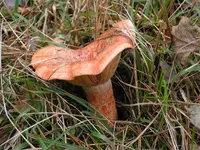
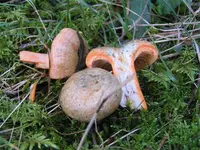
Orange-latex Milky, Lactarius deterrimus, is a mycorrhizal mushroom that forms a close partnership with spruce trees in forests across Europe. It is not a leafy plant but a fungus that fruits from the soil surface. Caps are usually orange to carrot-colored, often with concentric zones, and the gills exude distinct orange latex when damaged, which helps with identification. Fruiting bodies typically appear in late summer to autumn, often in groups. This species is tied to coniferous habitats, so attempts to care for Orange-latex Milky usually focus on maintaining suitable spruce hosts and undisturbed, moist, acidic soil rather than treating it as a typical garden plant.

Main Plant Requirements

Care Difficulty

Hard Care

Light Preference

Partial Shade

Water Requirements

Keep Soil Moist

Temperature Preference

Cool Climate

Hardiness Zone

3–7

Soil Texture

Loamy, Sandy, Organic-rich

Soil pH

Acidic (5.5–6.5)

Soil Drainage

Moist but well-drained

Fertilization

Minimal (feed rarely)

Get Personalized Care Plan

Scan your plant to receive care tips personalized for your specific plant

Available on iOS and Android

How to Care for the Orange-latex Milky

This mycorrhizal mushroom prefers forest light conditions rather than direct open-field sun.

  • Provide dappled or filtered light under spruce or mixed conifer canopy, roughly equivalent to 2–4 hours of gentle morning sun and bright shade the rest of the day.
  • Avoid strong midday and afternoon sun, which can dry the forest floor and reduce Orange-latex Milky fruiting; thick leaf litter or needles help buffer light and moisture.
  • In summer, choose shadier, north- or east-facing woodland edges; in cooler months, slightly more open canopy is acceptable as long as the soil does not bake.

This species relies on consistently moist, not waterlogged, forest soil to fruit well.

  • Aim for soil that feels evenly moist 5–10 cm deep; the surface may dry slightly between rains, but deeper layers should stay cool and damp.
  • Improve drainage with loose organic matter so water drains within a few hours; standing water, sour smell, or slimy mycelium indicate overwatering or poor aeration.
  • In dry, hot periods, supplemental irrigation or mulch can help; pale, brittle caps and cracked soil suggest underwatering, while sparse, moldy patches suggest excess moisture.

This ectomycorrhizal fungus performs best in cool to mild forest temperatures.

  • Optimal mycelial activity and fruiting occurs around 50–65°F (10–18°C), especially in moist autumn conditions under spruce or related conifers.
  • Lactarius deterrimus tolerates down to about 28–32°F (-2–0°C); light frosts may slow or briefly halt fruiting but rarely harm established mycelium in soil.
  • Sustained heat above 77–82°F (25–28°C) with dry conditions suppresses fruiting; shaded, mulched sites buffer temperature swings and help maintain suitable microclimate.

This mycorrhizal mushroom requires consistently moist, cool air rather than typical indoor room conditions.

  • Aim for 70–90% humidity around developing fruiting bodies, mimicking damp conifer forest conditions.
  • Dry air causes caps to crack, edges to curl, and surfaces to dull instead of staying evenly moist.
  • Increase humidity by using a closed, ventilated fruiting chamber with misting and a hygrometer to avoid extremes.

This ectomycorrhizal fungus relies on specific soil conditions and host roots rather than standard potting mixes.

  • Use loose, well-aerated sandy or sandy-loam forest soil with abundant decomposing conifer litter, not dense garden topsoil.
  • Soil should drain freely yet retain consistent moisture, avoiding standing water or compacted, puddling sites that exclude oxygen.
  • A slightly acidic pH of about 4.5–6 suits Lactarius deterrimus, commonly found under spruce in coniferous forest floors.
  • In situ, improve structure by gently incorporating fine conifer needles and leaf litter without disturbing existing tree roots.

This species is not realistically suitable for container growing, as it depends on complex mycorrhizal relationships with conifer roots that are difficult to replicate in pots.

This mycorrhizal mushroom associates with conifer roots and generally needs no supplemental fertilizer in natural soil.

Lactarius deterrimus does not require pruning, since the visible mushroom is only the fruiting body of a hidden fungal network.

Transplanting focuses on the host tree and soil rather than the Lactarius deterrimus fungus itself.

  • Only consider moving mycorrhizal soil when transplanting young conifers that already fruit this species nearby.
  • Best timing is early spring or early fall, in cool, moist conditions that limit stress to tree roots and fungal hyphae.
  • Lift and move the root ball gently, keeping as much original soil and fine roots intact as possible.
  • Water thoroughly after transplanting and maintain even soil moisture so the fungal partnership can re-establish.

Propagation of this fungus is specialized and usually left to natural spore spread or professional cultivation.

This species is naturally cold hardy in temperate conifer forests and needs no special winter care.

Care Tips

Host tree selection

Establish mycorrhizal association by introducing this fungus only near compatible conifers such as spruce or occasionally pine, and avoid planting under broadleaf trees where symbiosis is unlikely to form.

Minimal soil disturbance

Mark the fruiting area and avoid raking, deep digging, or heavy foot traffic there, since disturbance of the fine root–fungus network can sharply reduce future mushroom production.

Leaf-litter management

Maintain a thin, natural layer of conifer needles and light leaf litter over the soil to protect fungal mycelium from drying, but remove thick, compacted mats that block air flow and water infiltration.

Targeted irrigation zone

When supplementing rainfall, water in a wide ring under the drip line of the host tree rather than directly on emerging mushrooms, supporting the underground mycelium while keeping fruiting bodies drier and less prone to decay.

Fruiting body handling

Cut or gently twist mature mushrooms at the base instead of pulling them out with attached soil and roots, which helps preserve the underground mycelium and supports long-term success when growing Orange-latex Milky.

Common Pests and Diseases

Mycophagous slugs

This pest feeds directly on mushroom caps and stems, leaving irregular holes, slime trails, and sometimes consuming entire young fruiting bodies.

Solution

Hand-pick slugs in the evening or early morning, use physical barriers like copper tape or coarse grit around the fruiting area, and reduce dense groundcover that provides daytime shelter while keeping the soil around the host spruce tree consistently moist but not waterlogged.

Fungus gnats

These insects are attracted to moist, organic-rich soil in coniferous habitats and may feed on developing mycelium and tiny primordia, reducing the number of visible mushrooms.

Solution

Improve surface drainage around the fruiting zone, allow the top layer of organic litter to dry slightly between heavy waterings, use yellow sticky traps near the ground, and avoid adding fresh, overly rich organic waste that encourages gnat breeding when trying to grow Lactarius deterrimus.

Parasitic molds

This disease appears as white, gray, or greenish fuzzy growth on mushroom caps or stems, causing soft, water-soaked spots and rapid collapse of affected fruiting bodies.

Solution

Promptly remove and discard infected mushrooms, avoid overhead watering that splashes soil onto caps, maintain good air movement through selective thinning of low vegetation, and do not leave decaying fruiting bodies in place as they can spread mold spores to new mushrooms.

Larval cap borers

These insects are fly or beetle larvae that tunnel inside caps and stems, creating small entry holes, brownish tunnels, and soft, discolored tissue that spoils the mushrooms.

Solution

Harvest mushrooms as soon as they reach usable size, discard heavily infested specimens, keep the fruiting area free of old decomposing mushrooms that attract egg-laying adults, and use fine mesh netting over small cultivation patches if practical to physically block adult insects.

Interesting Facts

Bright orange latex

When injured, the fruiting body exudes a bright carrot-orange latex that slowly turns wine-red on exposure to air, a key diagnostic feature that separates it from many similar milkcap species.

Spruce specialist fungus

This species forms a highly specific ectomycorrhizal partnership with Norway spruce roots, exchanging mineral nutrients and water for sugars and strongly preferring spruce forests over other conifer habitats.

Green-staining flesh

The caps and gills often develop distinct green staining as they age or after handling, a chemical reaction that makes older specimens easy to distinguish from most other orange milkcaps.

Botan icon

Did you know?

In parts of Central and Eastern Europe, this fungus is considered a choice edible and is sometimes sold in local markets, but it is often overlooked in Western Europe where closely related milkcaps receive more culinary attention.

FAQs about Orange-latex Milky

This mushroom is considered edible when correctly identified and properly cooked, but quality varies and some individuals experience stomach upset. It should never be eaten raw and must not be confused with similar, toxic orange milkcaps.

Grow Healthy Plants with Botan Care

Keep your plants happy and healthy with plant identification, disease detection, and easy care guidance.


Botan plant care app — identify plants on mobile

Explore More Plants